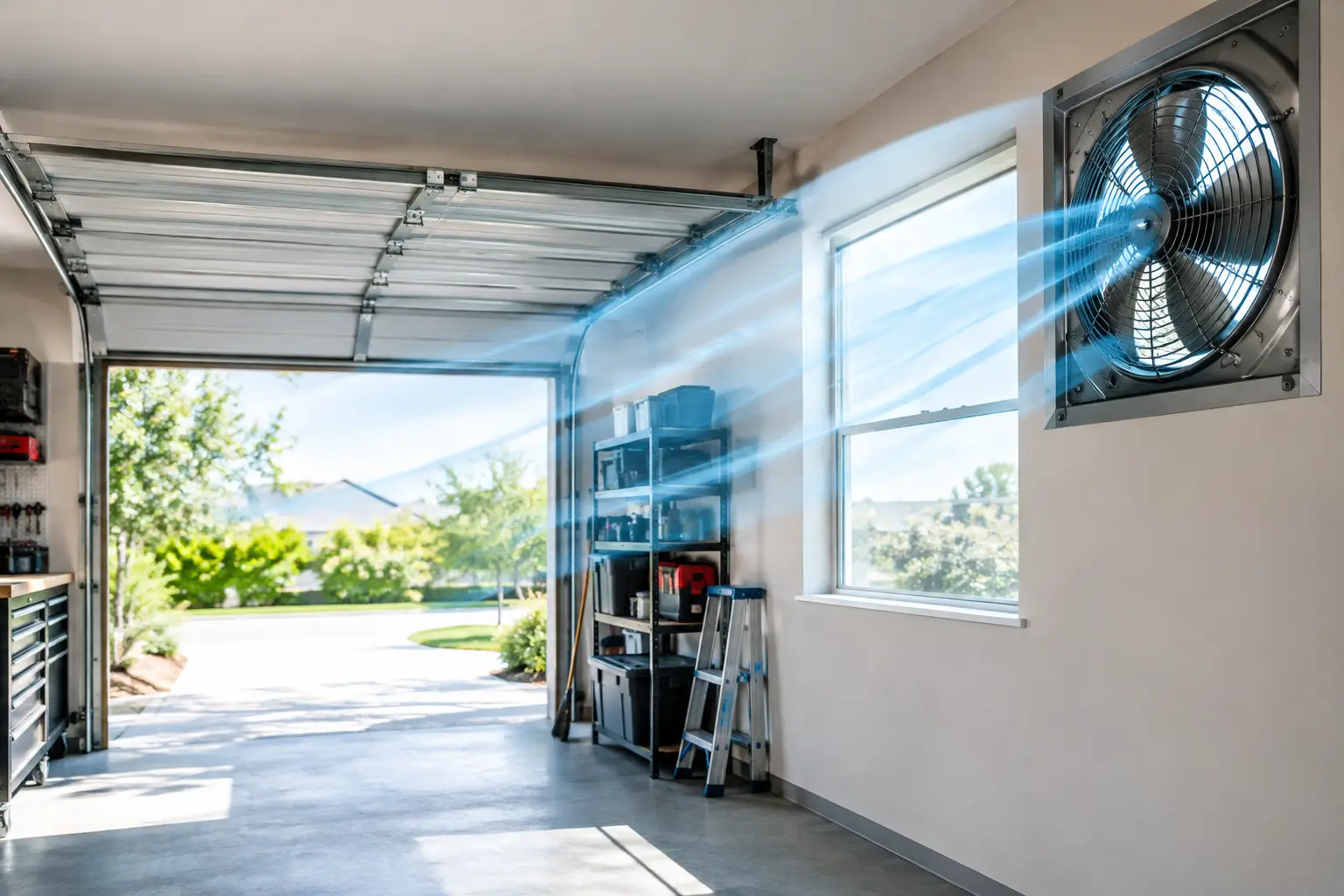
A Central Texas garage can become unbearable fast. By midafternoon, the concrete holds heat, the roof deck radiates warmth, and stale air turns a storage area, workshop, home gym, or parking space into a room no one wants to use. Learning how to improve garage airflow is less about adding one fan and more about creating a deliberate path for fresh air to enter, hot air to leave, and moisture and fumes to stay under control.
The right solution depends on how you use the space. A detached garage used for cars needs a different approach than an attached garage converted into a workshop or fitness area. The goal is the same: a safer, more comfortable, more functional part of your property that supports daily life and protects the investment you have made in it.
Start by Identifying What Is Causing the Problem
Poor airflow usually shows up as more than heat. You may notice lingering gasoline or paint odors, condensation on tools, mildew near exterior walls, a musty smell after storms, or a garage that remains hotter than the outdoors long after sunset. These issues can overlap, which is why choosing a solution based only on temperature can miss the real cause.
In Central Texas, garages often struggle with intense solar heat, warm humidity, and large swings in use. Opening the garage door may provide a quick rush of air, but it is not a dependable ventilation plan. It can also bring in dust, pollen, insects, and humid air, especially during storm season.
Before making changes, consider where air is entering, where it can exit, and what is blocking the route between those two points. Stacked boxes, wall-to-wall shelving, tightly parked vehicles, and a fully sealed garage door can all limit circulation. A free inspection from an experienced contractor can help identify whether the issue is primarily ventilation, insulation, moisture intrusion, or a combination of all three.
How to Improve Garage Airflow With Better Ventilation
Effective garage ventilation needs intake and exhaust. Fresh air must have a place to come in, while hot, stale air needs a dedicated place to leave. Without both, a fan may simply move the same hot air around the room.
Add High and Low Vent Openings
Heat rises, making high-mounted exhaust vents especially useful. Ridge vents, gable vents, roof vents, or wall vents near the ceiling can give trapped heat a route out. Lower wall vents or louvered openings can provide replacement air closer to floor level.
This high-low arrangement encourages natural air movement even when mechanical equipment is off. The exact placement matters. Vents should be sized and located to suit the garage layout, roof design, local weather exposure, and whether the garage is attached to conditioned living space.
For an attached garage, ventilation details deserve extra care. Air from the garage should not be directed into attic spaces connected to the home or toward doors, windows, and fresh-air intakes. Exhaust fumes, chemicals, and stored fuel should remain separated from the living areas.
Use an Exhaust Fan for Reliable Results
A properly selected exhaust fan provides more consistent results than passive vents alone. It actively removes hot air, odors, humidity, and airborne contaminants, making it especially valuable for workshops, garages with appliances, hobby spaces, and rooms used regularly by people.
Wall-mounted exhaust fans work well when exterior wall access is available. Roof-mounted options can be effective in certain layouts, but they require careful flashing and weatherproofing. In either case, a fan should be paired with adequate intake ventilation. Otherwise, it works harder while delivering less airflow.
Controls can make the system easier to use. A basic wall switch is practical for occasional use. A timer prevents the fan from running longer than needed, while a thermostat or humidity sensor can activate ventilation when the garage reaches a set condition. For homeowners who use the garage as a gym or work area, these controls can make comfort feel automatic rather than another task on the checklist.
Install a Ceiling Fan Where It Makes Sense
A ceiling fan does not remove heat from a garage, but it can make an occupied space feel noticeably more comfortable by moving air across the skin. It is a good complement to exhaust ventilation, not a replacement for it.
Choose a fan rated for the environment and installed at a safe height with adequate clearance from the garage door, storage racks, and vehicle lift equipment. In a tall garage, a larger fan with the right downrod can distribute air more effectively than a small fixture mounted too close to the ceiling.
Reduce the Heat That Is Entering in the First Place
Ventilation manages hot air after it arrives. Insulation and air sealing reduce the amount of heat entering the garage, which can lower the workload on every fan and make the space more usable year-round.
The garage door is often the largest uninsulated surface in the room. An insulated door can reduce heat gain dramatically, particularly on west- and south-facing elevations. Weatherstripping around the perimeter and a properly sealed bottom gasket also help keep out wind-driven rain, dust, pests, and hot outdoor air.
Attic insulation above the garage is another high-value improvement. In many Texas homes, the ceiling beneath the attic is the primary source of radiant heat. Spray foam insulation can be a strong option in the right assembly because it helps limit air movement as well as heat transfer. The best approach depends on whether the attic is vented or conditioned, the existing insulation, roof configuration, and the home’s overall building envelope.
Do not overlook gaps around penetrations. Openings around plumbing, electrical lines, attic hatches, and wall transitions can allow hot attic air and outdoor humidity into the garage. Sealing these areas carefully improves comfort without accidentally blocking required ventilation.
Manage Moisture, Not Just Temperature
Central Texas humidity can create problems even when a garage does not feel especially hot. Moisture can rust tools, damage stored belongings, encourage mold growth, and make a concrete floor feel damp after a rainy stretch.
If the garage has a persistent moisture issue, first look for water entry. Check door seals, exterior grading, roof drainage, wall cracks, and plumbing leaks. Ventilation can remove humid air, but it cannot solve water that is entering through the structure.
A dehumidifier may help in an enclosed, finished, or heavily used garage, particularly if the space is insulated and air sealed. However, it needs a drainage plan and regular maintenance. Running a dehumidifier in a leaky, unconditioned garage can waste energy because it is continually trying to dry incoming outdoor air.
For garages used to store vehicles after rain, a floor drain or well-designed surface drainage can also make a meaningful difference. The objective is to move water away from the building and avoid allowing moisture to linger along walls or under stored items.
Protect Indoor Air Quality and Safety
Airflow improvements should never compromise safety. Never run vehicles in a closed garage, even with fans operating. Ventilation reduces contaminants but does not make vehicle exhaust safe to breathe.
Garages with gas-fired water heaters, furnaces, or other combustion equipment require a more careful assessment. Changes to vents, doors, insulation, and exhaust fans can affect combustion air and pressure balance. A qualified professional should evaluate the setup before major modifications are made.
Store paints, solvents, lawn chemicals, and fuel in approved containers and avoid placing them near ignition sources. If you regularly sand, weld, paint, or work with strong chemicals, source-capture ventilation may be needed in addition to whole-room airflow. This is one of those situations where a general fan is not enough.
Build a Solution Around How You Use the Garage
A basic storage garage may only need improved door seals, attic insulation, passive vents, and a dependable exhaust fan. A woodworking shop may need stronger mechanical exhaust, strategically placed intake air, dust collection, and more electrical capacity. A garage gym benefits from air movement at occupant level, temperature-responsive exhaust, and insulation that reduces afternoon heat.
For a garage conversion or major upgrade, airflow should be planned alongside electrical work, wall finishes, flooring, insulation, and storage. Treating ventilation as an afterthought can mean opening finished walls later or settling for equipment that is loud, undersized, or poorly located.
NXT Construction Inc. approaches these improvements as part of a complete property solution, balancing comfort, durability, visual appeal, and the way your family actually uses the space. A well-ventilated garage is not just cooler on a July afternoon. It is a cleaner, more flexible room that can serve your home with confidence for years to come.