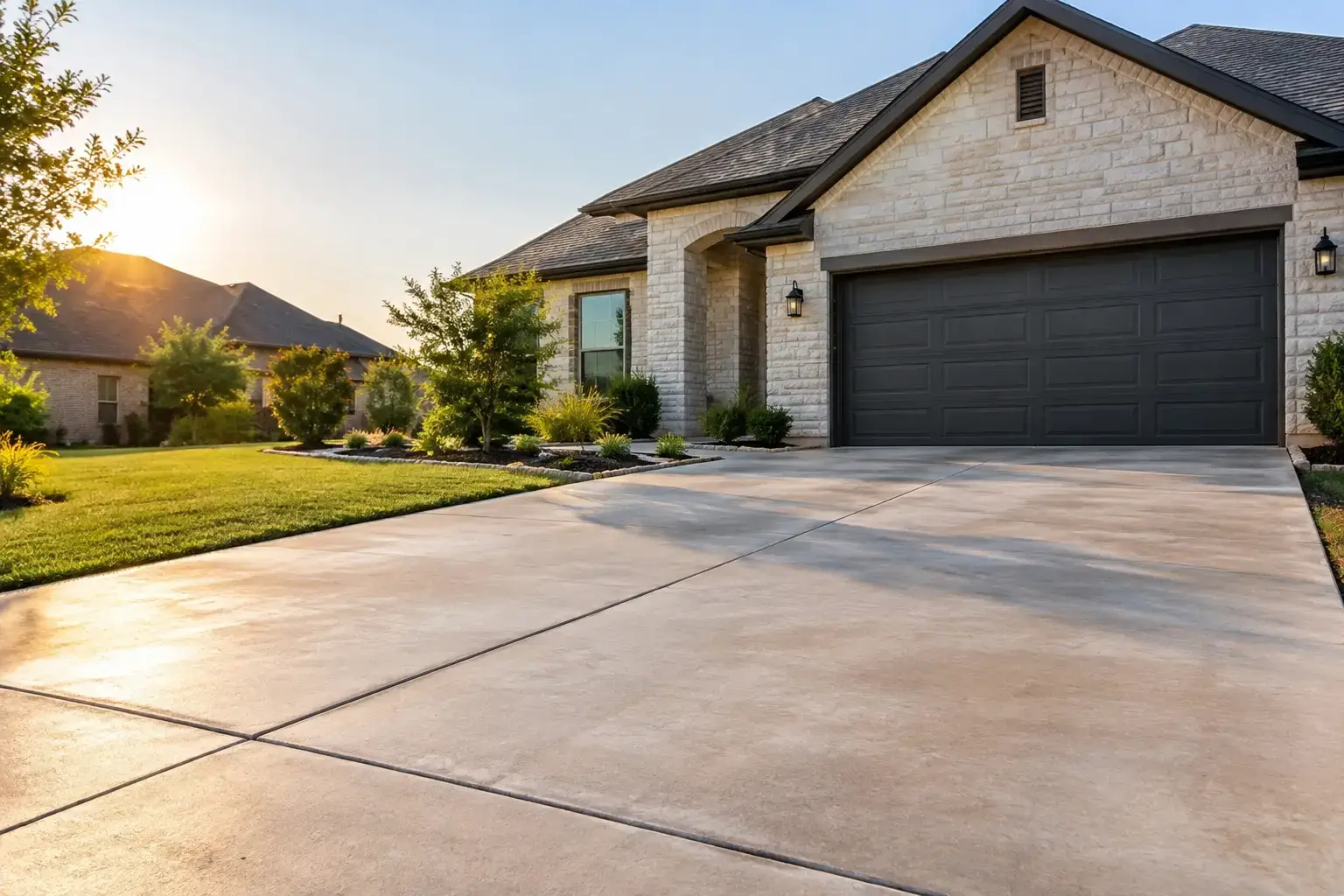
A driveway works harder than most parts of a property. It carries daily vehicle traffic, withstands punishing Central Texas sun, manages sudden downpours, and sets the visual tone before anyone reaches the front door. Well-planned concrete driveways do more than create a place to park. They improve curb appeal, protect the surrounding landscape, and add a durable, finished look that supports long-term property value.
For homeowners in Austin, Leander, Cedar Park, Georgetown, Lakeway, Liberty Hill, and nearby communities, the right driveway is not simply a matter of pouring concrete. Site preparation, drainage, reinforcement, joint placement, thickness, and finish all influence how the surface performs over time.
Why Concrete Driveways Make Sense in Central Texas
Concrete is a strong choice for Central Texas properties because it handles regular vehicle use and can be tailored to suit a wide range of architectural styles. A clean broom finish complements a classic family home, while exposed aggregate, decorative borders, or a colored finish can elevate a contemporary build, outdoor living project, or high-end renovation.
Durability is a major advantage, but it is not automatic. Texas heat creates expansion pressure, periods of drought can affect underlying soils, and intense rainfall can expose drainage weaknesses quickly. A driveway’s longevity depends as much on the base beneath the slab as the visible concrete surface.
Concrete also offers a practical maintenance profile. It does not need the routine resealing and edge repairs commonly associated with asphalt, although sealing can help protect decorative finishes and reduce staining. With appropriate installation and care, a concrete driveway can deliver decades of dependable service.
That said, concrete is not the right answer for every situation without adjustments. Properties with active soil movement, poor drainage, steep grades, or existing foundation concerns need a more thoughtful plan. Addressing those conditions before installation is far less expensive than correcting cracked concrete or drainage damage later.
What Makes a Concrete Driveway Last
A polished finish cannot compensate for weak preparation. Quality concrete driveways begin with an assessment of the property, including vehicle needs, water flow, soil conditions, access points, and how the new work connects to sidewalks, garages, curbs, gates, and landscaping.
Start With a Stable Base
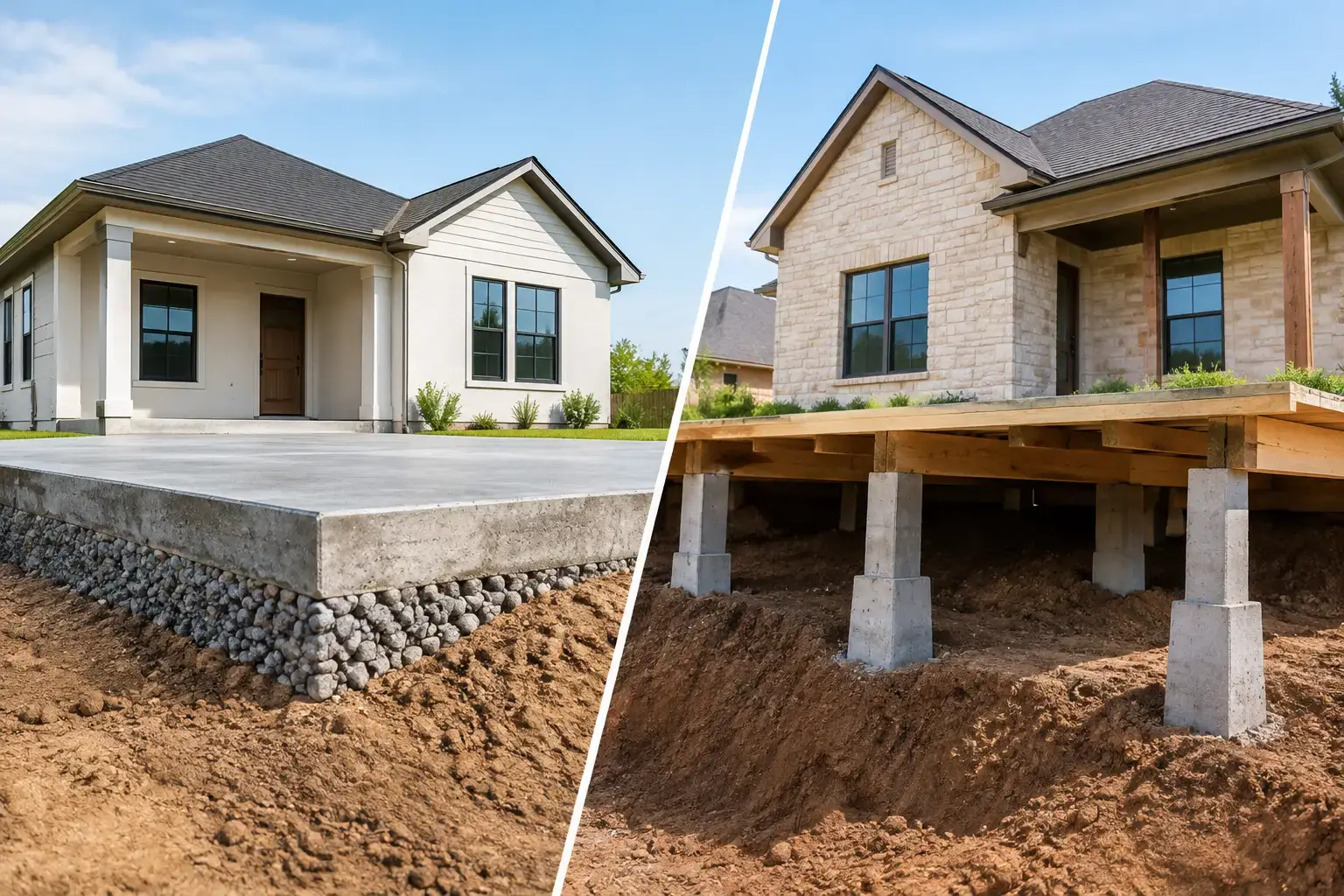
The soil below a driveway must be graded and compacted correctly. In areas with expansive clay soils, this step is especially important. A properly prepared base helps distribute the load of vehicles and reduces the risk of uneven settlement.
If the site has soft spots, poor drainage, or evidence of previous movement, the contractor may recommend additional base material, grading improvements, or drainage solutions before concrete is poured. This is not unnecessary upselling. It is the work that protects the investment homeowners actually see.
Choose the Right Thickness and Reinforcement
A standard residential driveway often uses a four-inch slab, but thickness should reflect how the space will be used. A driveway that regularly supports heavy trucks, trailers, RVs, work vehicles, or a basketball goal with concentrated loads may need a thicker design or reinforced sections.
Reinforcement can include steel rebar, wire mesh, or fiber additives, depending on the project. Reinforcement does not guarantee that concrete will never crack. Concrete naturally moves and can develop hairline cracks over time. Its role is to help hold the slab together and limit separation if cracking occurs.
A contractor should also consider thicker sections at areas under greater stress, such as the driveway apron, garage entry, turnarounds, and locations where vehicles brake or turn frequently.
Plan Joints Instead of Hoping for No Cracks
Control joints are intentional grooves placed in concrete to guide natural cracking into less visible, more manageable lines. Their spacing and depth should be planned according to the slab dimensions and layout.
A driveway with poorly placed joints may crack in random patterns, even when high-quality concrete is used. Thoughtful joint layout is one of those details that can seem minor on installation day but makes a visible difference years later.
Give Water a Clear Place to Go
Water should move away from the home, garage, and foundation. This matters in every driveway project, but it is particularly critical during Central Texas storm events, when a brief downpour can send significant runoff across a property.
The driveway should have enough slope to shed water without creating an awkward parking surface or pushing runoff toward neighboring properties. Depending on the site, the solution may involve regrading, drainage channels, swales, trench drains, or coordination with patio and landscape improvements. Water management should be part of the driveway design from the beginning, not an afterthought once concrete has cured.
Design Choices That Improve Curb Appeal
A driveway occupies a substantial portion of the front yard, so it should complement the property rather than look like a blank expanse of gray. The best design choice depends on the home’s architecture, lot size, maintenance preferences, and budget.
A traditional broom finish is reliable, slip-resistant, and clean in appearance. It is often the most practical option for homeowners who want a durable surface with a straightforward, timeless look. Decorative saw-cut borders or contrasting bands can add definition without the added cost of a fully decorative driveway.
Exposed aggregate reveals natural stone within the concrete for a textured, higher-end finish. It works especially well with stone facades, native landscaping, and outdoor entertaining areas. Stamped concrete can create the look of pavers or natural stone, but it requires careful installation and ongoing sealing to preserve color and surface quality. For some properties, real pavers may be worth considering, though they typically involve a higher initial cost and more joint maintenance.
Color can also be used strategically. Earth tones often blend naturally with Central Texas limestone, stucco, brick, and native plantings. Lighter colors may feel cooler underfoot during summer, while darker finishes can show dust, tire marks, and weathering more readily.
Replacing an Existing Driveway: When Repair Is Not Enough
Small cracks, surface stains, and minor scaling do not always require a full replacement. A professional evaluation can determine whether sealing, patching, resurfacing, or targeted repairs will provide a meaningful result.
Replacement becomes the more responsible option when the slab has widespread cracking, major settlement, recurring drainage problems, heaving, crumbling edges, or significant elevation differences. Pouring a thin overlay over an unstable driveway may improve appearance briefly, but it does not correct the conditions causing the failure.
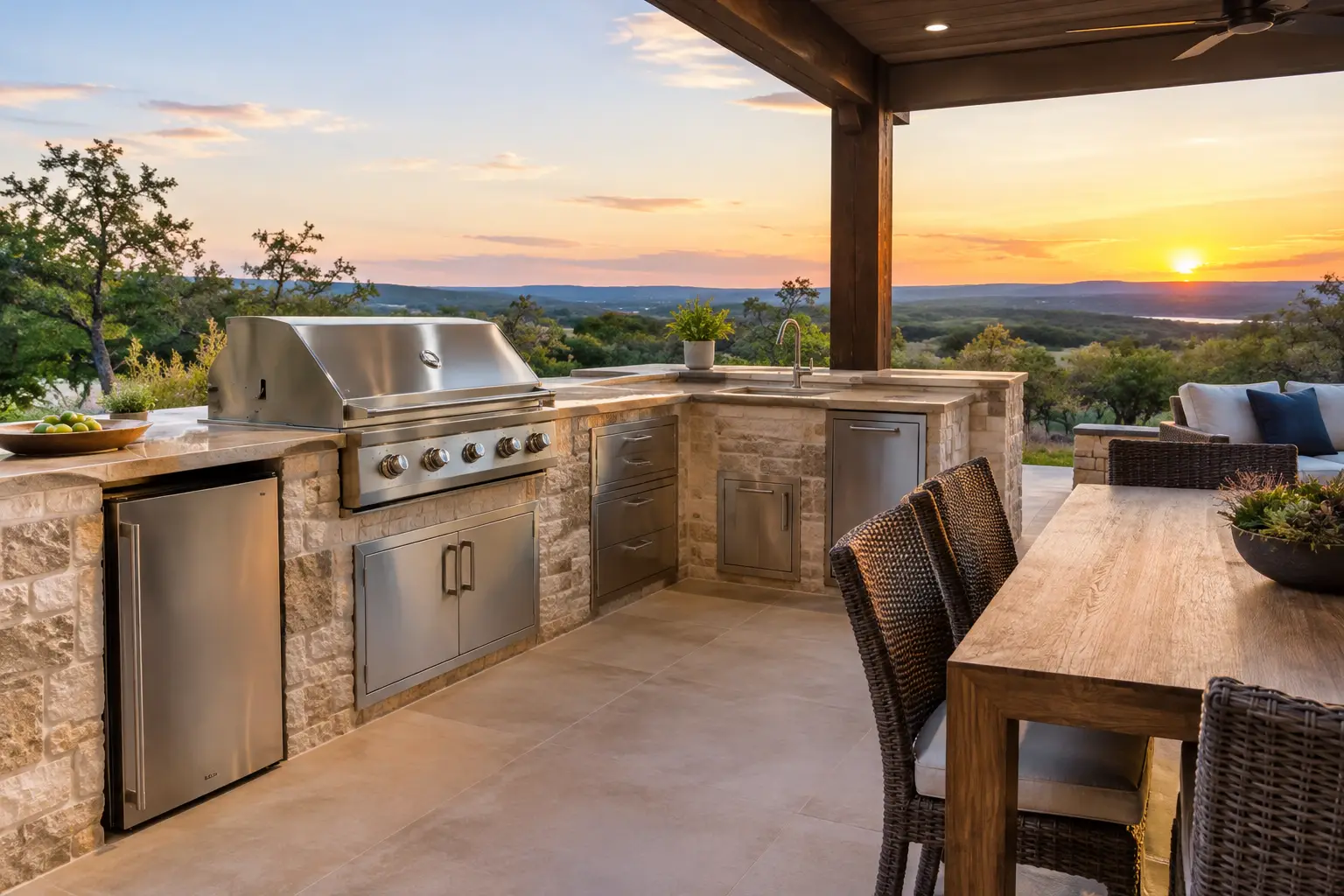
Removal also creates an opportunity to improve the layout. Homeowners may widen a narrow drive, add a parking pad, create a turnaround, improve access for an ADU, or connect the driveway to a new patio, outdoor kitchen, or garage addition. These changes can make daily life easier while improving the property’s appeal to future buyers.
Questions to Ask Before You Approve the Work
Before selecting a contractor, ask how the existing slab or soil will be evaluated, how runoff will be managed, what slab thickness and reinforcement are proposed, and where control joints will be placed. You should also understand the expected finish, curing process, timeline, and who is responsible for protecting adjacent landscaping, gates, irrigation, and hardscape features.
It is also wise to ask whether local permitting, right-of-way requirements, HOA standards, or utility considerations apply. Driveway aprons and changes near streets can involve requirements that differ by municipality or neighborhood. A qualified local contractor should help identify these details early, before they affect schedule or budget.
At NXT Construction Inc., driveway planning is approached as part of the larger property vision. Whether the goal is a simple replacement, a more functional arrival area, or a complete exterior transformation, the work should reflect the way you use your home and protect the investment behind it.
Simple Care for a Better-Looking Surface
Once the driveway is installed, a few habits can preserve its appearance. Keep heavy, concentrated loads off slab edges, clean oil or automotive fluid spills promptly, and avoid harsh de-icing chemicals or abrasive cleaning practices. If the driveway has a decorative finish, follow the contractor’s recommendations for resealing intervals.
Most importantly, pay attention to changes. New cracks, pooling water, or gaps where the driveway meets the garage or walkways may signal drainage or movement issues that deserve attention before they grow.
A driveway should feel like a dependable part of the property, not a recurring concern. When its design respects the site, the soil, the weather, and the home’s character, it becomes a durable welcome home every single day.