A shower can look finished on installation day and still become a daily frustration if the tile was chosen for appearance alone. A smart shower tile comparison considers how a material handles hard water, regular cleaning, wet bare feet, grout maintenance, and the demands of a busy Central Texas household. The right choice should complement your vision while protecting the investment behind the walls.
For most homeowners, porcelain is the strongest all-around option. That does not make it the automatic answer for every remodel. Natural stone can create a more distinctive, high-end retreat, glass can add light and movement, and ceramic can deliver a polished look at a more accessible price. The best material depends on where it will be used, how much maintenance you want, and how the entire shower is designed and built.
Shower Tile Comparison: What Matters Beyond Color
Tile selection affects more than the finished look of your bathroom. The material, finish, size, and installation method all influence cleaning needs, slip resistance, longevity, and project cost. A large-format wall tile may create a clean, contemporary feel with fewer grout lines, while a smaller mosaic floor tile can provide better traction because of the added grout joints.
In Central Texas, mineral-heavy water is another practical consideration. Lighter tile colors and textured surfaces can show mineral deposits more readily, especially around fixtures and glass enclosures. This does not rule out a material, but it should shape expectations about cleaning and sealing.
Equally important, even premium tile cannot compensate for weak waterproofing. Tile and grout are finish materials, not the waterproof layer of a shower. A properly prepared shower includes a sound substrate, a compatible waterproofing system, correctly detailed corners and penetrations, and drainage that directs water where it belongs. Craftsmanship behind the tile protects the home long after the design trends change.
Porcelain Tile: The Best All-Around Performer
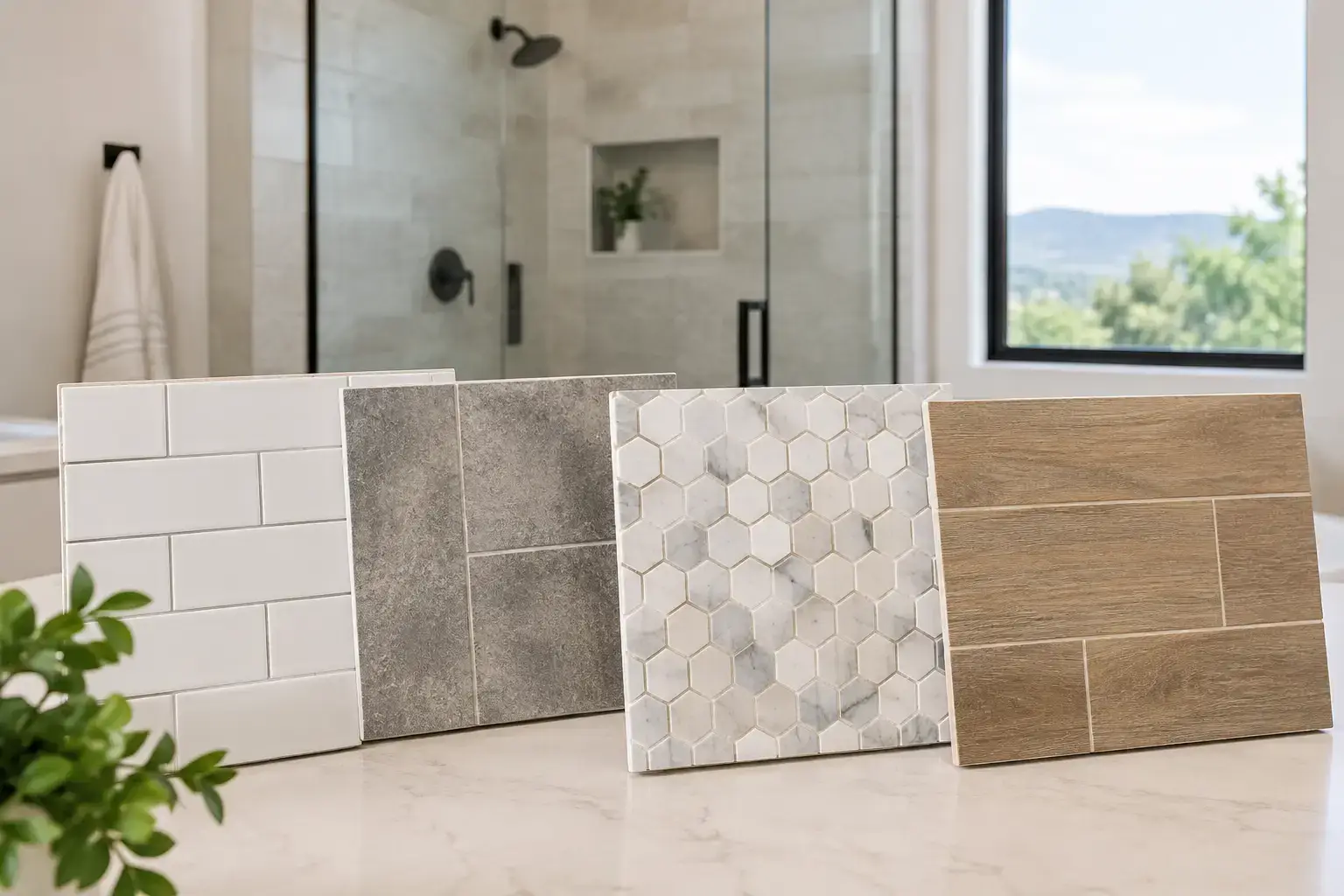
Porcelain is often the leading choice for shower walls and floors because it is dense, highly water-resistant, durable, and available in an exceptional range of styles. Homeowners can achieve the look of marble, limestone, concrete, wood, or handmade tile without taking on the same maintenance requirements as many natural materials.
For shower walls, porcelain works well in large-format panels and standard tile sizes alike. Large tiles can make a compact shower feel more open and reduce the amount of grout to clean. For floors, choose a porcelain tile with an appropriate slip-resistance rating and a size that allows the installer to create proper slope toward the drain. Small porcelain mosaics are a reliable floor choice for curbless showers, shower pans, and areas with multiple slope changes.
Porcelain does come with trade-offs. It can be harder to cut than ceramic, which makes experienced installation especially valuable around niches, valves, benches, and linear drains. Some realistic stone-look porcelain products also have a higher material cost than basic ceramic. Still, for homeowners seeking long-term performance with manageable upkeep, porcelain offers outstanding value.
Best for
Porcelain is ideal for active family bathrooms, primary showers, rental properties, and homeowners who want a refined finish without a demanding maintenance routine. It is also a strong option when you want the visual drama of natural stone but prefer a more predictable surface.
Ceramic Tile: A Practical Choice for Shower Walls
Ceramic tile is a classic bathroom material for good reason. It is cost-effective, easy to find in a broad selection of colors and shapes, and well-suited to shower walls when properly installed. Subway tile, square tile, decorative trim, and handcrafted-look ceramic can all bring personality to a remodel without overwhelming the budget.
The main distinction is density. Ceramic is generally less dense than porcelain and may absorb more water, so it is better suited for shower walls than high-traffic shower floors. A glazed ceramic tile offers good surface protection, but chipped edges can be more noticeable and potentially more vulnerable than porcelain.
Ceramic shines when the design calls for color, texture, or a timeless layout. A soft white subway tile can support a traditional Austin home renovation, while a saturated green, blue, or terracotta-inspired ceramic can give a powder room or guest bath a more custom identity. The material cost may be lower, but intricate layouts, specialty trim, and handmade variations can increase labor requirements.
Natural Stone: Distinctive Beauty With Real Maintenance
Natural stone brings depth, variation, and a sense of permanence that manufactured materials cannot fully duplicate. Marble, travertine, limestone, slate, and quartzite each have their own character, and no two pieces are exactly alike. In the right bathroom, stone can make a shower feel like a private spa rather than a standard utility space.
That beauty comes with responsibilities. Most natural stone requires sealing, and some varieties are more sensitive to acidic cleaners, mineral buildup, staining, or etching. Marble and limestone, for example, can develop a worn patina over time. Some homeowners love that lived-in character; others expect the surface to remain pristine and may be disappointed.
Stone also requires careful selection for shower floors. Polished stone can be slippery when wet, while honed or textured finishes often provide a better balance of comfort and traction. Smaller stone mosaics can help with drainage and footing, but they add grout lines and cleaning time.
Natural stone is best chosen with clear expectations. If you enjoy authentic materials, are comfortable with periodic sealing, and view natural variation as part of the design, it can be a beautiful investment. If low maintenance is the priority, a high-quality porcelain stone look may be the wiser direction.
Glass Tile: Best as an Accent, Not Always a Main Surface
Glass tile catches and reflects light in a way that can make a shower feel brighter and more dimensional. It works especially well in niches, feature bands, accent walls, and decorative mosaics. In a darker bathroom, a glass detail can create a focal point without requiring an entire wall of reflective material.
Using glass tile throughout a shower is possible, but it requires precise installation. The substrate must be exceptionally flat because irregularities can show through translucent pieces. Glass also expands and contracts differently than other materials, so installers need compatible setting materials and proper movement accommodation. Depending on the product, scratches, soap residue, and hard-water spots may be more visible than they are on porcelain.
For many remodels, glass delivers the most value as part of a balanced design. Pair it with durable porcelain walls or a stone-look field tile, then use it to draw attention to a niche or create a tailored color transition.
Tile Size, Grout, and Finish Change the Decision
Material is only one part of the equation. Tile size and finish can radically change how the shower performs and how much attention it needs. Large-format wall tile creates a clean, expansive look and reduces grout lines, but requires flat walls and careful layout. A poorly planned layout can leave awkward narrow cuts at corners, ceilings, or shower edges.
Smaller tile has its advantages. Mosaics conform well to a sloped shower floor and can add traction, but more grout means more surface area to maintain. Grout color also matters. Bright white grout creates crisp contrast but may show discoloration sooner. A mid-tone or color-matched grout can be more forgiving in a high-use bathroom.
Matte and honed finishes generally hide water spots better than polished finishes, while polished surfaces can make a shower feel more formal and luminous. There is no universal winner. The strongest choice aligns with your cleaning habits, lighting plan, fixtures, and desired level of visual contrast.
Plan the Shower as a Complete System
A successful shower remodel is not simply a tile purchase. It is a coordinated construction project involving plumbing locations, waterproofing, wall preparation, ventilation, drain placement, glass enclosure details, and fixture selection. These decisions should be made early, particularly if you are adding a bench, recessed niche, curbless entry, or large-format tile.
This is where a design-minded contractor can help prevent expensive changes later. At NXT Construction Inc., we help homeowners turn material preferences into practical bathroom solutions that fit their lifestyle, budget, and property. The goal is not to steer every client toward the same tile. It is to build a shower that looks intentional, drains correctly, feels comfortable, and remains dependable for years.
Before making a final selection, bring home samples and view them in the bathroom at different times of day. Put them near the planned fixtures, cabinetry, and paint colors. Consider how they look when wet, not just under showroom lighting. A tile that earns your confidence in the real space is more likely to remain a choice you appreciate every morning.