A hard Central Texas rain can expose drainage problems in less than an hour. Water spilling over gutters, pooling against a slab, carving channels through a yard, or creeping beneath a patio is more than an inconvenience. Left untreated, it can contribute to foundation movement, soil erosion, landscape loss, mold concerns, and expensive water remediation. The best rainwater drainage solutions start with understanding where the water comes from, where it collects, and where it can safely go.
For homes in Austin, Leander, Cedar Park, Georgetown, Liberty Hill, Lakeway, and surrounding communities, drainage planning needs to account for intense downpours, clay-heavy soils, limestone terrain, mature landscaping, and changing grades around additions or outdoor living spaces. A system that works beautifully on one property may be the wrong choice for the next.
Why Rainwater Needs a Planned Exit Route
A roof sheds an enormous volume of water during a storm. That water has to move somewhere. When gutters discharge beside the foundation or a yard slopes back toward the house, runoff saturates the soil around the structure. In expansive clay soils, repeated wet-and-dry cycles can cause movement that places stress on foundations, walkways, driveways, and plumbing.
Drainage also affects how you use your property. A backyard may look level and inviting on a sunny day but become muddy and unusable after every storm. Patios can hold standing water, turf may thin out, and mulch beds can wash away. Addressing the issue protects the investment you have made in your home while making outdoor areas more functional for family time and entertaining.
The right approach is rarely one product. Effective drainage is usually a coordinated system that captures water, moves it away from structures, and releases it in an area designed to handle it.
Best Rainwater Drainage Solutions for Central Texas
Gutters and properly extended downspouts
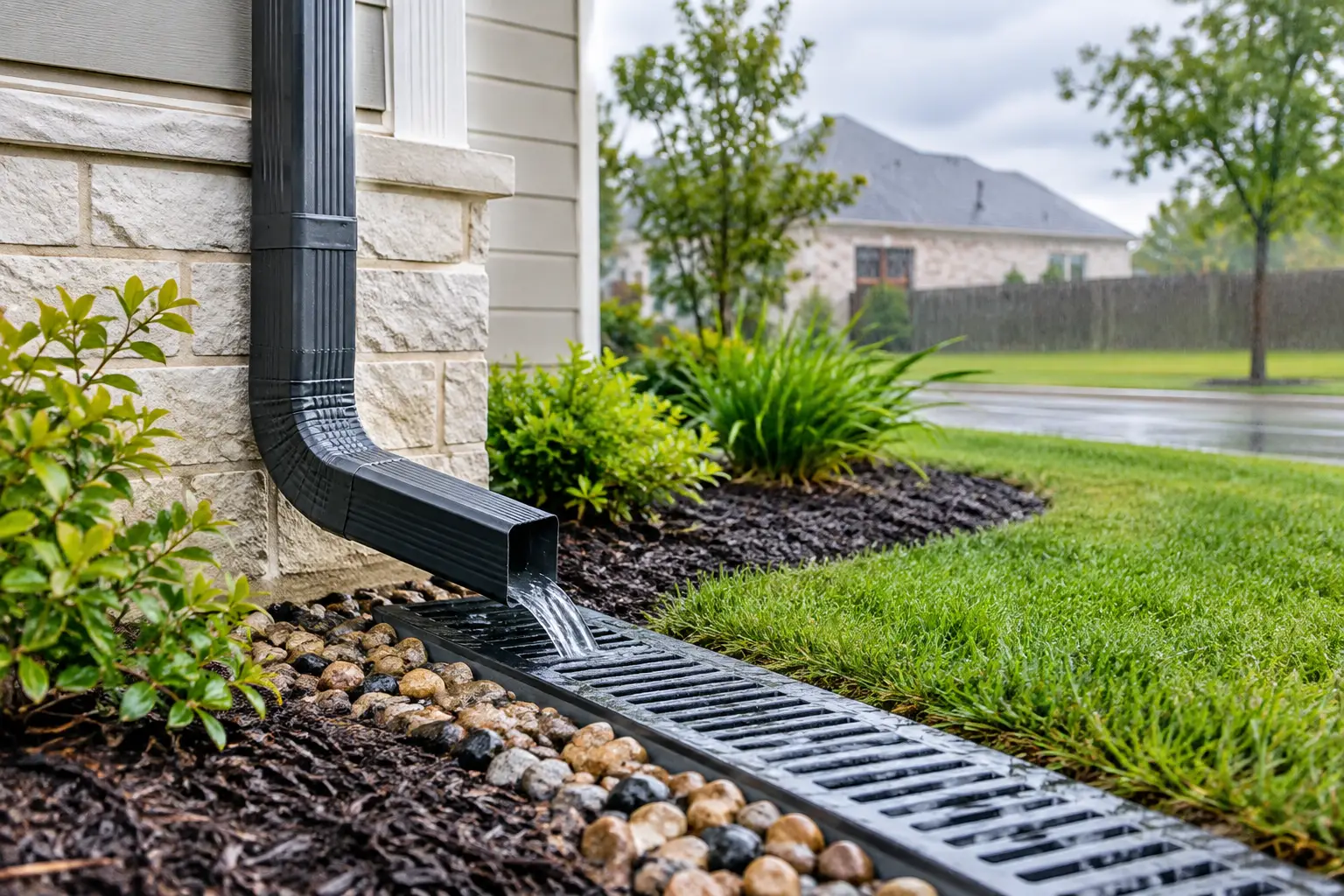
Gutters are the first line of defense because they control roof runoff before it hits the ground. But gutters alone do not solve a drainage issue if downspouts dump water at the edge of the foundation. Downspout extensions, buried drain lines, or solid piping can carry water to a safe outlet farther into the yard.
This is often the most practical improvement for homes with overflowing roof valleys, splashback on siding, or wet areas directly below downspouts. Gutters should be sized for the roof area and maintained regularly, especially where oak leaves and other debris collect. A clogged gutter can turn a well-designed system into a waterfall at the worst possible place.
Regrading for positive drainage
The ground around a home should slope away from the foundation so water naturally moves outward rather than collecting at the perimeter. This is called positive drainage, and it is one of the most valuable ways to protect a slab foundation.
Regrading may involve adding and compacting soil near the home, reshaping portions of the lawn, adjusting landscape borders, or rebuilding areas disturbed by construction. It is especially useful when patios, planters, walkways, or previous landscaping changes have created low spots beside the house.
There are limits. Raising soil too high against exterior walls can create moisture and pest concerns, and changing a grade without considering neighboring properties can redirect water into another problem area. Professional planning matters because the goal is controlled flow, not simply moving water out of sight.
Swales for broad yard drainage
A swale is a shallow, shaped channel that guides surface water across a property. Some are grass-lined and blend naturally into the yard. Others incorporate decorative rock, plants, or a dry creek bed appearance that adds character while managing stormwater.
Swales work well when a property has enough room to move runoff gradually toward a safe discharge area. They can be an attractive choice for larger yards in Liberty Hill, Georgetown, and other communities where landscape space allows for a more natural drainage design.
A swale is not ideal for every tight urban lot. If the property has limited setbacks, flat grades, or a need to move water beneath hardscape, a buried drainage system may be more effective.
French drains for saturated soil and persistent pooling
A French drain is a gravel-filled trench containing perforated pipe. It collects groundwater and water moving through the soil, then directs it toward a suitable outlet. These systems are often appropriate when a lawn stays soggy, a side yard holds water for days, or runoff gathers along a retaining wall.
French drains require thoughtful installation. The pipe must have the correct slope, the trench needs appropriate gravel and filter fabric, and the outlet has to be legal and practical. Installing one without a real discharge plan can simply move the pooling problem from one location to another.
For areas dealing mostly with water flowing across the surface, a French drain may not be the first choice. Surface drains or regrading can offer faster, more direct relief.
Catch basins and area drains
Catch basins and area drains collect water at low points and connect to underground piping. They are particularly effective near patios, driveways, pool decks, stairwells, side yards, and other places where hard surfaces concentrate runoff.
Unlike a French drain, an area drain is designed to capture surface water quickly. The basin should sit at the true low point, and the connecting pipe needs enough fall to carry water away efficiently. In a well-planned system, cleanouts and accessible basins make long-term maintenance far easier.
These drains are often part of a larger solution. For example, a patio drain may connect to a solid pipe that also receives downspout discharge before releasing water at a controlled location.
Channel drains for driveways and patios
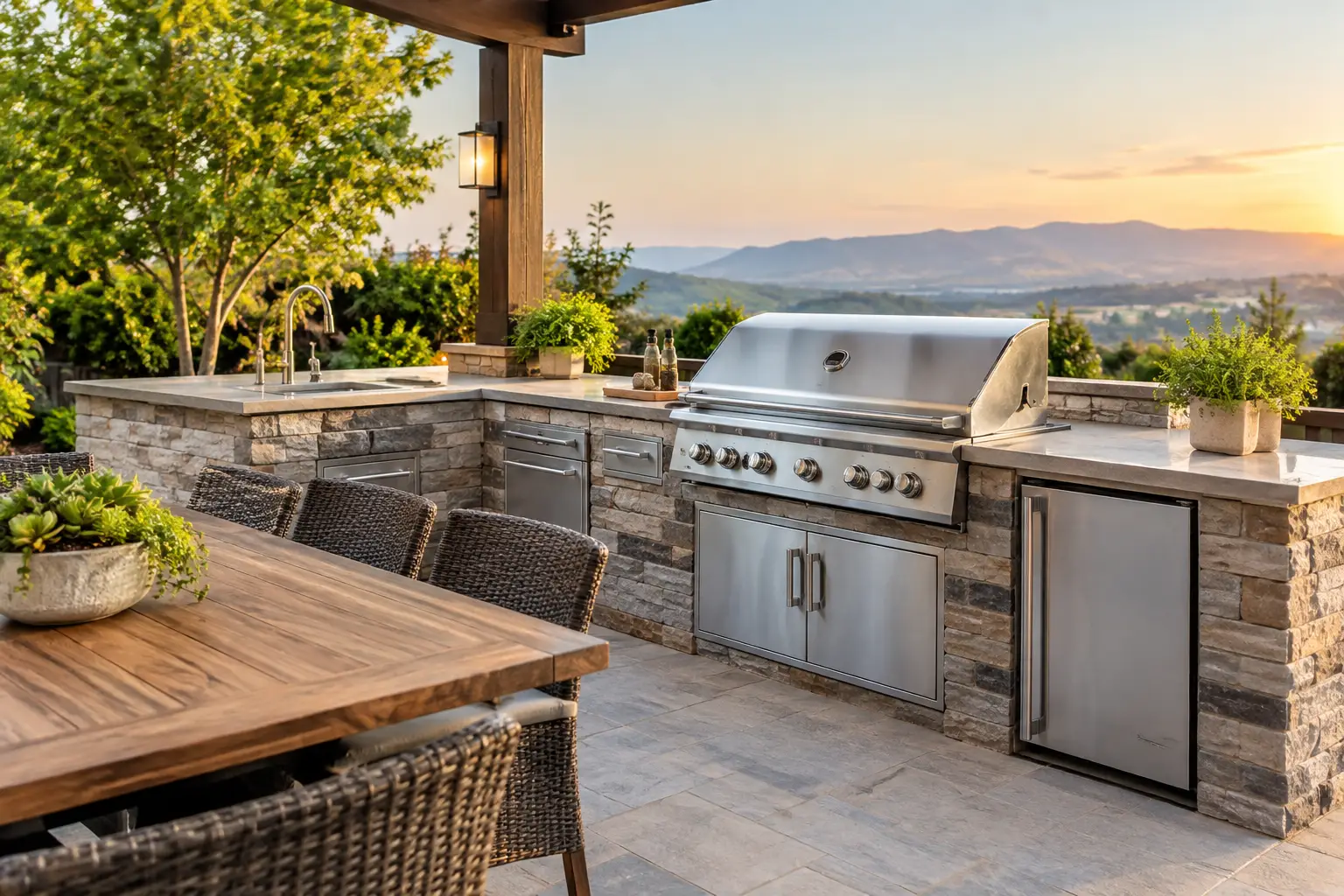
Channel drains are long, narrow grated drains installed flush with concrete or pavers. They are a strong option where water runs across a driveway toward a garage, travels into a covered patio, or pools along the edge of an outdoor kitchen.
Because the drain is integrated into the hardscape, installation is best handled during new construction, a patio replacement, driveway work, or a major outdoor renovation. Retrofitting is possible, but it can require concrete cutting and careful surface restoration.
For homeowners creating a more usable backyard, channel drains can protect finished concrete, outdoor cabinetry, and adjacent interior spaces without compromising the clean look of the project.
Dry wells and rain gardens
Dry wells temporarily hold runoff underground and allow it to soak into surrounding soil. Rain gardens use deep-rooted, water-tolerant plants to slow, filter, and absorb runoff in a landscaped depression. Both options can support a more sustainable drainage strategy when soil conditions and available space are suitable.
However, Central Texas soil can be highly variable. Dense clay drains slowly, and shallow limestone can limit underground storage. These solutions should be based on site conditions rather than chosen solely for appearance. A rain garden also needs an overflow route for the storms that exceed its capacity.
Match the Solution to the Source of Water
The most costly drainage mistakes happen when property owners treat the visible symptom but overlook the source. A puddle near a foundation may be caused by an overflowing gutter, a negative grade, a leaking irrigation line, a patio that pitches toward the home, or water entering from an uphill neighboring lot.
A thorough assessment should look at roof drainage, exterior grades, soil conditions, hardscape slopes, landscape features, retaining walls, existing underground lines, and foundation warning signs. It should also consider how water behaves during a heavy storm, not just how the yard looks after the ground has dried.
If water is already entering a crawl space, garage, or interior living area, act quickly. Water remediation may be needed alongside exterior drainage corrections to address damaged materials and help prevent long-term moisture problems.
Build Drainage Into Property Improvements
Drainage is easiest and most cost-effective to address when it is incorporated into a larger project. A new concrete driveway can include channel drainage. A patio expansion can be designed with the right slope and drain placement. A landscape refresh can add swales, erosion control, and a finished outlet that complements the yard.
This coordinated approach avoids the patchwork look of repeated quick fixes. It also protects the quality of the investment, whether you are remodeling a home, building an ADU, repairing a foundation, or creating an outdoor space designed for everyday life.
At NXT Construction Inc., drainage planning can be evaluated as part of a broader property improvement strategy, with practical recommendations that respect your home’s layout, goals, and budget. The right system should work quietly in the background, preserving the spaces you enjoy long after the storm has passed.