A kitchen can have beautiful cabinetry, premium appliances, and plenty of square footage yet still feel frustrating every morning. The issue is usually not the amount of storage. It is whether the storage works where, when, and how your household uses the room. The top kitchen storage solutions turn wasted inches into organized, accessible space that supports cooking, entertaining, school mornings, and everything in between.
For Central Texas homeowners planning a kitchen remodel, storage should be part of the design conversation from day one. A smart layout reduces countertop clutter, makes daily tasks easier, and gives your investment a more polished, custom feel. The right choices depend on your cooking habits, family size, existing footprint, and budget, but thoughtful storage is one upgrade that earns its place in almost every remodel.
Start With the Way Your Kitchen Actually Works
Before choosing cabinet inserts or specialty drawers, look at the friction points in your current kitchen. Where do groceries pile up? Which items are difficult to reach? Do several people cook at once, or is the kitchen primarily a quick-stop space for a busy family? These details matter more than a one-size-fits-all cabinet plan.
A family that buys in bulk may benefit most from a walk-in pantry with adjustable shelving. A homeowner who loves to bake may get more value from deep drawers for mixers, baking pans, and ingredients near the prep area. For an avid entertainer, hidden beverage storage and a dedicated serving zone can keep guests out of the main cooking path.
The goal is not to store more things just because space is available. It is to assign every essential item a logical home near where it is used. That approach creates a kitchen that feels calmer, faster, and easier to maintain long after the remodel is complete.
Top Kitchen Storage Solutions for Everyday Use
1. Deep Drawer Bases Instead of Lower Cabinets
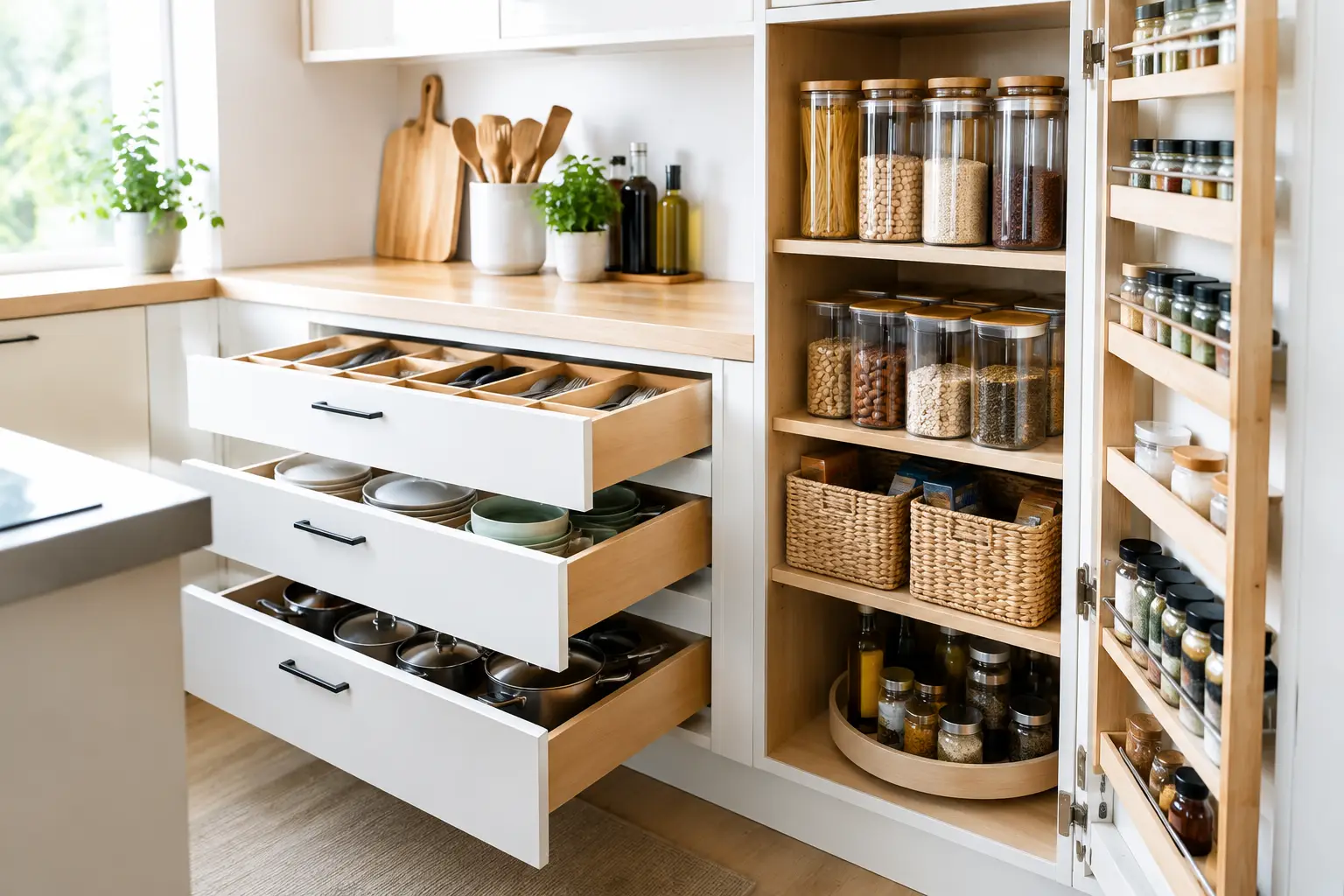
Traditional lower cabinets often become dark, crowded spaces where cookware gets buried behind other cookware. Deep full-extension drawers provide a better view of pots, pans, lids, serving dishes, and small appliances. You pull the storage toward you instead of kneeling down and reaching into the back of a cabinet.
This is one of the most practical upgrades for homeowners who want better accessibility without making the kitchen look overly specialized. Interior dividers can keep pans upright and lids organized. Heavy-duty drawer hardware is essential here, especially when the drawers will hold cast iron, Dutch ovens, or large stacks of dishes.
2. A Pantry Designed Around Real Inventory
Pantries work best when they are designed for visibility, not just volume. Adjustable shelves allow the space to change with your household, while shallower shelves prevent canned goods and snacks from disappearing behind larger items. Pull-out shelves are particularly useful for deep pantry cabinets, where fixed shelves can create a frustrating dead zone.
A walk-in pantry can be a standout feature in a larger kitchen, but it is not automatically the best choice. In a compact layout, a tall cabinet pantry with rollout trays may use the available square footage more efficiently. The right option depends on traffic flow and the amount of space you can dedicate without compromising the kitchen’s working areas.
3. Pull-Out Trash and Recycling Centers
A freestanding trash can is rarely a design feature anyone wants to highlight. A pull-out trash and recycling center keeps waste contained, improves visual order, and places disposal close to the primary prep zone. Locating it near the sink or island usually makes cleanup more efficient.
For households that compost, a three-bin system can be worth considering. It takes more cabinet width and may require more consistent habits, but it supports a cleaner workflow and reduces the need for multiple containers on the floor or countertop.
4. Purpose-Built Corner Cabinet Storage
Corner cabinets can be among the most underused areas in a kitchen. Old-fashioned lazy Susans offer a basic improvement, but modern corner solutions can provide better access. Options include pull-out shelves that swing outward, curved shelving systems, and blind-corner organizers that bring stored items forward.
These systems cost more than a simple fixed shelf, so they are best used where the corner will store frequently used cookware or small appliances. If the cabinet will hold only seasonal serving pieces, a simpler and more budget-conscious solution may be enough.
5. Vertical Dividers for Trays and Boards
Baking sheets, cutting boards, muffin tins, and platters create a familiar cabinet problem: they slide into a stacked pile that is difficult to sort. Vertical dividers solve it with a relatively small amount of space. Installed in a narrow base cabinet or upper cabinet, they let each piece stand on edge and come out independently.
This detail is especially useful near the oven, cooktop, or prep zone. It keeps bulky flat items close at hand and prevents the daily clatter that comes from lifting half the stack to find one sheet pan.
6. An Island That Does More Than Seat Guests
An island can become the hardest-working storage feature in the room when it is planned with intention. The cooking side might include drawers for utensils, cookware, or spices, while the seating side can hold shallow cabinets for linens, crafts, charging stations, or entertaining supplies.
Avoid filling every inch with storage if it makes the island feel bulky or limits legroom. An island needs proper clearances around it, and seating comfort should not be sacrificed for one more cabinet. When the dimensions allow it, combining closed storage with a few open display niches can keep the piece functional without feeling heavy.
Make Small-Kitchen Storage Feel Custom
Smaller kitchens require more discipline, not necessarily more cabinetry. Extending upper cabinets to the ceiling creates room for items used less often and eliminates the dust-catching gap above standard cabinets. A slim pull-out cabinet beside the range can organize oils and spices, while a narrow tray cabinet can fit into spaces that would otherwise be wasted.
Appliance garages are another valuable option when countertop clutter is the main concern. They create a dedicated place for a toaster, blender, or coffee equipment while keeping those items plugged in and available. They work best when the door design is easy to operate and the interior includes the electrical planning needed for safe, convenient use.
Do not overlook the inside of cabinet doors. Shallow racks can hold wraps, cleaning supplies, or spice jars, provided they do not interfere with shelves or drawer hardware. This is a modest improvement, but several small decisions like this can make a compact kitchen feel far more capable.
Storage That Supports Aging in Place and Busy Families
The best storage plans also consider who will use the kitchen in five or ten years. Full-extension drawers, D-shaped pulls, pull-down upper-cabinet shelves, and accessible pantry systems can make the room more comfortable for people with limited mobility. These features do not have to look clinical. When integrated into a well-designed remodel, they simply make the kitchen easier for everyone to use.
For families, assign accessible drawers or cabinets to everyday snacks, water bottles, lunch supplies, and kid-friendly dishes. This creates independence while reducing traffic around the cook. A dedicated drop zone near the kitchen entry can also control backpacks, mail, and devices before they take over the counter.
Choose Durable Details That Match the Investment
Storage hardware is where quality becomes visible over time. Soft-close slides are expected in an updated kitchen, but their load rating, installation, and adjustment matter just as much as the feature itself. Premium hinges, durable drawer boxes, and properly reinforced cabinets protect against sagging, sticking, and premature wear.
Custom storage does not mean every cabinet needs an expensive mechanism. Put the budget toward the locations used every day: cookware drawers, the pantry, waste pull-outs, and corners. Use standard shelving where it makes sense. This balance delivers a kitchen that feels tailored without directing the entire remodeling budget into accessories.
At NXT Construction Inc., we help Central Texas homeowners connect storage decisions to the larger kitchen plan, from cabinet layout and electrical needs to finishes, lighting, and long-term durability. The result should look refined, but more importantly, it should make daily life easier.
A well-organized kitchen is not about hiding every possession behind a cabinet door. It is about giving your household room to cook, gather, and move through the day with less clutter and more confidence. Begin with the habits that matter most in your home, then build storage around them.