
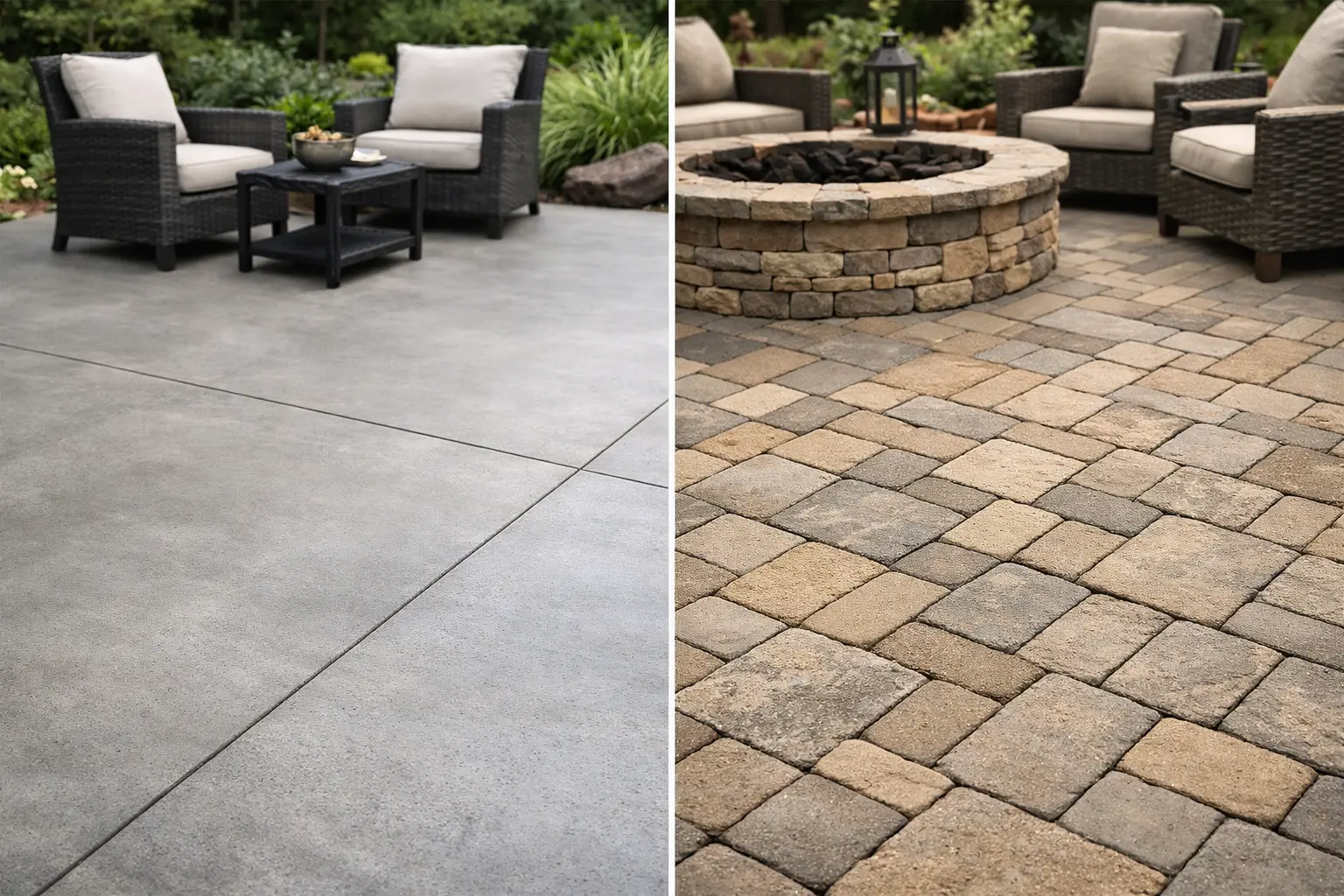
A patio in Central Texas has to do more than look good in a project photo. It has to hold up to intense summer sun, sudden downpours, shifting clay soils, muddy paw prints, pool days, and the way your family actually gathers outside. When weighing a concrete patio versus pavers, the best answer is rarely about a single material being universally better. It is about choosing the surface that fits your property, priorities, and plans for the space.
A clean concrete slab can create a modern, low-maintenance foundation for an outdoor kitchen, pergola, or covered entertaining area. Pavers can bring texture, color variation, and a more tailored architectural feel. Both can be excellent investments when they are designed around proper base preparation, drainage, and the realities of the site.
Concrete Patio Versus Pavers: The Core Difference
Concrete patios are typically poured as a continuous slab, then finished with a smooth, broomed, stamped, stained, or textured surface. Their visual appeal comes from the finish, color, layout, edges, and surrounding design elements. A well-planned concrete patio can feel crisp and expansive, especially alongside contemporary homes or large outdoor living additions.
Pavers are individual units made from concrete, natural stone, or brick. They are installed over a compacted base and bedding layer, with joint material between each piece. Because they come in different shapes, colors, and patterns, pavers offer more built-in visual variation than a standard slab.
The practical distinction is just as important as the aesthetic one. A concrete slab behaves as one large surface. Pavers work as a flexible system of many smaller pieces. That difference influences cost, repair options, drainage strategy, and how each material responds to soil movement.
Start With How You Want to Use the Patio
The right patio material should support the life happening around it. A small grilling pad outside a back door has different requirements than a full outdoor room with a fireplace, kitchen, dining area, and shade structure.
Concrete is often a strong fit for homeowners who want a broad, level surface for furniture, outdoor kitchens, basketball goals, or accessible pathways. It also works well where a consistent plane matters, such as a patio that transitions from interior flooring through large sliding doors. A carefully designed control-joint layout can make the slab look intentional rather than purely utilitarian.
Pavers are especially compelling when the patio is a visual centerpiece. They can complement Hill Country stone, traditional brick, transitional exteriors, and landscaped pool areas. Patterns such as running bond, herringbone, and modular layouts provide a level of detail that makes a backyard feel more custom. Pavers also make it easier to create curves, define zones, and blend walkways into the patio design.
For either option, think beyond the immediate project. If you expect to add a pergola, outdoor kitchen, fire feature, or pool later, the initial patio plan should account for future footings, utility lines, and load requirements. Building the surface first without a long-term layout can create expensive rework later.
Upfront Cost and Long-Term Value
A basic poured concrete patio is usually more cost-effective upfront than a paver patio of the same size. It requires less individual material placement and can cover larger areas efficiently. Decorative concrete finishes, custom colors, saw-cut patterns, borders, and complex site access can narrow that price gap, but plain or lightly finished concrete generally remains the budget-friendly starting point.
Pavers often cost more because of the material itself and the labor-intensive installation process. The ground must be excavated correctly, the base must be built and compacted in layers, edges must be restrained, and each unit must be laid with care. That installation work is not an optional upgrade. It is what allows a paver system to perform well.
Long-term value is more nuanced. Concrete can offer exceptional value when it is properly reinforced, placed over a prepared subgrade, sloped for drainage, and finished by skilled professionals. Pavers can justify their higher initial cost through elevated curb appeal, design flexibility, and simpler spot repairs. A patio that improves how often your family uses the yard can be valuable regardless of which material you choose.
Central Texas Soil, Movement, and Cracking
Austin-area properties commonly contend with expansive clay soils. These soils can swell when wet and shrink during dry periods, creating movement below patios, driveways, and foundations. No exterior hardscape is completely immune to those conditions.
Concrete will crack at some point. That is the honest expectation with a slab, not a sign that every concrete patio has failed. Control joints are placed to encourage cracks to form in planned locations, but they cannot guarantee an invisible surface forever. Hairline cracking may be mostly cosmetic, while wider separation, settlement, or trip hazards deserve professional evaluation.
Pavers do not crack as a single slab because they are separate units. Their joints allow the system to move somewhat with changing ground conditions. If a localized area settles or becomes uneven, the affected pavers can often be lifted, the base corrected, and the surface reinstalled. That repairability is one of their strongest advantages.
Still, pavers are not maintenance-free just because they are flexible. A weak base, poor compaction, missing edge restraints, or inadequate drainage can lead to shifting, low spots, and loose units. The real decision is not simply rigid versus flexible. It is whether the patio will be built with the preparation needed for your site.
Heat, Drainage, and Everyday Maintenance
Both concrete and pavers can get hot under Central Texas sun. Lighter colors and shaded areas help considerably, whether the shade comes from a pergola, covered patio, mature trees, or a planned roof extension. Dark pavers and dark concrete finishes can absorb more heat, so color selection should be part of the conversation, particularly near pools and barefoot entertaining spaces.
Concrete patios need positive slope so water moves away from the home and does not pond against the structure. Surface drains, swales, or integrated drainage solutions may be needed on flat lots or near covered outdoor spaces. A patio should never be treated as separate from the property’s overall drainage plan.
Pavers can be installed with traditional joints or, in appropriate applications, permeable joint systems that allow water to move through the surface into a designed base below. That does not eliminate drainage planning, especially on clay soils, but it can be useful where runoff management is a priority.
For maintenance, concrete is straightforward: sweep it, wash it periodically, and consider resealing decorative finishes as recommended. Stains from grease, leaves, and rust should be addressed promptly. Pavers may require occasional joint-sand replenishment, cleaning, and weed management if installation or upkeep is neglected. Individual stained or damaged pavers can be replaced, which is a practical benefit in high-use areas.
Design Options That Change the Decision
The design gap between concrete and pavers is smaller than many homeowners assume. Stamped concrete can mimic stone or tile. Exposed aggregate brings texture and slip resistance. A stained or colored slab can be refined with borders, score lines, and integrated steps. For modern homes in Leander, Cedar Park, and Georgetown, large-format concrete surfaces often create the calm, architectural look owners want.
Pavers offer their own kind of design confidence. Their joints and pattern make them visually interesting without relying on a decorative coating or stamp. They pair naturally with seat walls, fire pits, stone columns, pool coping, and garden paths. On homes with a more traditional, rustic, or layered exterior palette, pavers can make the patio feel established rather than newly added.
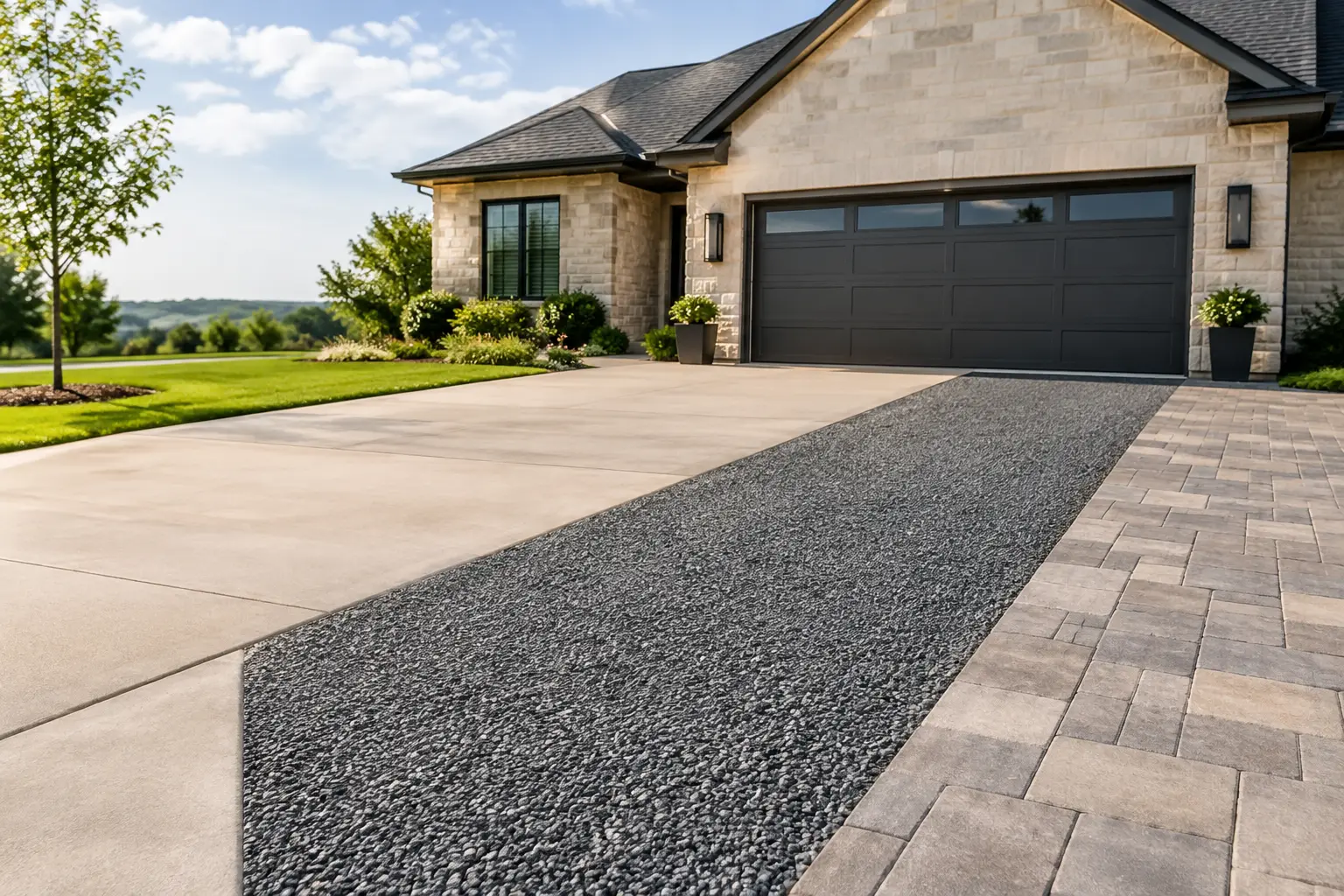
There is also a middle path. A concrete patio can be paired with a paver border, or pavers can define a dining area while concrete supports a larger covered living space. Mixed materials work best when the transitions, elevations, and drainage are planned from the beginning.
How to Make the Right Choice for Your Property
Choose concrete when you want a clean, expansive surface, a more efficient initial budget, and a simple maintenance routine. It is particularly practical for covered patios, outdoor kitchens, and large gathering areas where furniture stability and a continuous finish matter.
Choose pavers when architectural detail, pattern, repairability, and flexible surface performance are higher priorities. They are often worth considering for premium entertaining patios, pool decks, garden-connected spaces, and properties where a custom hardscape is central to the outdoor design.
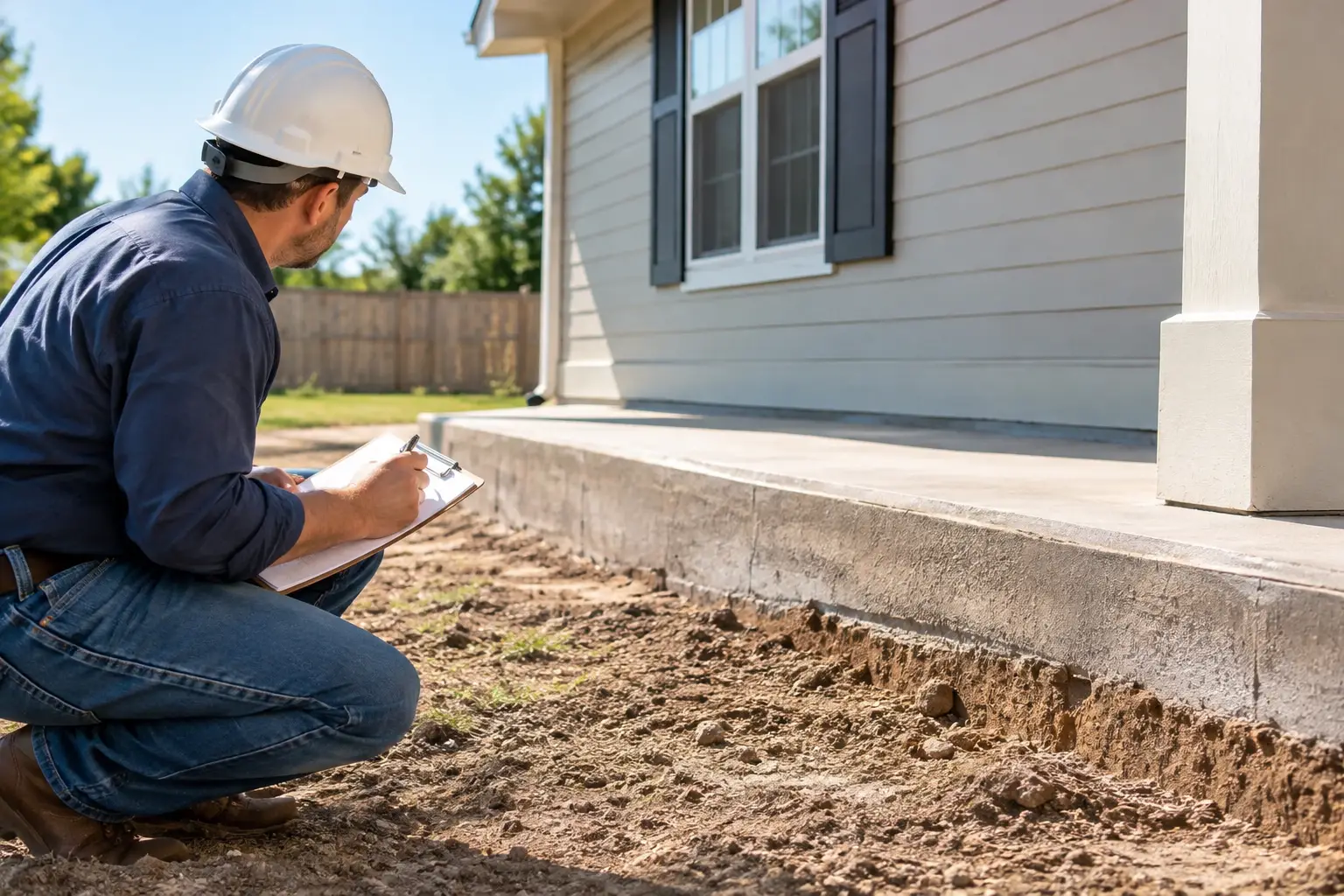
Before committing, have the patio area assessed for grade, drainage paths, access, existing trees, soil conditions, and nearby structures. The material matters, but craftsmanship below the finished surface matters more. At NXT Construction Inc., that means planning an outdoor living project around how the space will serve your family now and how it can support the next phase of your home.
The patio you choose should make it easier to step outside, host people you enjoy, and use more of the property you have worked hard to own. Start with the way you want that space to feel, then build the foundation to match.

2 Responses