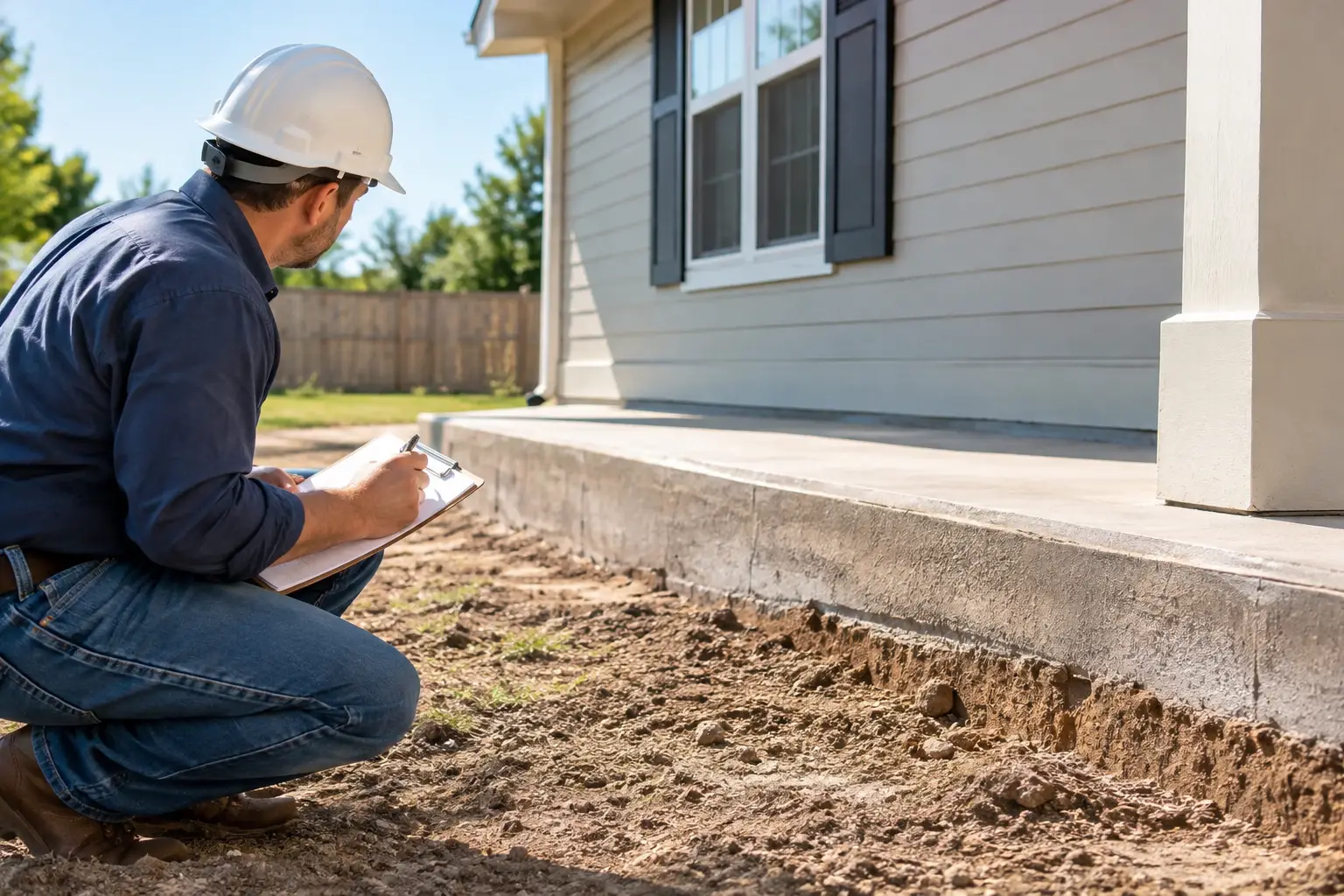
A Central Texas summer can turn the soil around your home hard and dry within weeks. Then a heavy rain arrives, the ground swells, and your slab responds to the change beneath it. To prevent slab foundation movement, the goal is not to make your property completely motionless. It is to limit the dramatic moisture swings, drainage problems, and hidden leaks that put uneven pressure on a concrete slab.
That approach protects more than concrete. A stable foundation helps safeguard your flooring, drywall, doors, windows, plumbing, and the long-term value of the home you have worked hard to build or improve.
Why Slabs Move in Central Texas
Many homes across Austin, Leander, Cedar Park, Georgetown, Liberty Hill, and Lakeway sit on expansive clay soils. Clay absorbs water and expands. When it dries, it shrinks and pulls away. This repeated cycle can cause sections of a slab to lift, settle, or rotate at different rates.
Some seasonal movement is common in this region. The concern is differential movement, meaning one part of the foundation moves more than another. A slab does not need to visibly crack to be under stress. Minor cosmetic cracks can occur in many homes, while recurring cracks, sticking doors, or sloping floors may indicate a larger issue that deserves a professional assessment.
Construction quality, lot grading, tree placement, roof runoff, plumbing leaks, and landscape watering all affect how consistently soil moisture is maintained around the foundation. There is no single fix for every property. The right solution depends on the home’s drainage pattern, soil conditions, age, and repair history.
How to Prevent Slab Foundation Movement
Keep moisture levels consistent around the perimeter
The ground immediately around a slab should not cycle between bone-dry and saturated. During extended dry weather, a controlled foundation watering plan can help reduce soil shrinkage. A soaker hose placed several inches away from the foundation, not directly against it, is often more effective than a sprinkler that wets the surface unevenly.
Water slowly enough for moisture to soak into the soil rather than run off. The schedule will vary with the weather, the type of soil, shade, and irrigation coverage. Overwatering can be as harmful as underwatering because saturated soil may swell and increase pressure against the foundation. The objective is moderate, even moisture, not wet soil.
Avoid relying on a fixed calendar alone. Check the soil regularly during drought conditions. If it is deeply cracked or pulling away from the house, it may be time to make careful adjustments. If the ground is already soft or water is collecting near the perimeter, stop adding water and address drainage first.
Direct roof runoff away from the house
A roof can shed thousands of gallons of water during a major storm. If gutters overflow or downspouts release water beside the slab, that concentrated runoff can saturate one section of soil while other areas remain dry.
Keep gutters clean and securely attached, especially before periods of heavy rain. Downspouts should carry water away from the foundation and release it onto a properly graded area, drainage swale, or approved extension system. The exact distance depends on the property layout, but the principle is simple: roof water should continue moving away from the structure, not pool near it.
Pay attention to areas where patios, walkways, driveways, or landscape borders meet the house. These hard surfaces can redirect water toward the slab when their slope is incorrect. A small drainage flaw can become a recurring source of soil movement over several seasons.
Maintain positive grading
The grade around your home should gently slope away from the foundation. Over time, mulch, new flower beds, erosion, settling soil, and remodeling projects can change that slope without homeowners noticing.
Do not pile soil or mulch high against exterior siding, brick weep holes, or foundation vents. Besides creating moisture concerns, it can conceal the drainage path and make inspections more difficult. If one side of the home stays wet long after rain while another side dries quickly, a site evaluation can identify whether regrading, a swale, a French drain, or another drainage improvement is appropriate.
Drainage systems are not one-size-fits-all. Installing a drain without identifying where the water originates and where it can safely discharge may simply move the problem to another part of the yard. A well-planned solution accounts for the entire property, including neighboring grades and hardscape.
Manage trees and landscaping with the slab in mind
Mature trees add shade, beauty, and value, but their roots can draw significant moisture from clay soil. The issue is often not roots physically lifting a slab. More commonly, roots create uneven drying beneath and around the foundation, particularly during long hot spells.
Before planting a new tree, consider its mature size, water demand, and distance from the home. Existing trees should be evaluated thoughtfully rather than removed automatically. Removing a large tree can also alter soil moisture patterns, so major landscape changes deserve a plan.
Choose planting beds and irrigation zones that support consistent moisture without directing excessive water toward the house. Keep dense shrubs and groundcover from blocking drainage routes or concealing cracks, leaks, and grade problems along the exterior wall.
Investigate plumbing leaks quickly
A leaking supply line, drain line, or irrigation pipe can saturate soil below or beside a slab for months before the problem becomes obvious. Unexplained increases in water bills, warm spots on floors, damp flooring, mildew odors, or a constantly running water meter can all warrant investigation.
Exterior leaks matter too. Check hose bibs, sprinkler heads, backflow systems, and irrigation lines for overspray or pooling near the home. If a leak is suspected beneath the slab, prompt leak detection can prevent a manageable repair from becoming a structural concern.
Watch for Changes Before They Become Major Repairs
Foundation movement is often gradual. A simple record of changes can help you and a qualified professional distinguish normal settling from active movement. Take dated photos of cracks, note doors that begin sticking, and observe whether gaps around trim or windows change with the seasons.
Look for patterns rather than reacting to one small crack. For example, a hairline drywall crack that remains unchanged may be cosmetic. A crack that widens, reopens after repair, or appears alongside uneven flooring and exterior brick separation deserves closer attention.
Do not cover recurring signs with caulk or paint and assume the issue is resolved. Cosmetic repairs have their place, but they should follow an understanding of the cause. Otherwise, the same crack may return because moisture, drainage, or structural movement is still active.
When a Professional Foundation Inspection Makes Sense
Call for an inspection when you see multiple signs of movement, notice a sudden change after a drought or major storm, or suspect a leak. This is especially wise before a large remodel, room addition, new flooring installation, or major outdoor project. Investing in a kitchen, bathroom, ADU, or patio is more secure when the supporting structure is evaluated first.
A thorough assessment should consider the slab, interior symptoms, exterior elevations, drainage, vegetation, and potential plumbing concerns. Recommendations should be tied to observed conditions, not a generic repair package. In some cases, drainage correction and moisture management may be the first step. In others, structural foundation repair may be necessary to stabilize the home and prevent further damage.
For Central Texas property owners, NXT Construction Inc. brings a practical, client-focused approach to foundation concerns, helping identify the work that serves both the home’s condition and the owner’s long-term plans.
Your foundation does not need perfect weather to perform well. It needs consistent care, smart water management, and timely attention when the home begins to show you something has changed.