A backyard ADU can do more than add square footage. For many Central Texas homeowners, it can create a private home for family today and a dependable income-producing space tomorrow. This ADU income example uses realistic planning assumptions to show how rental revenue, operating costs, construction choices, and financing can affect the numbers.
The goal is not to promise a fixed return. Rental demand, local regulations, property taxes, insurance, construction scope, and your financing all matter. But a clear example can help you decide whether an accessory dwelling unit belongs in your long-term property plan.
An ADU Income Example in Central Texas
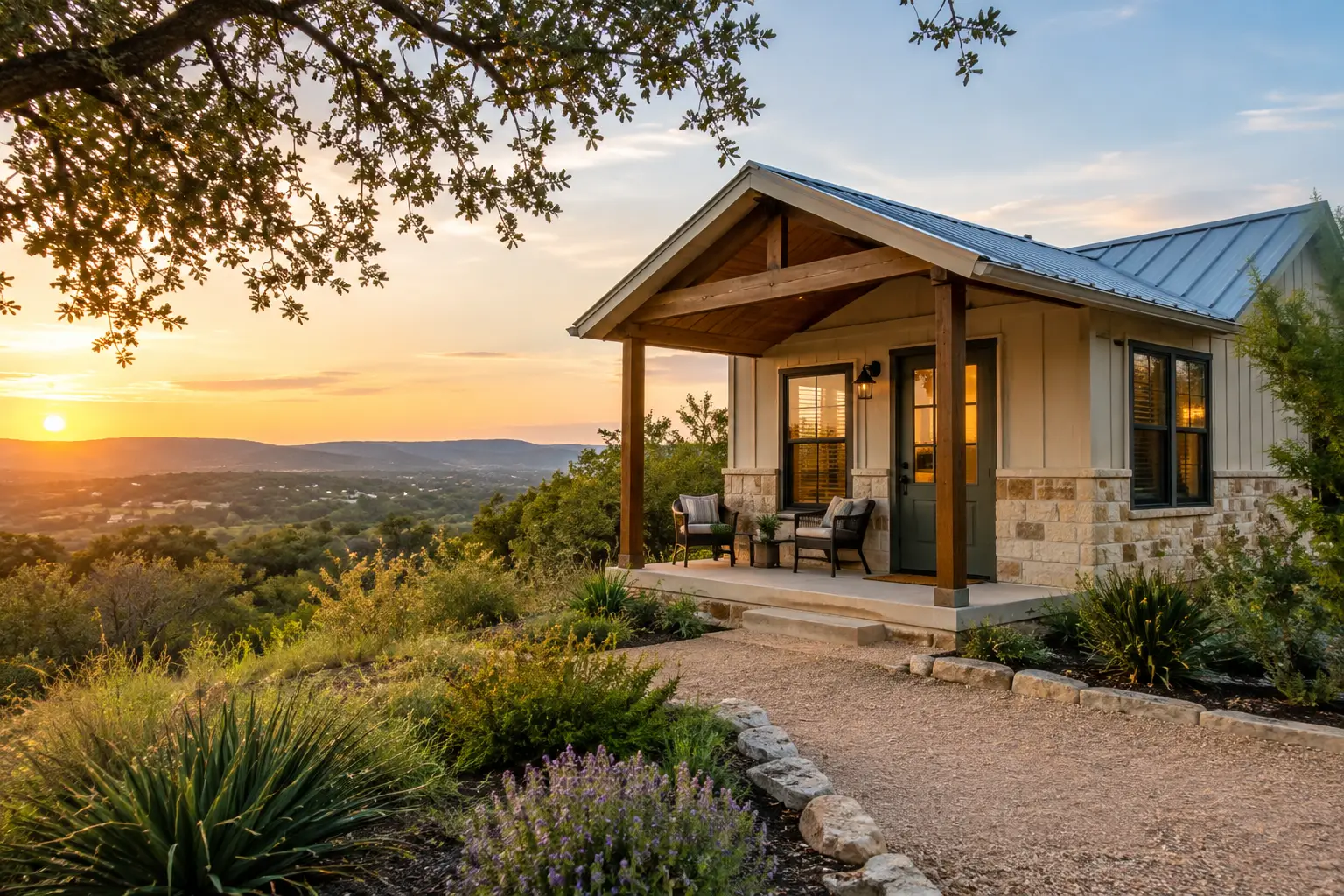
Consider a homeowner in the Austin metro area building a detached, 700-square-foot one-bedroom ADU with a full kitchen, bathroom, living area, laundry, and dedicated outdoor entry. It is designed as a durable long-term rental, with finishes that feel polished without turning every selection into a luxury upgrade.
For planning purposes, assume the completed ADU costs $210,000. That figure can include design, permits, site preparation, utility connections, foundation work, construction, appliances, and finishes. Some projects cost less, while properties with difficult access, substantial grading needs, utility upgrades, premium materials, or custom architecture can cost more.
Now assume the unit rents for $1,850 per month. This may be reasonable for a well-designed one-bedroom ADU in certain Austin-area neighborhoods, but rent should always be confirmed against current local comparable listings. At that rate, the gross annual rental income is:
$1,850 x 12 months = $22,200 per year
Gross rent is a useful starting point, but it is not the amount that lands in your pocket. A sound investment decision starts with the costs that continue after construction is complete.
Estimated annual operating costs
In this example, the owner budgets $5,350 per year for recurring expenses. That allowance could include property tax impact, landlord insurance, maintenance reserves, repairs, shared utility costs, advertising or leasing costs, and a vacancy reserve.
A simple breakdown might look like this:
- Property taxes and insurance: $1,650
- Utilities paid by the owner: $1,200
- Maintenance and repair reserve: $1,500
- Vacancy and turnover reserve: $1,000
Subtracting those estimated costs from gross income leaves a projected net operating income of $16,850 per year.
$22,200 gross rent – $5,350 operating costs = $16,850 net operating income
If the project were paid for in cash, that would represent an approximate 8% annual return before income taxes on a $210,000 construction investment. More importantly, the owner still holds a functional, permitted living space that may improve the property’s flexibility and market appeal.
How Financing Changes the Monthly Picture
Many homeowners do not pay cash for an ADU. They may use a home equity loan, home equity line of credit, construction financing, cash-out refinance, or another lending solution that fits their larger financial plan.
Suppose the homeowner puts $60,000 toward the project and finances the remaining $150,000. Loan payments will depend on the rate and term available at the time of borrowing. For a conservative planning exercise, assume annual debt service of approximately $13,800, or about $1,150 per month.
With $16,850 in annual net operating income and $13,800 in annual debt payments, the ADU produces about $3,050 per year in cash flow before income taxes, or roughly $254 per month.
That is not a get-rich-quick number. It is a measured example of an asset doing several jobs at once: helping offset its own construction cost, creating future housing options, and adding usable space to a property in a high-demand region.
There is also a different way to view the same project. A homeowner who needs a private suite for a parent, adult child, caregiver, or frequent guest may receive immediate lifestyle value before ever renting the unit. Later, when household needs change, the ADU can become a long-term rental, a workspace, or a place for returning family members. The strongest projects are designed for both present needs and future flexibility.
Why Rent Is Only One Part of the Decision
An ADU income example can look attractive on paper and still fail to match a homeowner’s goals if the plan ignores the property itself. A cramped layout, poor privacy, weak sound control, limited parking, or an awkward route to the unit can reduce rental appeal and create friction for everyone living on site.
The best income-producing ADUs feel intentional. A separate entrance, practical storage, in-unit laundry, energy-efficient insulation, durable flooring, and a well-planned kitchen can make a compact home more comfortable and easier to maintain. Outdoor separation matters, too. Even a modest patio, screened view, fence strategy, or dedicated walkway can help the main home and ADU feel like distinct spaces.
Construction quality affects the numbers over time. Choosing materials solely because they are inexpensive can lead to more maintenance, earlier replacements, and a unit that struggles to compete with newer rentals. At the same time, overspending on features that tenants will not value can unnecessarily extend the payback period. The right scope balances durability, local rental expectations, your home’s architecture, and your budget.
What Can Improve an ADU’s Earning Potential?
Location is the largest factor, but design and operations have meaningful influence. A clean, well-lit ADU near major employment centers, schools, medical facilities, or growing suburban hubs may command stronger rent than an equally sized unit with a less convenient location. In communities such as Leander, Cedar Park, Georgetown, Liberty Hill, Lakeway, and Austin, demand can vary significantly by neighborhood and property type.
A few decisions tend to support stronger long-term performance:
- Build a layout that works for a real resident, not just a floor plan. Prioritize storage, functional kitchen space, natural light, and a comfortable bathroom.
- Plan utility metering and access early. Clear agreements around water, electricity, internet, trash, and parking prevent avoidable conflicts.
- Use energy-conscious construction. Proper insulation, efficient HVAC, quality windows, and thoughtful shading can lower operating costs and improve comfort during Central Texas summers.
- Protect privacy for both households. Consider window placement, fencing, sound control, outdoor lighting, and separate paths from the beginning.
Before setting rent, review comparable long-term rentals with similar size, condition, amenities, and location. Do not base your estimate on the highest asking price you see online. A slightly more conservative rent assumption often creates a more resilient project budget.
Long-Term Rental Versus Short-Term Rental
Some owners initially see short-term rentals as the fastest path to higher revenue. In select locations, nightly rates can produce greater gross income than a year-long lease. They also come with more variables: furnishing costs, cleaning, booking management, occupancy swings, guest communication, local restrictions, and greater wear on the unit.
A long-term tenant may generate less gross revenue but can provide steadier occupancy and simpler operations. For a homeowner who wants predictable income and less day-to-day management, that trade-off can be worthwhile. Local rules and neighborhood restrictions can change, so verify current requirements before designing a project around short-term rental assumptions.
Questions to Answer Before Building
A good feasibility conversation should go beyond, “How much can I rent it for?” Start by asking what role the ADU needs to play in your life over the next five to 10 years. Will it house a family member first? Does it need to double as a home office? Is accessibility a priority? Would a two-bedroom layout create better flexibility, or would it add cost without enough rental benefit?
You should also confirm site constraints early. Setbacks, impervious cover, utilities, drainage, tree considerations, access for construction equipment, and permitting requirements can all influence cost and design. A contractor who understands the full property can help identify challenges before they become expensive change orders.
For homeowners considering an ADU as part of a larger remodel or property upgrade, coordinating the work can be especially valuable. Shared site work, electrical upgrades, drainage improvements, driveway changes, or outdoor living enhancements may be more efficient when planned as one connected investment.
An ADU should not be treated as a generic backyard structure. It is a small home, a long-term asset, and often a meaningful part of a family’s future. NXT Construction approaches ADU planning with that full picture in mind, helping Central Texas homeowners align design, construction quality, budget, and real-world use.
The most useful number is not the highest possible rent. It is the income estimate that still makes sense after you account for operating costs, financing, maintenance, and the way you want your property to serve you for years to come.