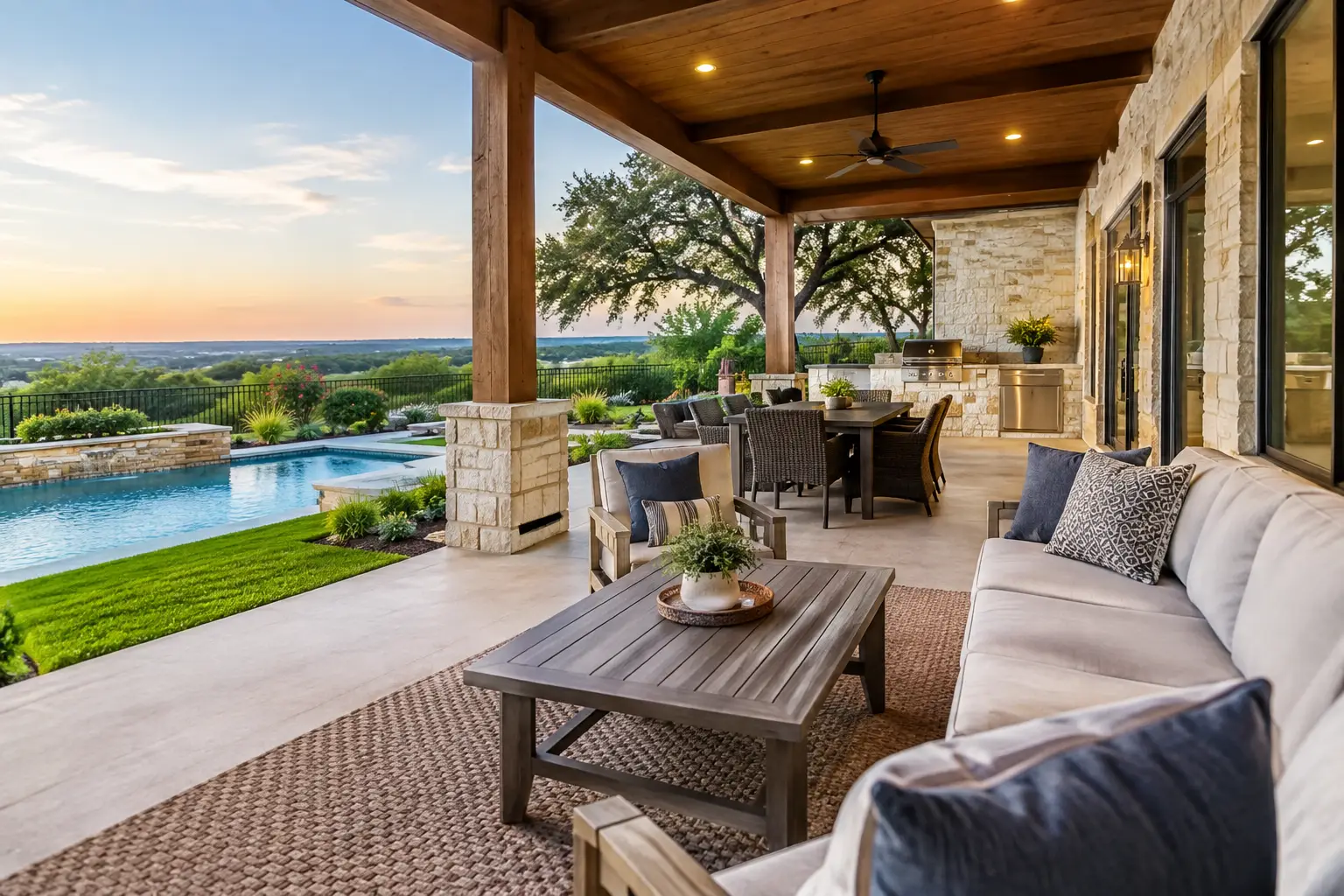
A Central Texas backyard can be brilliant at 8 p.m. and punishing by 2 p.m. That contrast is why texas patios backyard living is not simply about adding a slab and a few chairs. It is about creating an outdoor space that handles intense sun, sudden rain, shifting soil, smoke from the grill, busy family schedules, and the way you actually want to spend time at home.
The most successful patio projects feel like a natural extension of the house. They give a family room to gather, make weeknight meals easier, create a quiet place to work or recharge, and add a setting that makes guests want to stay awhile. Getting there requires more than attractive finishes. It requires thoughtful planning, sound construction, and materials suited to the Texas climate.
What Makes Texas Patios Different
Outdoor living in Austin, Liberty Hill, Leander, Cedar Park, Lakeway, Georgetown, and nearby communities comes with real construction considerations. Summer heat can make an uncovered patio unusable during the hours homeowners most want to use it. Heavy rain can expose poor grading quickly. Clay soils and drainage patterns can affect concrete performance, while strong sun fades lesser materials and dries out wood finishes faster than many people expect.
That does not mean every backyard needs the same solution. A compact lot may benefit most from a covered dining patio with integrated lighting. A larger property may have room for separate zones: one for cooking, one for lounging, and one around a pool, fire feature, or outdoor gym. The right design starts with the home, the lot, and the household’s daily routine.
A patio should also respect the architecture already there. A clean-lined contemporary home may call for large-format pavers, steel details, and a streamlined pergola. A Hill Country-style property may feel more cohesive with natural stone, warm wood, and a substantial covered structure. Good design is not about copying a photo. It is about building something that looks intentional on your property.
Plan Backyard Living Around Real Life
Before selecting stone, concrete color, or a pergola style, consider how the space needs to work. Homeowners often begin with a wish list, but a stronger approach is to identify the moments the patio should support. Do you want coffee outside before work? A place where children can play within view of the kitchen? A shaded dining area for weekend gatherings? A cooking zone that keeps the heat and mess outdoors?
Traffic flow matters. The path from the kitchen to the grill should be direct, especially if the patio will be used for entertaining. Seating should not block access to doors, gates, or the yard. If an outdoor kitchen is part of the plan, leave practical clearance around the grill, refrigerator, sink, and prep surface. A beautiful layout that creates bottlenecks becomes frustrating fast.
Think about privacy and sightlines, too. A patio can frame a mature oak, a pool, or a view, but it can also unintentionally put the seating area in full view of a neighboring second-story window. Screening, landscape beds, strategic rooflines, and carefully placed structures can make an open backyard feel more comfortable without closing it off.
Shade Is a Comfort System
In Central Texas, shade is not a decorative extra. It is what determines whether a patio earns regular use from late spring through early fall. The best choice depends on orientation, budget, and the amount of weather protection you want.
A pergola offers filtered light and architectural character, and it can be an excellent solution where breezes and partial sun are welcome. It is less effective, however, for stopping rain or delivering deep afternoon shade unless it is paired with a properly designed cover system. A solid patio cover provides more dependable protection from heat and weather, particularly on west-facing exposures. It may cost more and require closer coordination with the home’s roofline, drainage, and structural connections, but it usually creates a more functional all-season room outdoors.
Ceiling fans can improve comfort in covered areas, while recessed lighting and task lighting extend the patio’s use after dark. For homeowners who entertain frequently, layered lighting matters: brighter light at cooking surfaces, softer illumination at seating areas, and clear lighting along steps and walkways.
Choose Materials Built for Texas Conditions
Material choices shape the patio’s appearance, maintenance needs, and long-term performance. Concrete remains a practical foundation for many outdoor living projects because it is durable, adaptable, and can be finished in numerous ways. A simple broom finish is dependable and slip-resistant. Stamped or stained concrete can provide more visual character, though it needs proper installation and ongoing attention to protect its finish.
Natural stone delivers a distinctive Texas look and can add texture that feels connected to the landscape. It is an excellent option for patios, retaining walls, fireplaces, and outdoor kitchens, but installation quality matters. Uneven or poorly set stone can create trip hazards and drainage issues. Pavers offer another strong choice, particularly when homeowners want visual pattern and the ability to address a localized repair more easily than with a large continuous slab.
There is no universal best material. Light-colored surfaces may stay more comfortable underfoot in the sun, but they can show stains more readily. Darker materials can create dramatic contrast, yet they absorb more heat. Textured finishes can improve traction around pools and exposed areas, although aggressive texture may be less comfortable for bare feet. The goal is to balance beauty with how the surface will be used every day.
Drainage and Structure Come First
A patio should direct water away from the home, not trap it against the foundation. This is one of the least glamorous parts of a backyard project, yet it is among the most important. Proper slope, drainage routes, expansion joints, and transitions between hardscape and landscape all help manage water during heavy Texas rain.
Existing conditions deserve a close look before construction begins. Downspouts, grade changes, mature tree roots, irrigation lines, and prior concrete work can influence the final design. If a property has signs of settling, cracking, standing water, or drainage concerns, those conditions should be evaluated rather than covered up by a new patio. A well-built outdoor upgrade protects the investment in the home as well as the enjoyment of the yard.
Texas Patios Backyard Living Features Worth Adding
Once the patio’s structure and layout are resolved, features can turn it into a true outdoor living environment. An outdoor kitchen is a natural fit for homeowners who grill often or host family and friends. The most useful kitchens prioritize workable counter space, weather-rated storage, a reliable grill location, and enough room for more than one person to move around. A large built-in kitchen is not always necessary. For some households, a focused grill island with prep space and a small refrigerator delivers the better return.
Fire features deserve the same practical thinking. A fireplace can become a strong visual anchor under a covered patio, while a fire pit may suit a more open seating area. Local conditions, safety clearances, fuel choice, and prevailing wind all affect the right placement. Smoke that regularly blows into the seating area will limit how often the feature is used.
Other additions can be quieter but just as valuable: built-in benches for flexible seating, storage for cushions and pool items, outdoor-rated outlets for work or holiday lighting, and dedicated areas for fitness equipment. Families with multigenerational needs may also plan the patio as a connection between the main house and an ADU or guest suite, giving everyone a shared gathering place with room to breathe.
Build for Value, Not Just the Reveal
A finished patio should photograph well, but its real value comes from years of dependable use. That means using appropriate footings and framing for overhead structures, selecting finishes that fit the exposure, planning for maintenance access, and making sure every transition feels intentional. Cutting corners on drainage, structural connections, or prep work may save money early, but it can create expensive corrections later.
A construction partner should help translate broad ideas into practical decisions. NXT Construction Inc. approaches outdoor living as part of the whole property, coordinating the design, site conditions, materials, and construction details that make a patio feel integrated rather than added on. Clear communication during planning is especially valuable when a project includes concrete, a cover, electrical work, a kitchen, landscaping coordination, or foundation and drainage considerations.
The best backyard is not necessarily the biggest one or the one with the most features. It is the place that makes ordinary evenings feel easier to enjoy. Build for the shade you need, the gatherings you host, the weather your property faces, and the life you want your home to support.