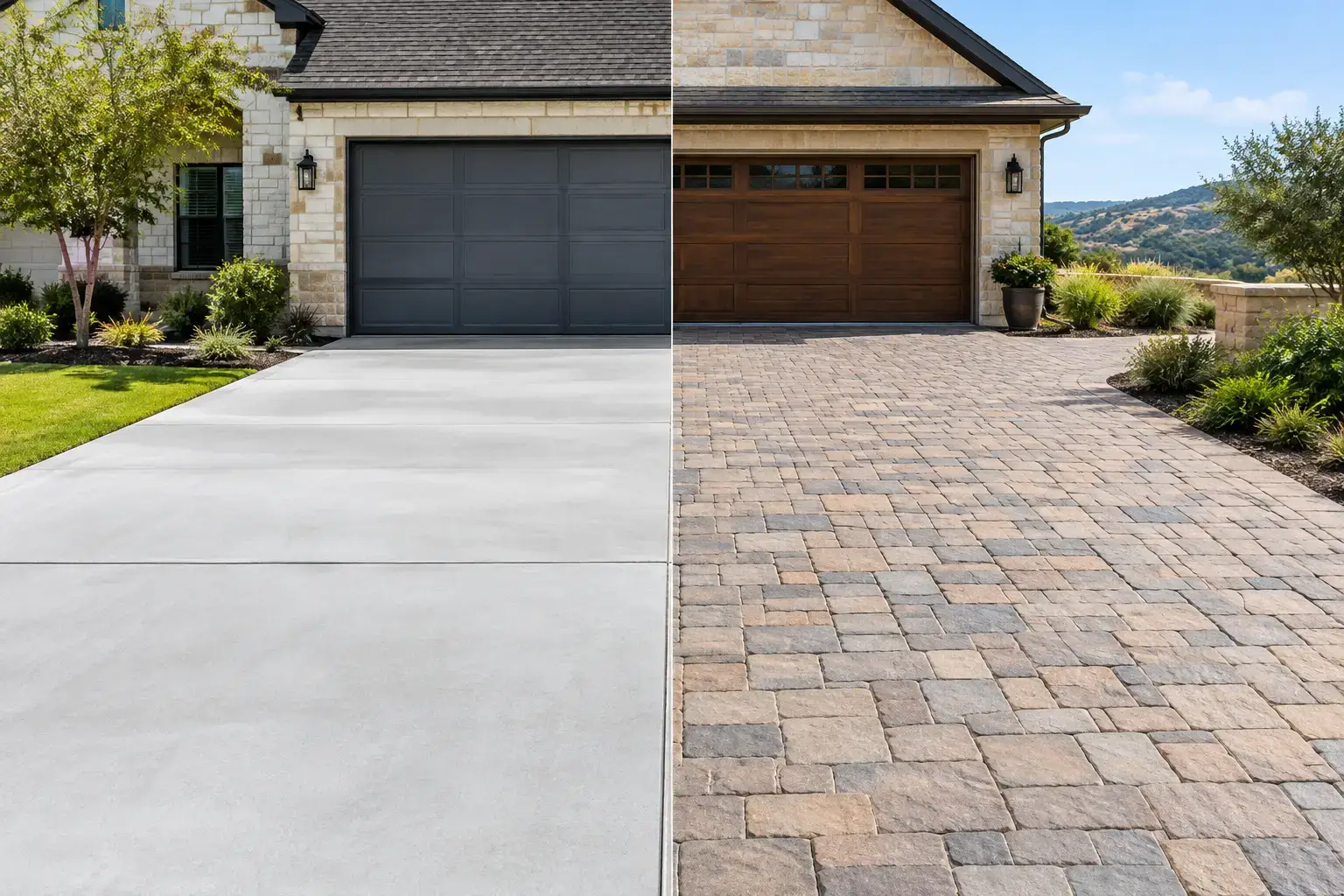
A driveway has a tougher job in Central Texas than most homeowners realize. It handles intense summer heat, sudden downpours, shifting soils, daily vehicle weight, and the first impression of your property. When weighing concrete versus paver driveways, the right choice is not simply about appearance or upfront cost. It is about how the material will perform on your specific site, complement your home, and support the way your family lives.
Concrete offers a clean, substantial look with a straightforward installation process. Pavers bring texture, design flexibility, and repair options that appeal to homeowners creating a more custom exterior. Both can be excellent investments when the base preparation, drainage plan, and installation quality are right.
Concrete Versus Paver Driveways: The Core Difference
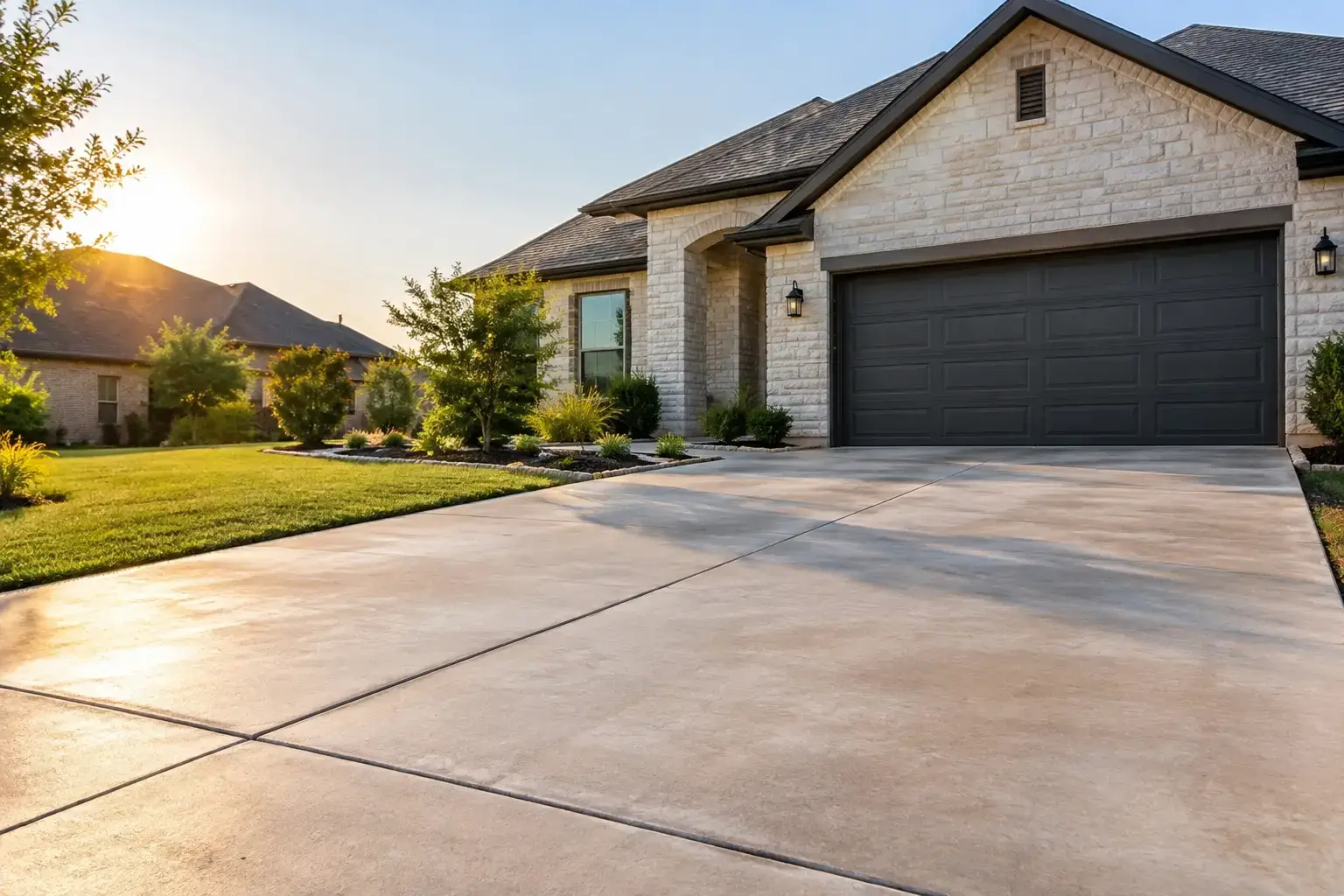
A concrete driveway is a continuous slab poured over a properly prepared base. It can be finished in a traditional broom texture or upgraded with color, exposed aggregate, stamping, or decorative borders. The finished surface feels cohesive and modern, making it a natural fit for many Central Texas homes, from Hill Country properties to contemporary new builds.
A paver driveway is built from individual units installed over a compacted aggregate base and bedding sand. The pavers interlock to create a strong surface while maintaining visible joints between pieces. Those joints can support drainage and give the driveway a detailed, architectural appearance that works particularly well with stone facades, brick homes, and outdoor living areas.
The distinction matters because concrete relies on control joints and slab integrity to manage movement. Pavers distribute movement across many individual pieces. Neither approach eliminates the need for thoughtful site preparation, especially where drainage issues, tree roots, or expansive soil may affect the driveway over time.
Upfront Cost and Long-Term Value
For many property owners, concrete is the more budget-conscious starting point. A standard concrete driveway generally requires fewer individual materials and less installation labor than a full paver system. Decorative finishes can raise the investment, but concrete often remains the more economical option for a large drive, side parking area, or straightforward replacement project.
Pavers usually cost more upfront because the installation is more labor-intensive. The crew must excavate, build and compact the base in layers, establish precise grading, place each paver, add edge restraints, and finish the joints. Premium paver styles, patterns, and borders can further increase the final price.
That higher initial investment can make sense when curb appeal is a major priority. A well-designed paver driveway can create a custom arrival experience and tie together walkways, patios, pool decks, and outdoor kitchens. For homeowners planning a broader exterior transformation, pavers can provide a unified visual language that is difficult to duplicate with a plain slab.
Long-term value depends on condition as much as material. A properly installed concrete driveway can serve a home for decades. A properly installed paver driveway can also provide long service, with the advantage that damaged sections may be lifted and repaired without replacing the entire surface. The best financial decision often comes down to the project scope, the home’s value, and how long you plan to enjoy the property.
Durability in Central Texas Heat and Rain
Central Texas weather puts every exterior surface to the test. Summer temperatures can be extreme, while heavy rain may arrive quickly after a long dry stretch. Soil movement is also a real consideration in many Austin-area communities.
Concrete is exceptionally strong under vehicle loads when it is correctly designed for the intended use. A driveway serving passenger vehicles has different needs than one handling a heavy truck, trailer, RV, or frequent service vehicles. Proper thickness, reinforcement where appropriate, joint placement, and a stable base all influence performance far more than the visible finish alone.
Concrete can develop cracks over time. Control joints are intentionally placed to encourage cracking in less noticeable locations, but they cannot guarantee a crack-free slab. Small cracks may be cosmetic, while wider or displaced cracks can indicate movement beneath the surface, drainage trouble, or an issue that deserves professional evaluation.
Pavers are not immune to movement, but their segmented design handles minor settlement differently. Rather than one slab cracking across its surface, a paver area may show a low spot, uneven joint, or shifted section. If the underlying cause is corrected, that area can often be removed, regraded, and reinstalled. This repairability is one of the strongest arguments for pavers on properties with localized movement risks.
Drainage is essential for both materials. Water should move away from the home, garage, and foundation rather than collecting along the driveway edge. Paver joints can allow some water to pass through, depending on the system, but they are not a substitute for a complete drainage strategy. Grading, swales, drains, and the driveway’s slope must work together to protect the property.
Maintenance and Repairs
Concrete is relatively simple to maintain. Routine cleaning keeps dirt, leaves, and automotive fluids from staining the surface, while periodic sealing can help protect decorative finishes and improve stain resistance. Avoid using harsh de-icing chemicals if freezing weather occurs, and address oil spills promptly.
The challenge with concrete is that repairs can remain visible. A patched section may differ in color and texture from the original slab, especially after years of weathering. If a large section has settled or cracked extensively, replacement may provide a better visual and structural result than repeated patching.
Pavers require occasional attention to the joints. Sand can wash out over time, weeds may appear if maintenance is neglected, and some areas may need re-leveling. Sealing is optional but can enhance color and help resist stains. A properly installed edge restraint is critical because it keeps the field of pavers from spreading under vehicle traffic.
When repairs are needed, pavers offer a clear practical advantage. A contractor can remove individual units, correct the base beneath them, and reset the surface. If you keep a small supply of matching pavers from the original project, future repairs can blend more naturally. That is particularly valuable for driveways with intricate patterns or premium finishes.
Curb Appeal and Design Flexibility
Concrete no longer has to mean plain gray. It can be shaped with graceful curves, colored in warm earth tones, finished with exposed aggregate, or bordered with stone and pavers. For homeowners who want a clean, low-visual-noise design, a wide concrete driveway can make a property feel open, polished, and accessible.
Pavers offer more design choices from the start. You can vary color, pattern, scale, and border details to complement the architecture of the home. A charcoal-and-sandstone palette may suit a modern exterior, while tumbled pavers can add character to a traditional or Hill Country-inspired property. Pavers also make it easier to create visual transitions between the driveway, front walk, courtyard, and patio.
The trade-off is that more detail requires more planning. A busy pattern can compete with an already detailed facade, while the wrong color selection may show dust, tire marks, or fading more readily. The strongest designs consider the entire exterior rather than selecting a driveway material in isolation.
Which Driveway Is Right for Your Property?
Choose concrete when you want a durable, clean-lined driveway with a more efficient upfront investment. It is often the practical choice for larger drive areas, simple layouts, and homeowners who prefer low routine maintenance. It can still deliver a high-end result when paired with thoughtful grading, decorative finishing, landscaping, and quality workmanship.
Choose pavers when custom design, repair flexibility, and a more distinctive exterior are central to the project. They can be an especially smart fit for homes with premium hardscaping, curved driveways, visible entry courts, or sites where you want the ability to address localized settling without replacing an entire slab.
Before choosing either material, consider the site itself. The driveway should be evaluated alongside existing drainage, soil conditions, garage elevation, vehicle use, mature trees, and nearby foundation concerns. A beautiful driveway that directs water toward the house or rests on an inadequate base is not a lasting improvement.
At NXT Construction Inc., the goal is to help Central Texas property owners make decisions that support both the look of their home and the demands of everyday life. A clear on-site assessment can reveal whether concrete or pavers better serve your budget, drainage needs, and long-term plans. Start with the ground beneath the driveway, then build an arrival experience you will be proud to come home to.