A Central Texas downpour can reveal more about your property than a year of sunny weather. Water that pools beside the slab, rushes from a roof valley, or saturates one side of the yard can quietly affect soil movement, concrete, landscaping, and indoor comfort. Knowing how to assess foundation drainage gives you a practical way to identify these concerns before they become a larger repair project.
The goal is not to eliminate every bit of moisture from your yard. Your foundation and landscaping need sensible water management, especially in the expansive clay soils common around Austin, Leander, Cedar Park, Georgetown, Lakeway, and Liberty Hill. The goal is to move concentrated water away from the home while maintaining grading that supports stable soil conditions around the slab.
How to Assess Foundation Drainage Around Your Property
Start your assessment after a meaningful rainstorm, when the evidence is easiest to see. Walk the exterior slowly and look at how water travels from the roof, across paved surfaces, and through landscaped areas. Take photos of anything that concerns you. They can help you compare conditions after future storms and give a foundation professional useful context during an inspection.
Pay attention to the entire site rather than only the foundation edge. A drainage issue often starts uphill, at a clogged gutter, a short downspout, an improperly pitched patio, or a neighboring slope that directs runoff toward the structure.
Check the grade next to the foundation
The soil and hardscape immediately around the house should generally slope away from the foundation. You do not need surveying equipment for an initial review. Stand back from each exterior wall and look for low spots, sunken mulch beds, edging that creates a dam, or soil that appears to rise toward the brick, siding, or stucco.
A useful rule of thumb is that the ground should fall about 6 inches over the first 10 feet away from the home where site conditions allow. Some lots, retaining walls, and tight side yards require a more tailored solution, but water should not be directed back toward the slab.
Look closely at the clearance between soil and exterior finishes. Soil or mulch piled too high can trap moisture near the wall, hide termite activity, and create a path for water intrusion. Regrading may be enough in a small area, but significant changes should be planned carefully so they do not create drainage problems elsewhere.
Follow the water from the roof
Your roof collects a remarkable amount of water during a Texas storm. Gutters and downspouts are often the first line of defense for foundation drainage, yet they are easy to overlook until water is visibly overflowing.
Check for leaves, roof grit, loose hangers, sagging gutter sections, and leaks at seams. Then watch where each downspout empties. Water should discharge well away from the foundation and should not pour onto a walkway, driveway, or planter that sends it back toward the house.
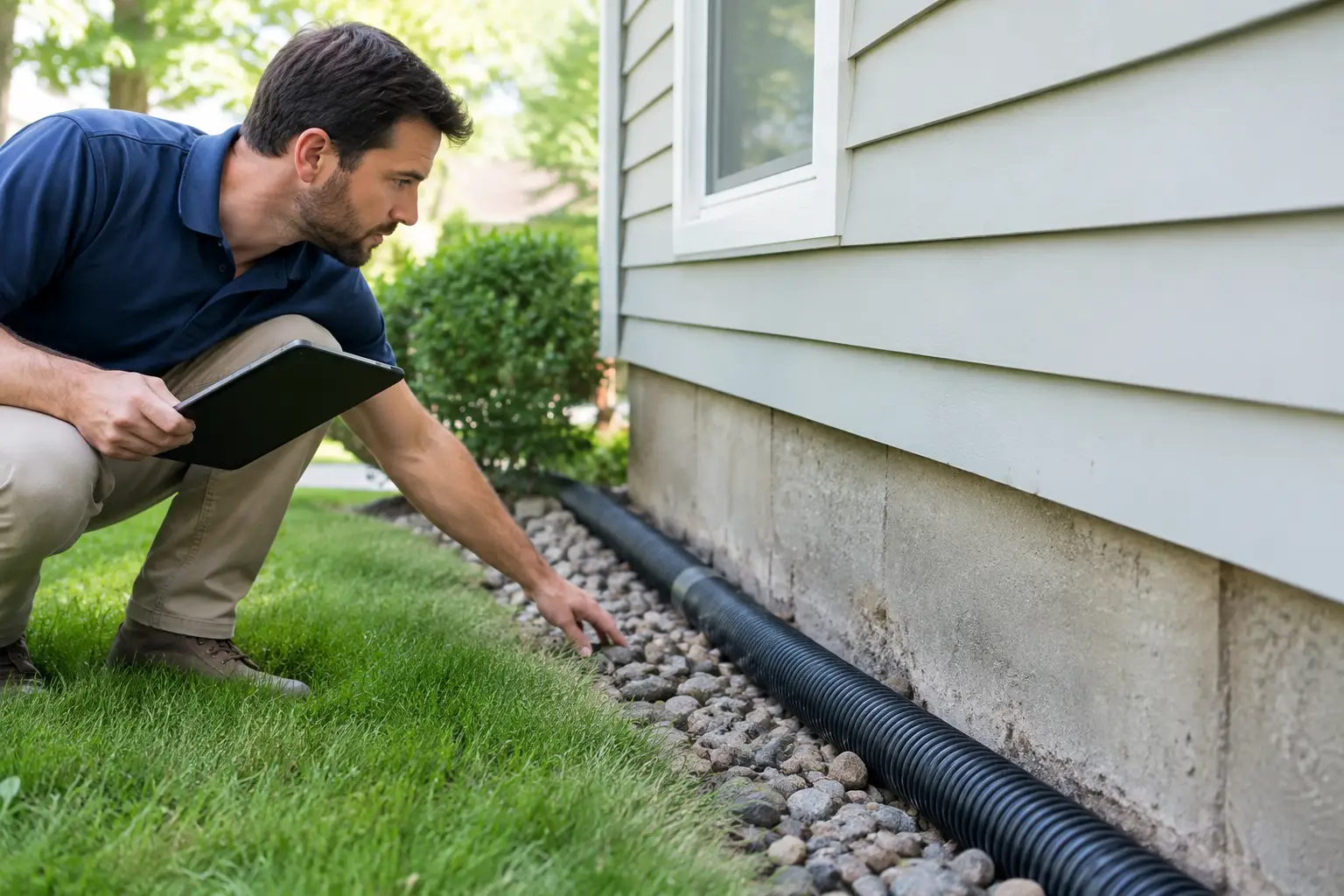
Downspout extensions, underground drain lines, splash blocks, and properly designed swales can all work well. The right choice depends on the lot layout, soil, landscaping, and local drainage path. An underground line is not automatically better if it has poor slope, gets clogged, or discharges into an area that already holds water.
Look for standing water and soft soil
Puddles that remain long after surrounding ground has dried deserve attention. Mark where they appear and note whether they occur next to the home, in a side yard, at the end of a downspout, or near a patio. Saturated soil can indicate a grading problem, compacted ground, a broken irrigation line, or runoff being concentrated in the wrong place.
Do not assume every wet area is caused by rain. Turn off irrigation for a day or two, if practical, and check whether the area remains wet. A hidden sprinkler leak can keep soil around a foundation unevenly moist, which is particularly problematic in clay-heavy Central Texas soils that expand when wet and shrink as they dry.
Inspect patios, driveways, and other hardscape
Concrete and pavers should help guide water away from the structure, not collect it. Check the slope of patios, walkways, porch landings, and driveways after rainfall. Water that runs toward a garage, exterior door, or foundation wall can eventually contribute to moisture intrusion and soil instability.
Small settlement, cracked concrete, or a low threshold may be a drainage warning rather than only a cosmetic issue. At the same time, a crack does not prove foundation failure. Concrete can crack for several reasons, including normal curing, tree roots, loading, and soil movement. The important question is whether the crack is changing and whether it is paired with water-management concerns.
Interior Clues That Support a Drainage Assessment
Drainage concerns often show up outside first, but the interior can provide important confirmation. Walk through the home and look for doors that suddenly stick, new drywall cracks around openings, separated trim, uneven-feeling floors, or windows that no longer operate smoothly. In a commercial property, watch for cracks at wall intersections, gaps around storefront systems, or moisture staining near exterior walls.
These symptoms can be associated with movement, but they need careful interpretation. Seasonal changes can cause minor cosmetic cracks, and a single sticking door may result from humidity or normal wear. A pattern of changes, especially after heavy rain or prolonged drought, is more meaningful than one isolated mark.
Also inspect closets, utility rooms, and exterior-facing baseboards for a musty odor, discoloration, or damp materials. Foundation drainage is related to surface water management, but plumbing leaks, failed flashing, and wall leaks can create similar symptoms. A thorough assessment separates the source of the water from the visible result.
Consider Central Texas Soil, Landscaping, and Irrigation
Foundation drainage is not only about getting rid of water. In much of Central Texas, dramatic wet-to-dry swings can stress expansive soils. A property that is soaked on one side by a downspout and extremely dry on the other side may experience uneven soil movement beneath the slab.
Landscaping plays a role. Large mature trees can draw substantial moisture from soil, while dense planting beds can hold water against the house if they are built too high or lack drainage. Decorative rock, landscape borders, and plastic edging can also redirect water in unexpected ways.
Irrigation should be checked seasonally. Sprinkler heads should not spray the house or repeatedly soak the perimeter. Controllers should be adjusted for rainfall, temperature, and plant needs. The ideal approach is consistency, not excessive watering or a completely dry foundation perimeter during a long hot stretch.
A Simple Foundation Drainage Checklist
During your next rain event, document these conditions:
- Overflowing gutters, leaking seams, or downspouts that discharge beside the slab.
- Soil, mulch, patios, or driveways that slope toward the structure.
- Standing water that remains near the foundation after the rest of the yard drains.
- Erosion channels, washed-out mulch, or exposed roots showing concentrated runoff.
- Persistent wet spots that may point to an irrigation or plumbing leak.
- New interior cracks, sticking doors, moisture staining, or changes that appear after wet weather.
Photos, dates, and notes about the weather make this checklist more useful. They help distinguish a one-time storm event from a condition that repeatedly affects the property.
When a Professional Assessment Is Worth It
Call for a professional evaluation if water regularly collects within several feet of the home, grading appears to direct runoff toward the foundation, or you notice structural changes alongside drainage problems. You should also seek help if an attempted fix, such as adding soil or a downspout extension, moves the problem to another area of the property.
A qualified contractor can evaluate roof runoff, surface grading, irrigation, hardscape slope, drainage routes, and visible foundation conditions as one connected system. Possible solutions may include regrading, gutter and downspout improvements, French drains, swales, catch basins, concrete adjustments, irrigation repairs, or foundation repair when evidence supports it. The best recommendation is rarely the biggest project. It is the solution that addresses the actual source of the water while protecting your home, budget, and long-term plans.
NXT Construction Inc. approaches drainage and foundation concerns with that broader property perspective, helping Central Texas owners understand what they are seeing before work begins. A professional inspection can replace guesswork with a clear plan and give you confidence in the next decision.
Water will always move across your property. The difference is whether your home is prepared to guide it safely away. A thoughtful inspection after the next storm can be one of the most valuable steps you take to protect the space you have worked hard to build.