A Central Texas attic can reach punishing temperatures long before the afternoon is over. If rooms beneath it run hot, your HVAC system struggles to keep up, and summer utility bills feel out of proportion to the house, spray foam insulation may be part of the answer. The right insulation strategy can make a home feel more consistent, protect critical building areas from humid air, and support the long-term performance of a remodel, addition, or new build.
Why Spray Foam Changes How a Home Performs
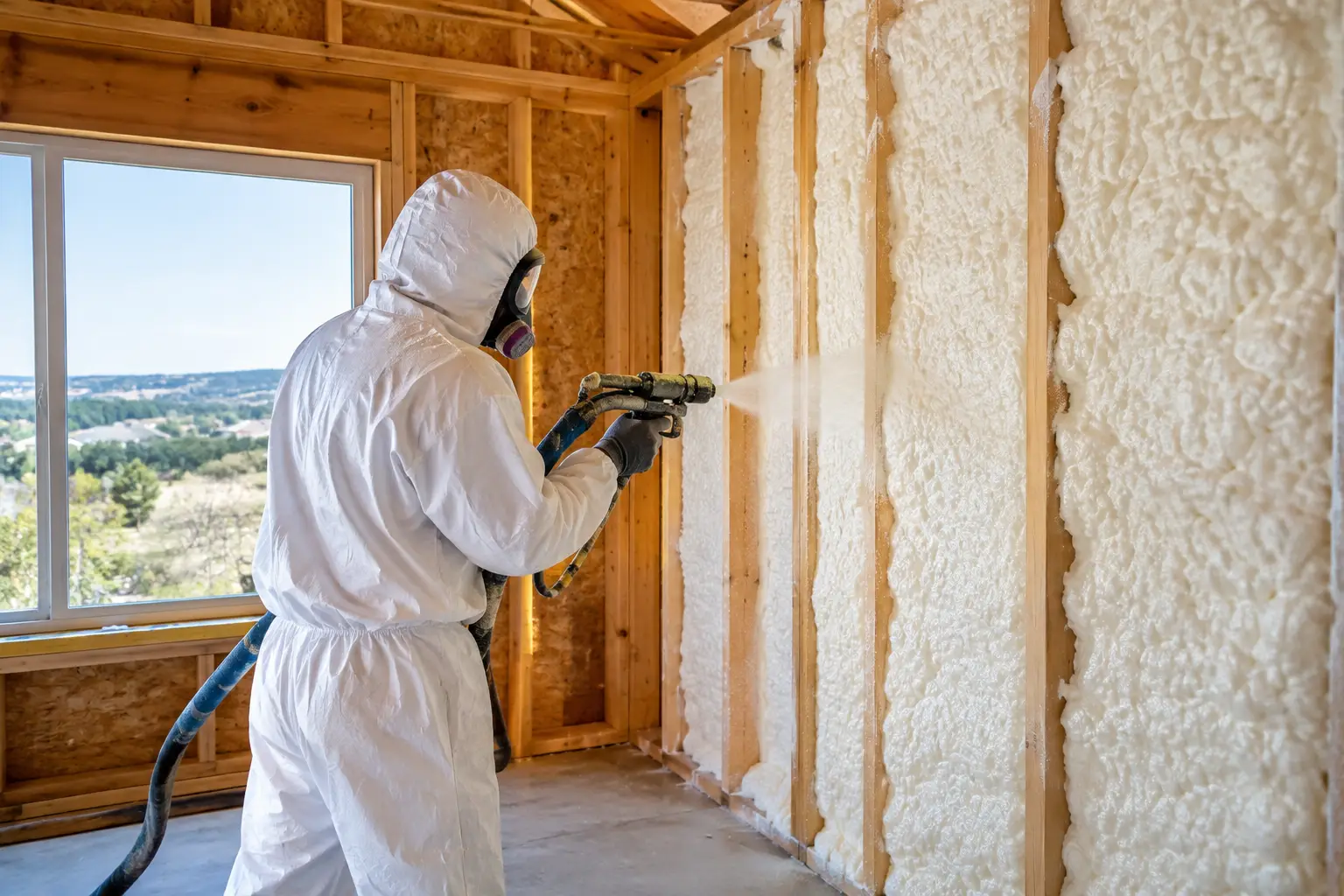
Traditional insulation materials are designed primarily to slow heat transfer. Spray foam does that, but its greater advantage is air sealing. When properly installed, it expands into gaps around framing, penetrations, and irregular surfaces where conditioned air often escapes and outside air enters.
That distinction matters in Austin, Cedar Park, Leander, Georgetown, Lakeway, Liberty Hill, and surrounding communities. Central Texas homes face high summer heat, humidity swings, sudden storms, and occasional winter cold snaps. Small air leaks can create hot upstairs bedrooms, damp mechanical areas, dust intrusion, and HVAC equipment that runs longer than it should.
By reducing uncontrolled air movement, spray foam can help create a more stable indoor environment. Homeowners often notice that rooms hold their temperature better, drafts are reduced, and the air conditioner does not have to fight against a blazing attic for as many hours. The exact improvement depends on the home’s design, existing insulation, windows, ductwork, and HVAC condition, so no responsible contractor should promise a one-size-fits-all result.
Open-Cell vs. Closed-Cell Spray Foam
The best foam for a project depends on where it will be installed and what the building assembly needs to do. Open-cell and closed-cell foam both air seal, but they perform differently.
Open-Cell Foam for Interior Applications
Open-cell foam is lighter and expands significantly during installation. It is commonly used in attic roof decks, interior walls, and other areas where a deep cavity is available. Its expansion helps it reach irregular gaps, making it useful for creating a continuous air barrier across complex framing.
For many Central Texas homes, open-cell foam at the roof deck can bring the attic closer to the home’s conditioned environment. That can be especially valuable when ductwork and HVAC equipment are located in the attic. Instead of operating in an extremely hot space, those components work in a more moderated environment.
Open-cell foam is not a waterproofing material. It can allow moisture vapor to move through it, which is why the roof assembly, ventilation plan, and any required coatings or vapor-control layers must be evaluated carefully. It is an excellent option in the right location, not an automatic solution for every attic.
Closed-Cell Foam for Higher R-Value and Moisture Resistance
Closed-cell foam is denser and provides a higher R-value per inch than open-cell foam. It also resists moisture more effectively and adds rigidity to certain assemblies. That makes it a strong choice for areas with limited cavity depth, exterior walls, crawl spaces, rim joists, metal buildings, and select commercial applications.
Because closed-cell foam is more material-intensive, it typically costs more. The additional investment may make sense where moisture resistance, compact thickness, or structural reinforcement is a priority. In other areas, open-cell foam or a hybrid insulation approach can deliver better value.
The goal is not to choose the most expensive product. It is to select the insulation assembly that supports your property’s design, budget, comfort goals, and local conditions.
Where Spray Foam Delivers the Most Value
A full-house installation is not always necessary. Often, the highest return comes from addressing the building areas responsible for the greatest heat gain and air leakage.
Attic roof decks are a common focus for homeowners planning a remodel, addition, or HVAC upgrade. Sealing the roofline can reduce the extreme heat surrounding ducts and air handlers while making attic access more practical for maintenance. It can also support a more comfortable second floor in homes where heat collects near the ceiling.
Exterior walls may be worth evaluating during a major renovation, particularly when drywall or siding is already being removed. Spray foam can seal around plumbing, electrical penetrations, and framing that would otherwise be difficult to access after finishes are installed.
Crawl spaces, rim joists, garage ceilings, and converted spaces also deserve attention. A room over a garage, for example, can feel noticeably colder in winter and hotter in summer if the floor assembly is poorly insulated or exposed to air movement. A targeted application may improve comfort without expanding the scope into areas that do not need it.
For commercial clients, spray foam can be effective in warehouses, offices, retrofits, and metal structures where large roof areas and air leaks affect operating costs and occupant comfort. The right specification depends on the building’s use, roof type, fire-safety requirements, and mechanical systems.
Installation Quality Matters as Much as the Product
Spray foam is not a material to treat as a quick add-on. Its performance depends on surface preparation, proper mixing, consistent application thickness, and a clear understanding of how the entire building manages heat, air, and moisture.
Before work begins, the installation area should be inspected for active roof leaks, water damage, mold concerns, or damaged framing. Foam can help manage air leakage, but it should never be used to cover up an unresolved moisture problem. A sound roof, dry substrate, and properly planned assembly come first.
Professional installers also need to protect occupied areas and follow required safety procedures during application. The home typically needs to be vacated during spraying and for the re-entry period specified for the product and job conditions. Once cured, the material performs as part of the building enclosure, but the application process deserves careful coordination.
If foam is applied to an attic roof deck, the home’s ventilation strategy may need to change. An attic designed as a vented space cannot simply be converted without considering combustion appliances, fresh-air needs, duct configuration, and local code requirements. This is where experienced project planning protects homeowners from expensive corrections later.
Planning Spray Foam During a Remodel or New Build
The best time to consider spray foam is before walls are closed and before mechanical systems are finalized. In a new custom home, it can be coordinated with framing, roofing, HVAC design, and electrical work so the entire home performs as intended.
During a remodel, the conversation should be broader than insulation alone. If you are opening walls for a kitchen expansion, building an ADU, converting a garage, or adding a primary suite, insulation decisions should align with the new space’s intended use. A home office needs predictable comfort through long workdays. A rental unit needs efficient systems that tenants can operate easily. A family room designed for entertaining should not become uncomfortable every summer afternoon.
NXT Construction Inc. approaches these decisions as part of the larger project plan, balancing material performance with design, budget, code requirements, and the way you want to live in the finished space.
Is Spray Foam Worth the Cost?
Spray foam usually costs more upfront than fiberglass or cellulose, so the question is fair. It can be worth the investment when air sealing is a major issue, when attic ductwork is exposed to extreme conditions, when cavity depth is limited, or when moisture resistance is a priority.
It may be less compelling when the existing building envelope is already well sealed, the project budget is tight, or another insulation system can meet the performance target at a lower cost. In some cases, a hybrid approach works best: use spray foam in hard-to-seal transitions and moisture-prone locations, then use another insulation type in larger, straightforward areas.
A thoughtful inspection helps identify what your property actually needs. Rather than choosing insulation based on advertising claims, start with the rooms that feel uncomfortable, the condition of the attic or crawl space, the location of your HVAC equipment, and the scope of any upcoming construction.
Your home should support the way you live, not force you to work around hot rooms, high energy use, or neglected building details. With the right design and installation plan, spray foam can be a practical step toward a more comfortable, durable, and efficient Central Texas property.