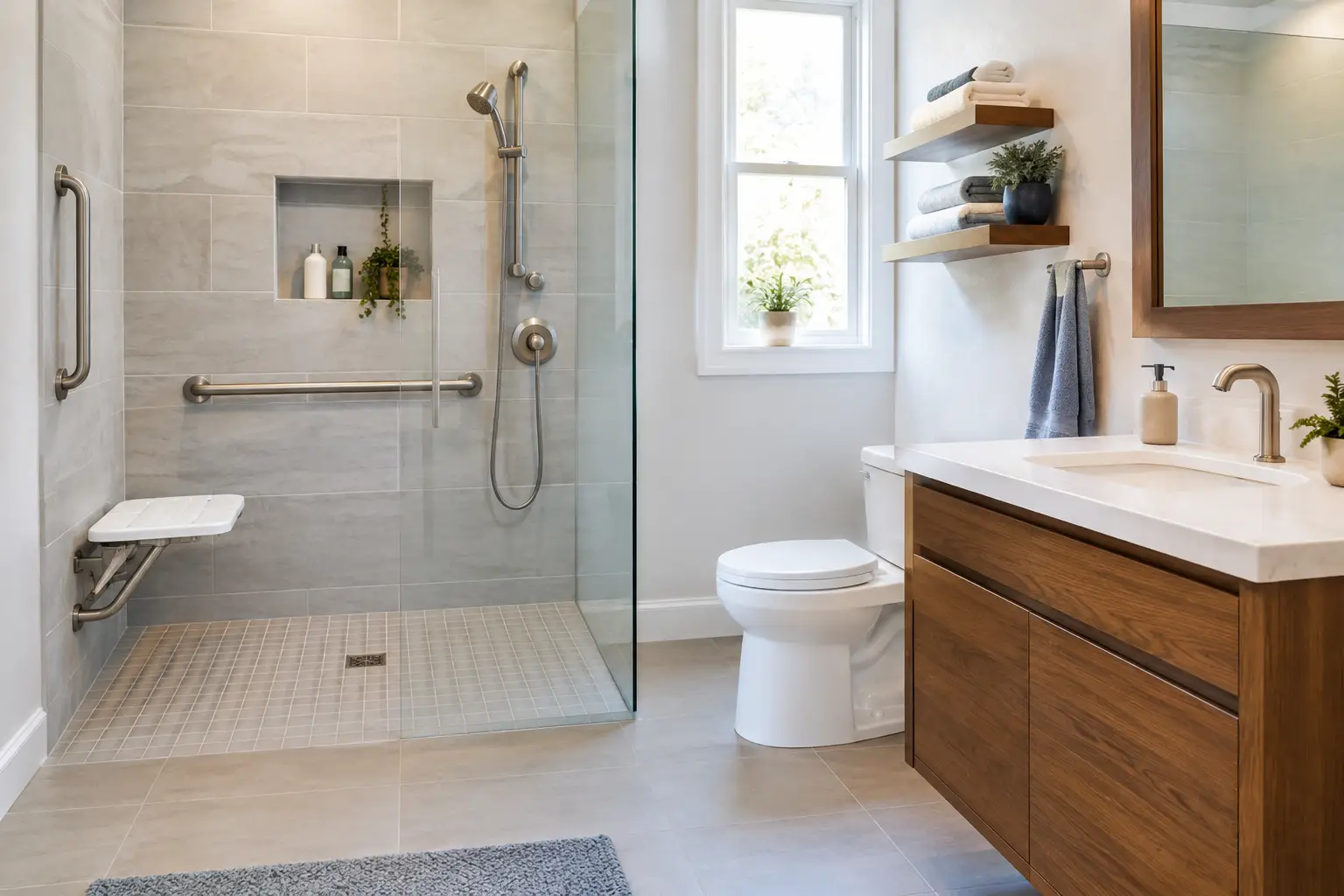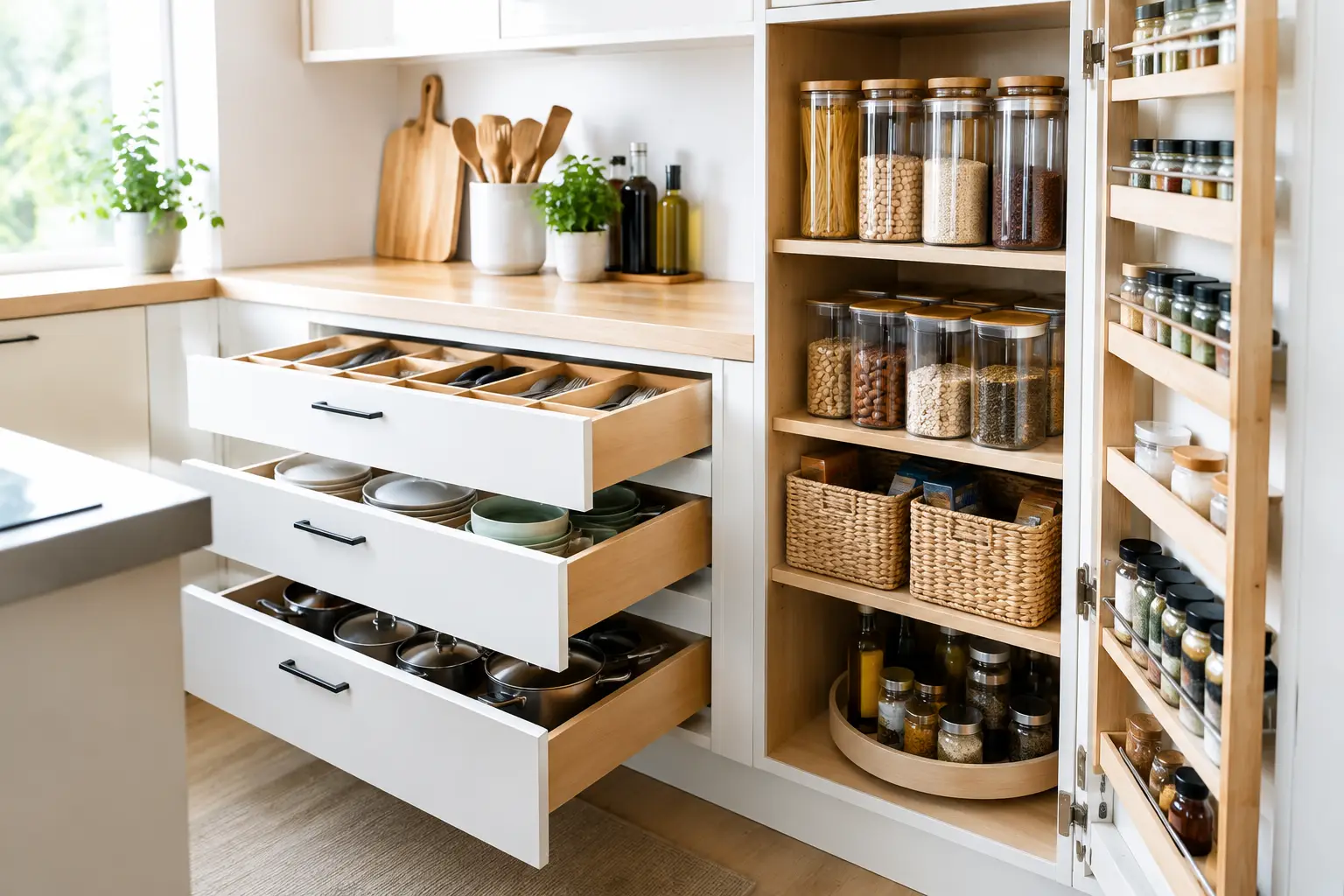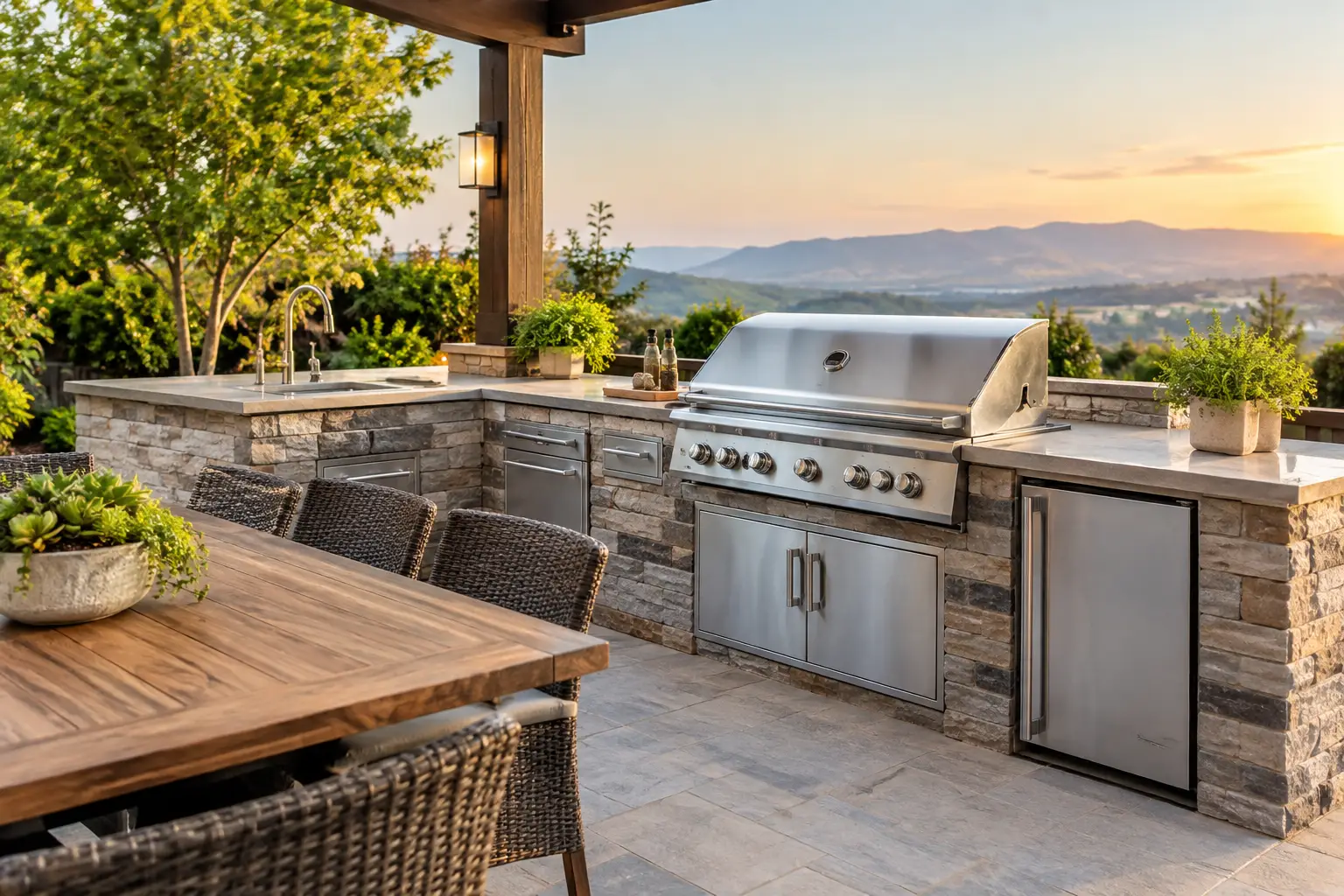
A kitchen remodel, ADU, patio addition, or custom home is a long-term decision, not a weekend purchase. The materials behind the finished surfaces affect indoor comfort, maintenance demands, energy bills, resale appeal, and the resources required to build the space. This guide to sustainable building materials helps Central Texas property owners make decisions that look right today and continue to perform through intense sun, sudden storms, humidity, and years of everyday use.
Sustainable construction is not about choosing one label or sacrificing the style you want. It is about considering a material’s full life: where it comes from, how it is manufactured, how far it travels, how it affects your indoor environment, how long it lasts, and what happens when it eventually needs replacement. The best choice depends on the project, the budget, and the conditions at your property.
What Makes a Building Material Sustainable?
A sustainable material reduces environmental impact while supporting a durable, healthy, functional property. That can mean recycled content, responsible sourcing, lower manufacturing emissions, local availability, reduced waste, or a long service life. Ideally, it delivers more than one of these benefits.
Durability deserves special attention in Central Texas. A product with a low-impact origin is not automatically the best sustainable option if it warps in humidity, fades quickly under UV exposure, attracts pests, or requires replacement far earlier than expected. A well-installed, long-lasting material can often have a lower lifetime impact than a greener alternative that fails prematurely.
For homeowners and commercial property owners, the practical question is not simply, “What is the greenest material?” It is, “What material gives this project the strongest balance of performance, health, appearance, cost, and long-term value?”
A Guide to Sustainable Building Materials by Project Area
Structure and framing
Wood remains a strong choice when it is responsibly sourced and suited to the application. Look for lumber from well-managed forests and consider engineered wood products when they can reduce waste and make efficient use of smaller trees. Engineered beams and joists can also provide the long spans needed for open-concept remodels, additions, and custom homes.
For projects that require steel, recycled-content steel is widely available and highly durable. Steel can be a smart fit for certain structural applications, commercial retrofits, and outdoor features because it resists pests and can be recycled again at the end of its service life. It does require thoughtful detailing in humid or exposed environments to prevent corrosion.
Concrete has a significant carbon footprint because cement production is energy-intensive. Still, it is often essential for foundations, driveways, patios, and structural work. A more sustainable approach may include mixes that replace part of the cement with supplementary materials, use locally sourced aggregate, and are designed for the required strength rather than overbuilt by default. Proper drainage, reinforcement, finishing, and curing matter just as much as the mix design because a driveway or slab that lasts for decades avoids the cost and impact of early replacement.
Insulation and air sealing
For Texas properties, reducing unwanted heat gain is one of the most valuable sustainability investments available. High-performing insulation and air sealing lower the demand placed on HVAC equipment while making bedrooms, home offices, garages, and living spaces more comfortable year-round.
Cellulose insulation, commonly made with recycled paper fibers, is a compelling option for many walls and attics. It can provide excellent coverage and makes use of recycled content. Mineral wool is another durable choice with strong fire resistance and sound-control qualities, especially useful around noisy rooms or in multifamily and commercial settings.
Spray foam insulation can be effective when a project needs strong air sealing in difficult cavities, rooflines, or complex additions. Its sustainability profile depends on the formula, application, and the overall building design. It is not always the right answer for every home, but installed correctly in the right location, it can significantly improve energy performance. The key is to design the insulation strategy as a system, including ventilation, moisture control, and the existing structure.
Exterior cladding, roofing, and outdoor materials
The building envelope takes the full force of Central Texas weather. Sustainable exterior choices should stand up to sun exposure, wind-driven rain, hail risk, insects, and temperature swings.
Fiber cement siding is often chosen for its long service life, fire resistance, and low maintenance needs. It is not a zero-impact material to manufacture, but its durability can make it a responsible choice for homes where wood siding would demand frequent repainting or repair. Metal roofing can also offer decades of service, reflect solar heat when properly finished, and contain recycled content. Its higher upfront cost may make more sense for a forever home, a high-performance new build, or a property owner prioritizing long-term maintenance savings.
For decks, pergolas, and outdoor kitchens, naturally durable wood or composite decking with recycled content can be worth considering. The right option depends on the desired look, the exposure level, and your tolerance for maintenance. Real wood brings warmth and can be repaired locally, but it needs regular protection. Composite products reduce routine upkeep, yet quality varies, and darker colors can become very hot in direct summer sun.
Interior finishes and healthier living spaces
The materials inside a home have a direct effect on the air your family breathes. Low- or zero-VOC paints, sealants, adhesives, and finishes can reduce odors and chemical emissions during and after construction. They are especially worthwhile in bedrooms, nurseries, home offices, and occupied commercial spaces where projects need to stay comfortable during a renovation.
For flooring, reclaimed wood, responsibly sourced hardwood, cork, linoleum, and durable tile can all be thoughtful options. Each has trade-offs. Hardwood can be refinished repeatedly but may not be ideal in consistently wet areas. Tile is exceptionally durable and well suited to bathrooms, mudrooms, and kitchens, though its production and installation can be resource-intensive. Cork is comfortable and renewable, but it needs a protective finish and may not be the best choice for every high-traffic space.
Cabinetry and millwork also deserve scrutiny. Choose durable boxes, formaldehyde-conscious panel products, and finishes that can handle daily cleaning. A cabinet that can be repaired, repainted, or refaced later is typically a better long-term investment than a lower-cost product built for a short replacement cycle.
Look Beyond the Product Label
A sustainability claim should start a conversation, not end one. Before selecting a material, ask four practical questions:
- How long will it realistically last in this location?
- What maintenance, coatings, or repairs will it require?
- Is it appropriate for Central Texas heat, moisture, pests, and weather exposure?
- Can it be repaired, reused, recycled, or responsibly removed later?
Also consider transportation and availability. A locally available material may reduce shipping impacts and make future repairs easier. However, local is not automatically better if the product performs poorly for the application. The goal is a decision that holds up on the jobsite and in real life.
Build Less Waste Into the Project
Material selection is only part of sustainable construction. Smart planning can reduce waste before demolition begins. Preserve sound framing where possible, confirm dimensions before ordering, and plan layouts that make efficient use of standard material sizes. During a remodel, separating reusable fixtures, doors, hardware, and clean lumber from general debris can keep valuable materials out of the landfill.
Renovation itself can be a sustainable choice. Updating a structurally sound home, improving insulation, repairing water damage correctly, and adapting underused square footage for an office or ADU often provides more value than starting over. The work must still address hidden concerns such as drainage, foundation movement, electrical capacity, and moisture intrusion. Covering up those issues with beautiful finishes only creates a larger repair later.
Balance Budget, Performance, and Long-Term Value
Not every sustainable feature has to be selected at once. If the budget is limited, prioritize the parts of the property that are hardest or most expensive to revisit: framing repairs, insulation, air sealing, windows, roofing, plumbing access, and moisture management. Decorative finishes can often be updated later, but correcting a poorly insulated addition or rebuilding a failed exterior assembly is disruptive and costly.
This is where an experienced construction partner adds value. NXT Construction Inc. helps clients weigh material options against the actual needs of the property, from durable outdoor living upgrades to high-performance additions and full home transformations. The right plan should protect your investment without asking you to pay for features that do not serve your goals.
A sustainable project should feel good long after the final walkthrough: cooler rooms in August, healthier indoor air, less maintenance, fewer surprises, and a space built to support the life you want to live in it.