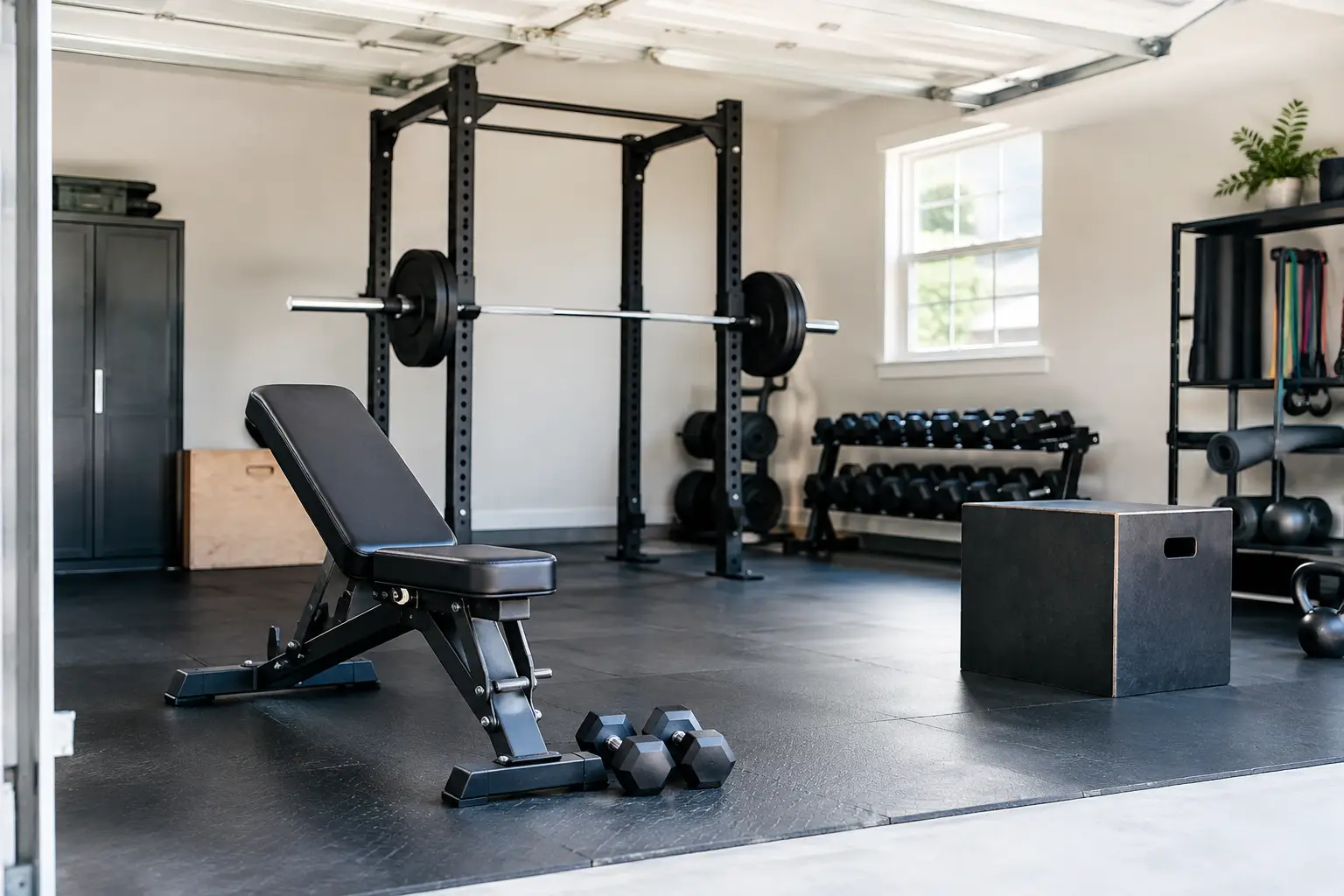
A garage gym can be the most convenient room in your home – until summer heat turns a workout into a battle with the thermostat, equipment crowds the cars, or bare concrete makes every session feel temporary. To improve garage home gym performance, start by treating the space as a real part of the home, not a collection of equipment pushed against a wall.
For Central Texas homeowners, that means planning for heat, humidity, dust, moisture, storage, and the way your household actually uses the garage. The best upgrades make the room safer, more comfortable, and easier to maintain while protecting the value and function of the property.
1. Start With the Layout, Not the Equipment
Before buying another bench, rack, or cardio machine, measure the room and map the traffic pattern. A garage gym has to work around doors, vehicles, utility access, storage, and sometimes a water heater or electrical panel. Those constraints are not a reason to settle for a cramped setup. They are the reason a thoughtful layout matters.
Create distinct zones for strength training, cardio, mobility work, and storage. Place heavy equipment where the slab is level and where you can move safely around it. Keep a clear path from the garage entry to the home and avoid blocking electrical panels, attic access, or mechanical equipment.
A two-car garage does not always need to become an all-or-nothing gym. Many homeowners benefit more from a flexible layout with a fold-away rack, wall-mounted storage, and an open training lane that can still accommodate a vehicle. If the goal is a dedicated fitness room, a garage conversion or a detached outdoor gym may offer more freedom and a cleaner long-term result.
2. Upgrade the Floor for Safety and Durability
Bare concrete is tough, but it is not designed for dropped weights, high-impact training, or comfortable floor work. It can also become slick when moisture is tracked inside. Flooring is one of the most practical investments you can make because it protects both your equipment and the slab beneath it.
Dense rubber flooring works well under racks, benches, dumbbell areas, and cardio equipment. Interlocking tiles can be easier to install in smaller areas, while rolled rubber provides a more continuous finish for a fully dedicated gym. The right material depends on how the room will be used. Olympic lifting and heavy deadlifts may call for a reinforced lifting platform, while a yoga and conditioning space may prioritize a smoother, easier-to-clean surface.
Do not cover signs of a slab problem with gym flooring. Cracks, uneven areas, moisture staining, or shifting can point to drainage or foundation concerns that deserve an inspection first. Addressing the underlying condition protects your investment and gives you a stable surface for years of training.
3. Make Cooling and Insulation a Priority
Austin-area garages can become punishingly hot. A fan alone may move air, but it does not solve the larger problem of heat radiating through an uninsulated garage door, attic, walls, and concrete. If you want to use the gym consistently from late spring through early fall, temperature control should be part of the plan.
Start with insulation. An insulated garage door, properly insulated walls, and attic insulation can greatly reduce heat gain. Spray foam insulation is especially valuable in spaces with difficult-to-reach gaps or where air sealing is a priority. It can help create a more stable interior environment while reducing the dust and outdoor air that often enter through poorly sealed openings.
From there, choose cooling that fits the scope of the space. A high-capacity ceiling fan can make a noticeable difference for open-air workouts. A ductless mini-split provides more dependable cooling and heating for a dedicated gym, while a properly designed HVAC extension may make sense during a larger garage conversion. Electrical capacity, insulation levels, and how often the gym is used should guide the decision.
4. Improve Lighting for Early Mornings and Safer Training
Many garages have a single overhead fixture that leaves corners dark and creates shadows around free weights. Better lighting changes how the room feels immediately, but it also improves safety. You need to see your footing, weight collars, storage shelves, and the edges of a lifting platform clearly.
Bright LED fixtures provide clean, efficient overhead light with less maintenance than older shop lights. Add task lighting near mirrors, storage walls, or stretching areas if needed. If the garage includes windows, consider privacy film or window coverings that reduce glare and solar heat without making the room feel closed in.
Plan the lighting around the equipment placement rather than installing fixtures wherever there is an empty spot. A rack placed directly beneath a harsh fixture can create uncomfortable glare, while a mirror wall needs even light to be useful. Small choices like these are what move a garage gym from functional to intentional.
5. Build Storage Into the Room
The fastest way to make a gym feel smaller is to leave plates, bands, mats, and recovery gear on the floor. Storage should be sturdy enough for heavy items and simple enough that everyone in the household will use it.
Wall-mounted plate pegs, vertical barbell holders, dumbbell racks, and closed cabinets can keep equipment organized without consuming valuable floor space. Overhead storage can hold seasonal items that do not belong in the gym zone, but keep frequently used fitness gear within easy reach. This is also a good opportunity to replace flimsy shelves with anchored, garage-rated storage that can handle real loads.
If your garage serves multiple purposes, custom cabinetry or partition walls can create visual order. You do not need to hide the gym completely. A clean, coordinated storage system allows the space to feel like a finished extension of the home rather than a compromise between a workout room and a cluttered storage unit.
6. Protect the Space From Moisture, Dust, and Wear
Garages are exposed to more than most interior rooms. Rainwater can enter beneath a door, humidity can affect metal equipment, and dust can collect quickly on mats and machines. These issues are manageable, but they should be addressed before they undermine the space.
Inspect the garage door seal, weatherstripping, and exterior drainage. Water should move away from the slab, not toward it. If you notice persistent moisture, musty odors, or visible staining, identify the source before adding finished walls, cabinetry, or flooring. Water remediation and repairs are far easier when the problem is handled early.
A durable wall finish, washable paint, and properly sealed penetrations around doors or utilities make ongoing maintenance simpler. For homeowners adding a sink, beverage station, bathroom access, or upgraded electrical service, permits and professional installation are worth considering. The more permanent the gym becomes, the more it should be built with the same care as any other home improvement project.
7. Add Details That Make You Want to Use It
The best garage home gym is not necessarily the one with the most equipment. It is the one that fits your training routine and makes consistency easier. A full-length mirror may improve form checks. A sound system, mounted screen, water station, or small recovery corner can make the room more enjoyable without overcomplicating it.
Think about acoustics, too. Rubber flooring helps reduce impact noise, and insulated walls can limit sound transfer to the home and neighboring properties. If you train before sunrise or after work, these details can make the space more considerate for everyone around you.
For a larger transformation, NXT Construction Inc. can help homeowners evaluate the garage structure, insulation, electrical needs, flooring, storage, and finish selections as one coordinated project. That approach is especially useful when the gym is part of a broader renovation, an outdoor living upgrade, or a plan to improve daily function and long-term property value.
Your gym should support the life you want to live, whether that means a quiet place for a 30-minute morning workout or a family-friendly training space that stays comfortable through a Central Texas summer. Build it with purpose, and it becomes a room you return to because it works.