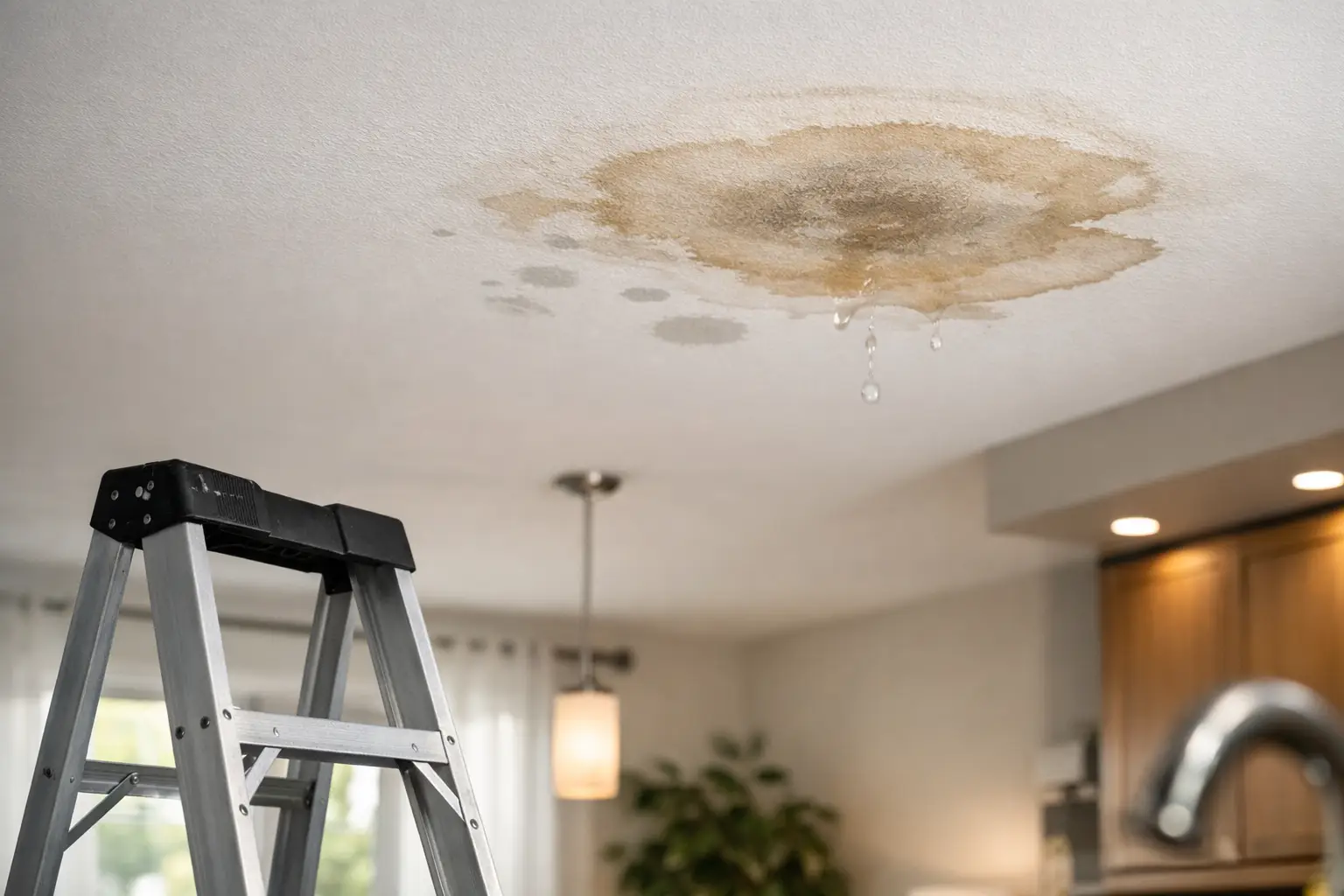
A faint yellow ring above the kitchen table or a brown patch spreading across a bedroom ceiling is more than a cosmetic problem. If you are asking what causes ceiling water stains, the short answer is moisture getting where it does not belong. The more useful answer is that the stain can reveal whether your property has a roof issue, plumbing leak, HVAC problem, or condensation concern – and how urgently it needs attention.
Ceiling stains often appear long after the water first entered the structure. Drywall, insulation, framing, and paint can absorb moisture before visible discoloration develops. By the time a stain reaches the finished ceiling, a small repair may have become a broader restoration project. Prompt inspection protects the finish of your home, but more importantly, it helps protect the systems and structure behind it.
What Causes Ceiling Water Stains?
Most ceiling water stains come from one of four sources: a roof leak, a plumbing leak, HVAC condensation, or excess indoor humidity. The location of the stain, its appearance, and when it gets worse can help narrow down the cause. Still, water does not always travel straight down. A roof leak several feet away can follow a rafter or pipe before appearing at the ceiling, so the stain itself is not always the origin point.
Roof leaks and storm damage
In Central Texas, roof-related water intrusion is a common concern after heavy rain, hail, high winds, or prolonged storms. Missing or damaged shingles, cracked flashing around vents and chimneys, deteriorated pipe boots, clogged valleys, and worn roof penetrations can allow water beneath the roofing surface.
A roof leak often creates a stain near an exterior wall, in an upper-floor ceiling, or around a skylight, vent, or chimney. It may darken during or shortly after rainfall. In a one-story home, an attic inspection can sometimes identify wet insulation, darkened roof decking, or active drips. In a two-story home, the source may be harder to trace because plumbing and mechanical systems can sit between the roof and the stained ceiling.
Roof repairs should address the entry point, not just the visible stain. Repainting a ceiling without correcting damaged flashing or roofing materials only covers a warning sign temporarily.
Plumbing leaks above the ceiling
If a stain sits below a bathroom, laundry room, kitchen, or upstairs utility area, plumbing should be high on the list of possibilities. Slow leaks from drain lines, supply lines, shower pans, toilet seals, tub overflows, refrigerator lines, or fittings can release small amounts of water over time. These leaks may not be obvious because they occur inside walls or floor cavities.
A plumbing-related stain may worsen after showers, laundry cycles, dishwashing, or toilet use. You may also notice a musty odor, soft drywall, peeling paint, a bubbling ceiling surface, or an unexplained increase in water use. A stain directly below a bathroom does not automatically mean a broken pipe. Grout failure, loose caulk, or water escaping around a shower door can also migrate into the framing below.
This is one area where careful diagnosis matters. Opening the wrong section of ceiling creates unnecessary disruption, while leaving a hidden leak in place can damage insulation, framing, flooring, and adjacent finishes.
HVAC condensation and drain problems
Air conditioning systems remove humidity as they cool your home. That moisture needs to drain properly. When an AC condensate line clogs, disconnects, cracks, or overflows, water can collect in an attic or mechanical cavity and eventually stain the ceiling below.
This issue is especially relevant in the Austin area, where air conditioning works hard through long, humid stretches of the year. A ceiling stain near an attic air handler, supply register, or interior mechanical closet may point to a condensate concern. In some cases, the stain appears during the hottest months rather than after rain.
Improperly insulated ductwork can also sweat when warm, humid air meets a cold surface. Over time, condensation can wet nearby drywall and cause discoloration. Regular HVAC service, clean drain lines, properly installed float switches, and adequate insulation reduce the risk, but they do not replace a proper assessment once staining appears.
Condensation and high indoor humidity
Not every water stain comes from a leak. Bathrooms, laundry rooms, kitchens, and poorly ventilated areas can develop condensation when humid indoor air repeatedly meets cool ceiling surfaces. This is more likely in spaces with limited exhaust ventilation, insulation gaps, or significant temperature differences.
Condensation-related damage can look different from a single leak. Instead of one defined brown ring, you may see widespread paint deterioration, mildew spotting, or discoloration around vents and exterior corners. These conditions can signal that the home needs better ventilation, air sealing, insulation, or moisture management.
The trade-off is worth understanding: sealing air leaks can improve comfort and energy efficiency, but a tighter home also needs properly designed ventilation. A long-term solution should balance energy performance with healthy moisture control.
Clues That Help Identify the Source
A few observations can make an inspection more efficient. Start by documenting the stain with photos, including its size and location. Then consider when you first noticed it and whether it changes after rain, shower use, laundry, or extended AC operation.
Fresh moisture often makes drywall feel soft or cool to the touch, although you should never press hard enough to break a weakened ceiling. A sagging area, active drip, or bulge requires immediate attention. Move furniture and electronics away from the affected area, place a container beneath active dripping, and avoid using electrical fixtures near water.
Color can offer a clue, but it is not a diagnosis. Yellow or brown staining often comes from water carrying dirt, tannins from wood framing, rust, or residue from older materials. A dark stain may indicate repeated wetting and possible microbial growth. White, chalky residue can sometimes suggest mineral-heavy water. The pattern, timing, and moisture reading are more reliable than color alone.
Why Waiting Can Make a Simple Repair More Expensive
Water damage is rarely static. Even a slow leak can saturate insulation, weaken drywall, corrode metal components, and create conditions that encourage mold growth. If water reaches engineered wood, subflooring, or structural framing repeatedly, repairs can become more involved.
There is also a visual and financial side to consider. A water-stained ceiling can affect the comfort of your home, undermine a recent remodel, and raise questions during a sale or property inspection. Repairing the source early preserves more of the original material and gives you greater control over the scope and cost of the project.
For commercial properties, the stakes can include interrupted operations, tenant concerns, damaged inventory, and safety risks. A professional response should identify the moisture source, contain damage, dry affected materials as needed, and restore the area with durable finishes rather than applying a cosmetic patch over an active issue.
The Right Order for Ceiling Water Stain Repairs
The most effective repair sequence begins with finding and stopping the moisture source. That could mean repairing roof flashing, replacing damaged plumbing components, clearing an HVAC drain line, correcting ventilation, or improving insulation. Only after the area is dry should damaged ceiling materials be repaired.
Depending on how long the leak has been active, restoration may involve removing wet insulation, replacing compromised drywall, treating affected framing, matching ceiling texture, and applying a stain-blocking primer before repainting. A quality repair should blend with the surrounding space while addressing the practical details that prevent recurrence.
Do not assume every stain requires major demolition. A small, isolated roof leak caught quickly may need limited drywall repair after the roof is fixed. On the other hand, a ceiling that is soft, sagging, repeatedly wet, or accompanied by odor deserves a more thorough investigation. The right scope depends on what the moisture has touched, not just how large the stain looks from below.
When to Call for Help
Call for professional support promptly if the ceiling is actively dripping, bulging, cracking, or near a light fixture. The same applies when you see recurring stains, suspect mold, cannot identify the source, or have experienced a significant roof or plumbing event.
For Central Texas homeowners, a free inspection can provide clarity before a small stain turns into widespread water remediation. NXT Construction Inc. approaches water damage as both a building-performance issue and a restoration opportunity: identify the cause, protect the property, and restore the finished space with craftsmanship that respects your home and investment.
A ceiling stain does not have to define the room or become a lingering source of stress. Treat it as an early signal, act before moisture spreads, and make the repair part of a smarter plan for a drier, stronger, more comfortable property.