A driveway can look simple when the concrete is fresh, but its long-term performance is decided well before the truck arrives. To prepare concrete driveway sites correctly in Central Texas, the work must account for soil movement, hard rain, vehicle loads, drainage patterns, and the finished elevation at the garage, sidewalk, and street. A smooth gray surface is only as dependable as the ground beneath it.
For homeowners in Austin, Leander, Cedar Park, Liberty Hill, Lakeway, Georgetown, and nearby communities, preparation is not a place to cut corners. Central Texas clay soils can swell when saturated and shrink during dry periods. Without a stable base and a thoughtful drainage plan, even a well-finished driveway may crack, settle, or direct water toward the home.
How to Prepare a Concrete Driveway Site
Preparation begins with a site assessment, not demolition. Before removing an existing driveway or marking a new layout, evaluate how water currently moves across the property. Look for low spots, roof runoff, downspout discharge, erosion near the driveway edge, and areas where water collects beside the foundation. The finished driveway should shed water away from the house without sending it toward a neighbor’s property or creating a pond near the curb.
The planned use matters just as much. A driveway for two passenger vehicles has different demands than one used by a heavy pickup, work trailer, RV, or commercial vehicle. Width, thickness, reinforcement, base depth, and control-joint placement should reflect the actual load the slab will carry. Building only for today’s parking needs can become an expensive limitation when a family adds vehicles, a boat, or a trailer later.
Confirm boundaries, access, and utility conditions
A clear layout prevents surprises once excavation starts. Mark the proposed driveway edges, confirm property lines, and identify the transition points at the garage, street, gate, walkways, or patio. If the driveway connects to a public street, local requirements may apply to the apron, curb cut, drainage, and right-of-way work.
Underground utilities deserve the same attention. Irrigation lines, landscape lighting, gas lines, water service, and drainage pipes may all cross the work area. Locating and protecting them before excavation is far less disruptive than discovering them with a skid steer. Access should also be planned for demolition equipment, base delivery, concrete trucks, and finishing crews without damaging landscaping or blocking essential entry points.
Remove unstable material and excavate to the right depth
Old concrete often needs full removal when it has widespread cracking, major settlement, poor drainage, or an inadequate base. Placing a new slab over a failing surface rarely solves the underlying problem. It can also create an awkward elevation at the garage or sidewalk and make drainage worse.
After demolition, crews excavate organic material, loose fill, roots, and soft soils until they reach a stable subgrade at the required depth. That depth is not a one-size-fits-all number. It depends on the specified slab thickness, the compacted base needed for the soil conditions, and the finished height required at adjacent structures.
Excavation should preserve the planned slope. A driveway generally needs a controlled fall to move water away from buildings, but too much pitch can make parking uncomfortable, scrape low-clearance vehicles, or cause fast runoff during heavy storms. The goal is deliberate drainage, not simply making the surface steep.
Build the Base That Supports the Slab
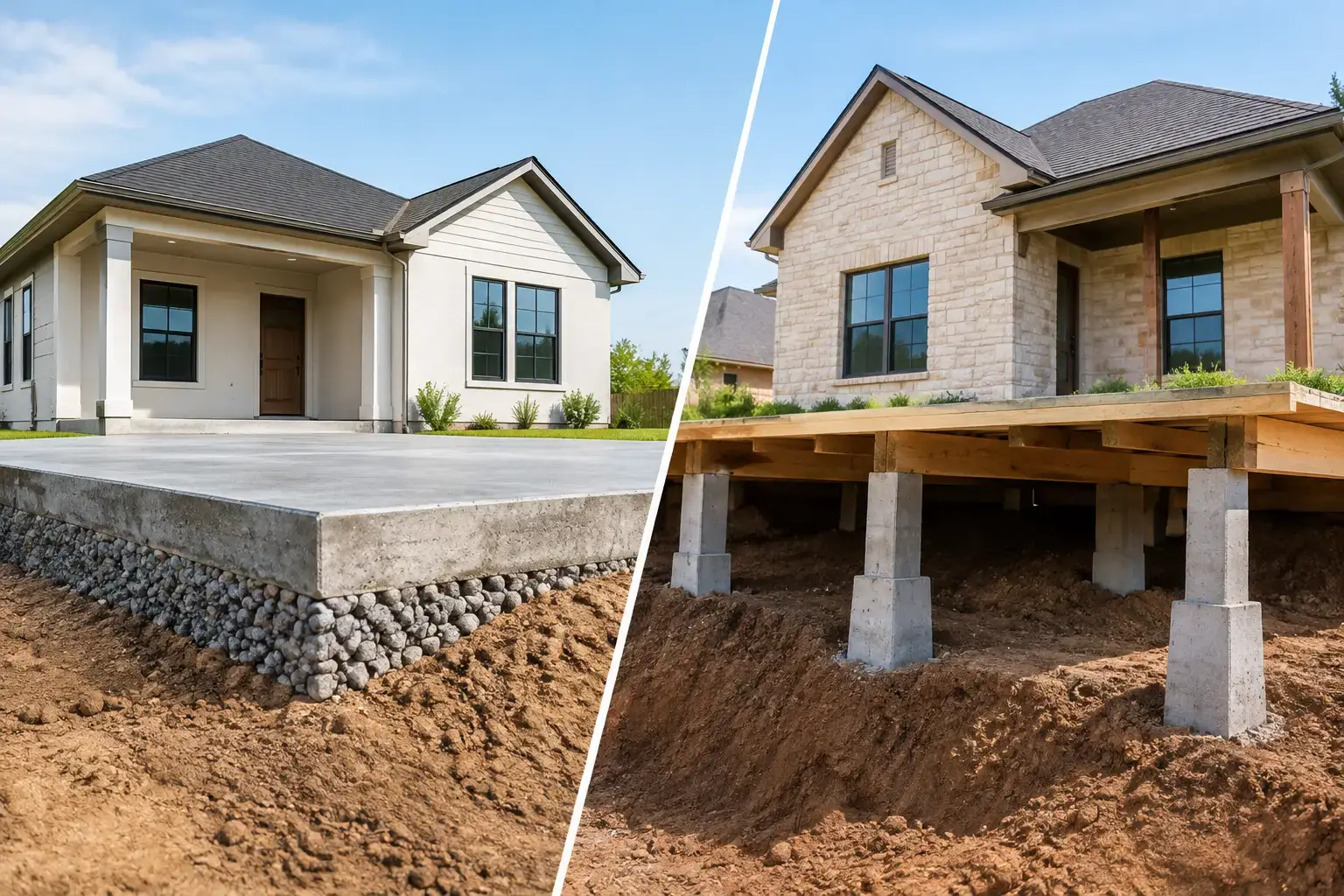
The subgrade is shaped and compacted first, then a suitable granular base is installed in lifts and compacted again. This base helps distribute vehicle loads, improves drainage below the slab, and gives the concrete a more uniform surface to rest on. Uniform support is critical because concrete is strong in compression but does not tolerate uneven settlement well.
In expansive clay areas, base preparation may require extra attention. If the soil is excessively wet, pumping, or unstable under equipment, pouring over it is a gamble. The right solution may involve drying, reworking, replacing unsuitable material, or adjusting the base design. It depends on the site. A contractor should explain why a particular approach is recommended rather than treating base work as an invisible allowance.
Compaction is not just driving equipment across the rock once. Proper compaction uses the right equipment, moisture conditions, lift thickness, and verification throughout the driveway footprint. Edges are especially important. Weak edges are more likely to break under tire loads, particularly where vehicles turn or back out.
Plan drainage before concrete makes it permanent
Concrete locks the grade in place for decades, so drainage decisions deserve careful review before forms are set. Water should move away from the garage and foundation, while roof runoff should be carried to a suitable discharge point instead of cascading across the new slab. In some properties, swales, drains, channel drains, or grading adjustments are part of the driveway solution.
Avoid trapping soil between the driveway and the home where water can linger. Also consider the driveway edges. If surrounding landscape beds are higher than the concrete, soil and mulch can wash onto the surface and hold moisture against it. A clean edge detail helps protect both appearance and drainage.
Set Forms, Reinforcement, and Joint Layout
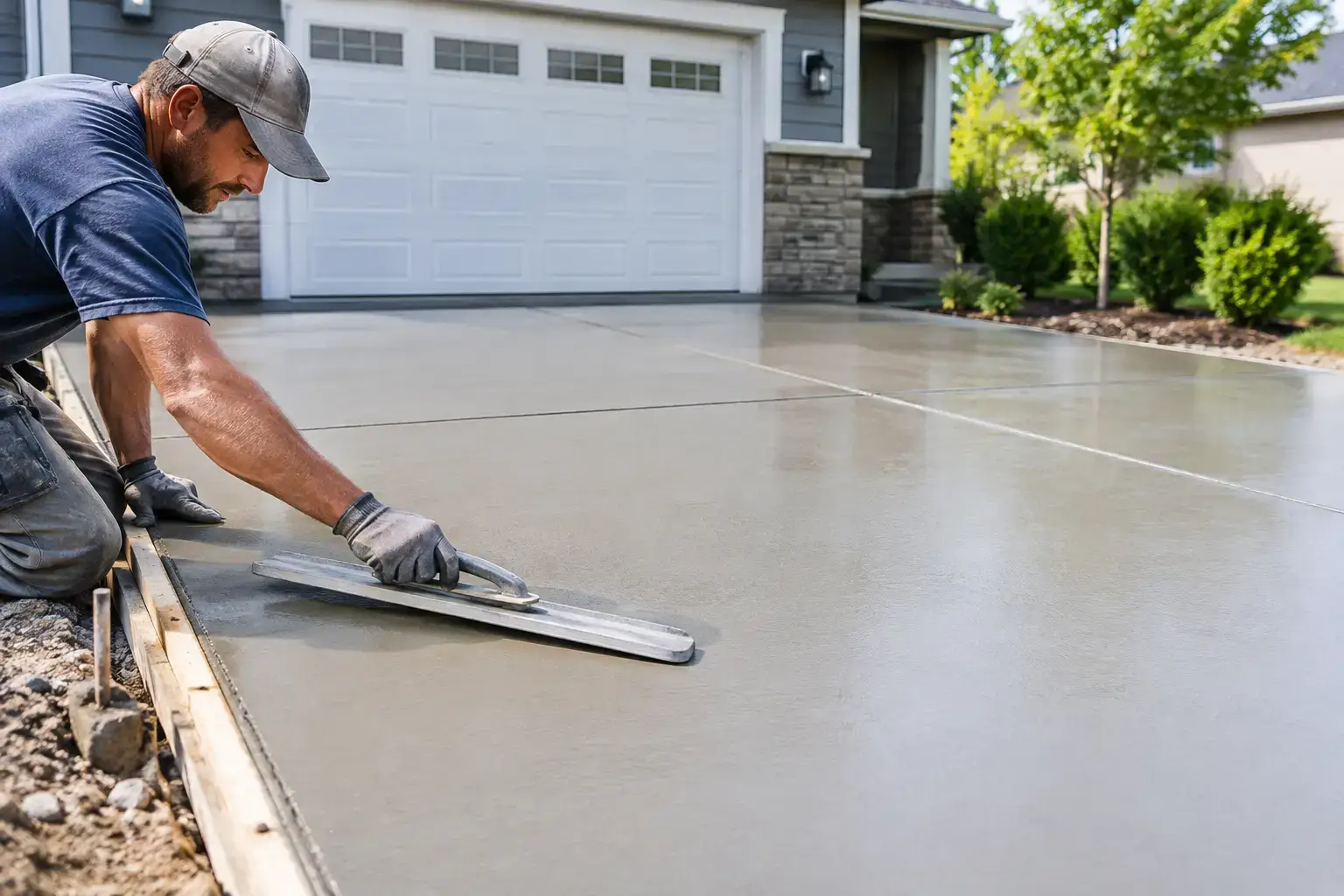
Forms establish the driveway’s shape, elevation, and slope. They should be firmly braced so they do not move during placement and finishing. This is the moment to confirm that the planned driveway feels right at the garage entrance, has appropriate clearance around structures, and aligns with the home’s exterior design.
Reinforcement can help manage cracking and improve slab performance, but it is not a substitute for good soil preparation. Depending on the design, a driveway may use steel reinforcing bars, welded wire reinforcement, fiber reinforcement in the mix, or a combination selected for the application. Steel reinforcement must be positioned within the slab, not left on the base where it provides little practical value.
Control joints are equally important. Concrete shrinks as it cures, and joints create planned locations for that movement. They do not eliminate cracks, but they greatly improve the odds that cracking occurs in orderly, less noticeable lines. Joint spacing, depth, and layout should work with driveway panels, changes in direction, corners, and areas around drains or columns.
Expansion material may be needed where the new driveway meets a garage slab, sidewalk, existing concrete, or vertical structure. Those transitions need room for independent movement. Skipping this small detail can lead to pressure, chipping, and premature cracking at the connection.
Choose the Right Concrete and Finish for the Job
A driveway mix should be selected for exterior vehicle traffic and local weather exposure. Strength matters, but water content, air content where appropriate, aggregate, placement conditions, and curing practices all affect the final result. Adding excess water at the jobsite may make concrete easier to spread, yet it can reduce surface strength and increase shrinkage risk.
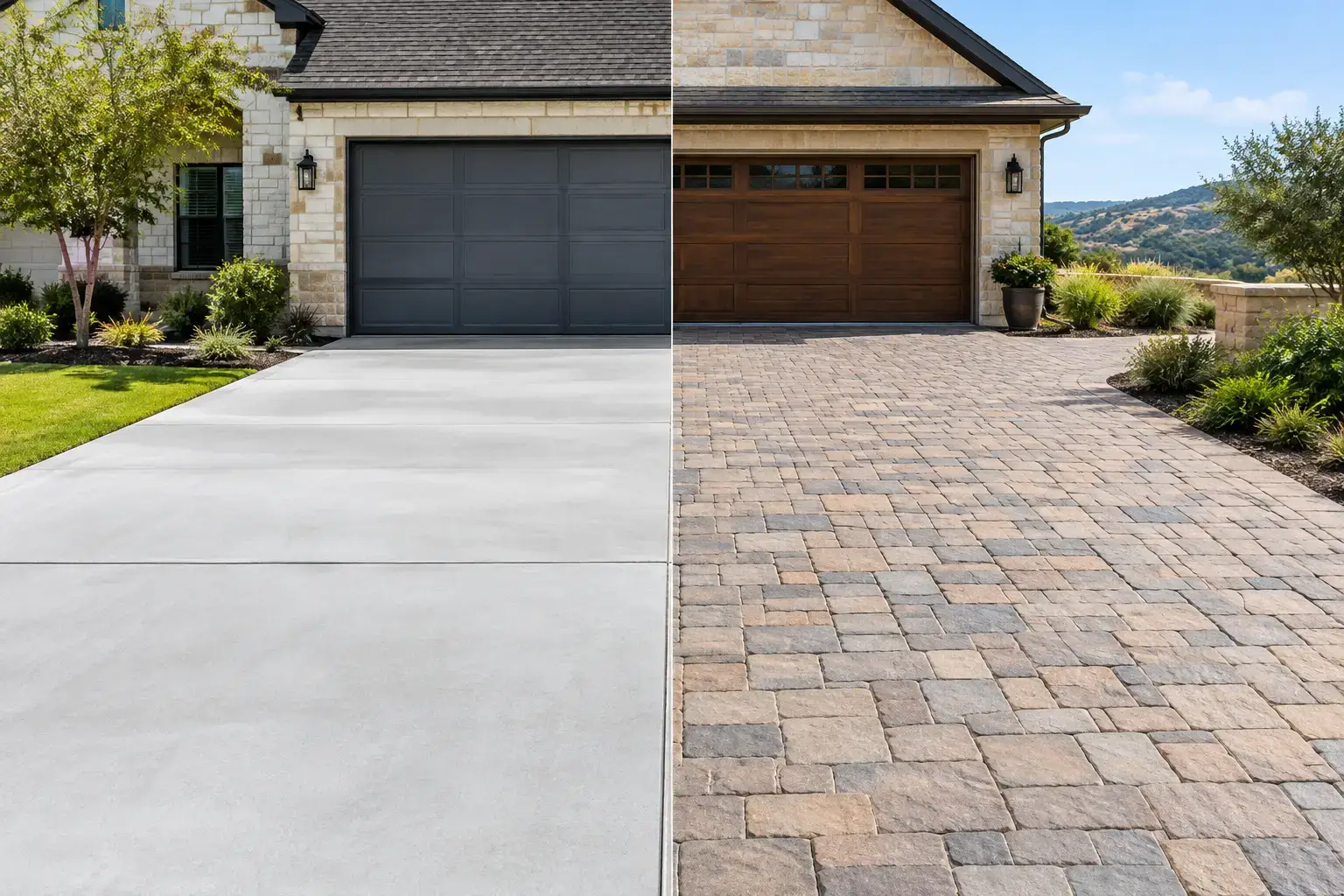
Finish should balance appearance with traction. A broom finish is a reliable choice for many Central Texas driveways because it provides texture for wet conditions and complements both traditional and modern homes. Decorative options such as exposed aggregate, borders, colored concrete, or saw-cut patterns can add curb appeal, but they also require careful planning and may increase the investment. The best choice depends on the architecture, maintenance expectations, and how prominently the driveway contributes to the property’s overall look.
Curing is part of construction, not an afterthought. Fresh concrete needs protection from rapid moisture loss, extreme heat, foot traffic, and vehicle loads while it gains strength. Texas heat and wind can accelerate drying at the surface, which is why professional timing, finishing, and curing procedures matter. A new driveway may look hard quickly, but it should not be treated as fully ready for heavy use immediately.
A Pre-Pour Check That Protects Your Investment
Before concrete placement, walk the site with the contractor and confirm the details that are difficult to change afterward:
- The driveway slopes away from structures and has a defined drainage path.
- The compacted base is uniform, stable, and built to the planned elevation.
- Forms create the approved width, shape, transitions, and edge alignment.
- Reinforcement and joint locations match the agreed design.
- Access, curing protection, and the schedule for using the driveway are clear.
A driveway is one of the first features visitors see and one of the hardest-working surfaces on the property. It should support daily life without becoming a recurring repair concern. NXT Construction Inc. approaches driveway projects as part of the larger property, considering drainage, foundation protection, curb appeal, vehicle use, and the details that help the finished work hold up over time.
If you are planning a replacement or new concrete driveway, start with a site conversation before choosing a color, border, or finish. A careful assessment of the ground, water flow, and how your household uses the space gives the project the best possible foundation for years of reliable service.