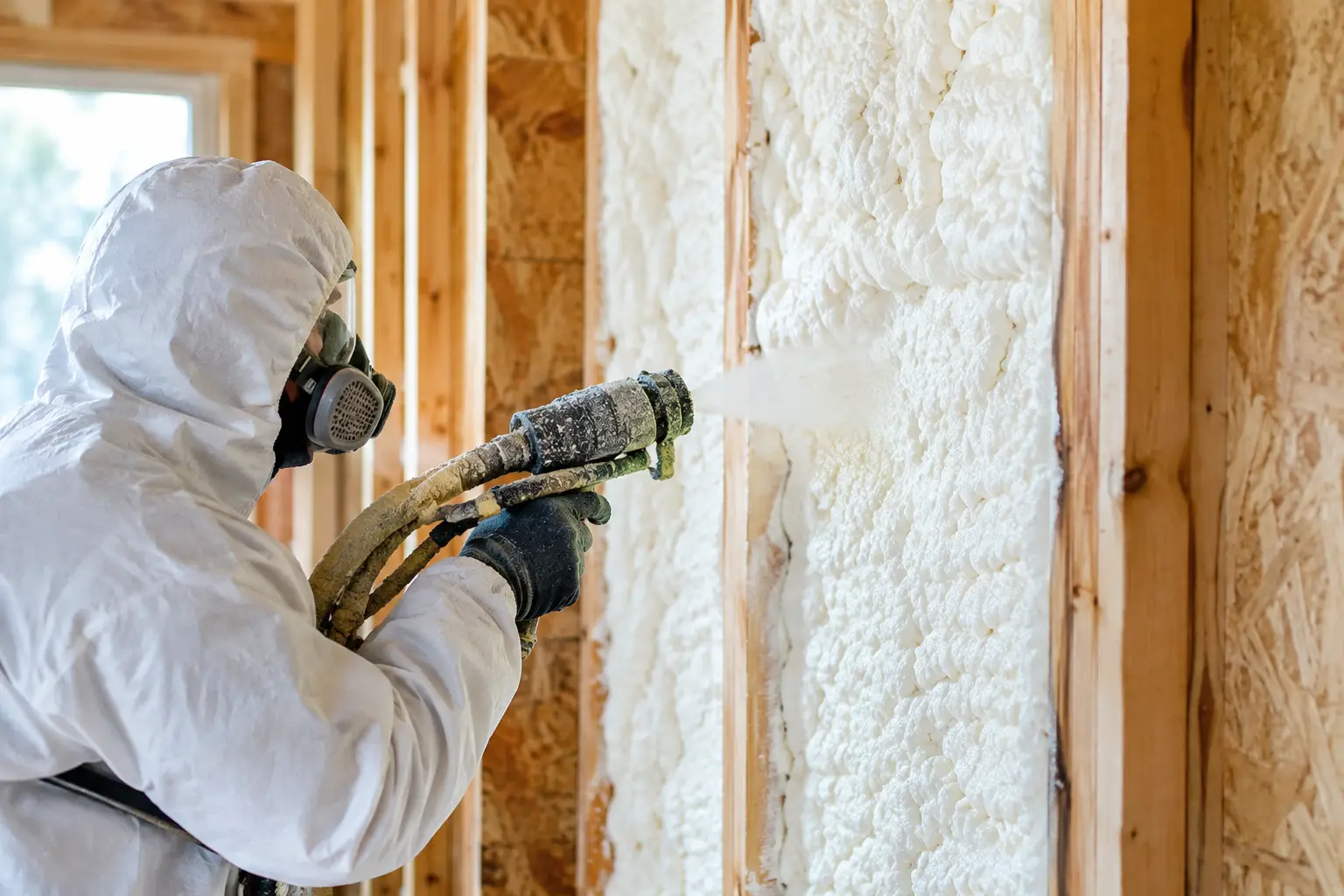
A Central Texas attic can reach extreme temperatures, while conditioned indoor air carries moisture toward cooler surfaces. That combination makes insulation decisions more than a comfort upgrade. So, does spray foam trap moisture? Not by itself. Properly selected and installed spray foam can reduce the air movement that carries humid air into wall and roof assemblies. Installed over an existing leak, on the wrong side of a moisture-control strategy, or without addressing building ventilation, it can conceal a problem that was already there.
For homeowners planning a remodel, new build, attic conversion, or energy upgrade, the right question is not simply whether spray foam is safe. The better question is whether the complete assembly – roof, framing, HVAC, ventilation, drainage, and insulation – is designed to manage water and humidity over time.
Does spray foam trap moisture in a home?
Spray foam does not generate moisture, and it does not automatically trap it. Moisture enters a building through bulk water leaks, humid outdoor air, indoor humidity, and vapor moving through materials. Spray foam changes how that moisture moves through a wall or roof.
Its greatest moisture-control advantage is air sealing. Air can carry far more water vapor than vapor diffusion through a typical painted wall. When hot, humid Texas air leaks through gaps around penetrations, attic connections, rim joists, or roof framing, it can meet a cooler surface and condense. A continuous spray foam application helps limit that air movement.
The concern arises when foam is used in an assembly that cannot dry adequately or when a roof leak is sealed beneath insulation. Wood framing and roof decking need protection from repeated wetting, along with a realistic drying path if they do get wet. Foam can slow that drying path, particularly closed-cell foam. That is not automatically a defect. It simply means the roof and wall details must be right before insulation goes in.
Open-cell and closed-cell foam manage moisture differently
Not every spray foam product performs the same way. Open-cell and closed-cell foam have different densities, air-sealing characteristics, and vapor permeability. Choosing between them should follow the building design rather than a one-size-fits-all sales pitch.
Open-cell foam
Open-cell foam expands substantially and fills irregular cavities effectively. It is an air barrier when installed to the appropriate thickness, but it is generally vapor permeable. In plain language, water vapor can move through it more readily than through closed-cell foam.
That permeability can be useful in certain roof assemblies because it may allow roof decking to dry inward if it becomes damp. It also means that open-cell foam does not stop water from a roof leak. A leak can still wet the decking and may eventually show staining, soft drywall, or other visible clues. Depending on the assembly and local requirements, a separate vapor-control coating or layer may be needed.
Closed-cell foam
Closed-cell foam is denser and provides a higher R-value per inch. At sufficient thickness, it can function as an air barrier and a vapor retarder. It also adds some rigidity and can be a strong choice where space is limited or moisture exposure is a significant design concern.
Because it resists vapor movement more strongly, closed-cell foam can reduce inward moisture migration. But it can also make drying more difficult if wet wood is covered or a leak develops later. The answer is not to avoid closed-cell foam. The answer is to confirm that framing is dry, flashing and roofing are sound, and the entire assembly has been designed for its location and use.
Where moisture problems actually begin
When a homeowner finds damp wood, mold growth, peeling paint, or a musty smell after an insulation project, spray foam may be blamed first. In many cases, it exposed or concealed a larger building-performance issue.
A roof leak is the most obvious source. Damaged shingles, failed flashing, worn pipe boots, poorly integrated skylights, and gutter overflow can introduce water before it ever reaches the insulation. Foam cannot correct those conditions.
Indoor humidity is another frequent factor. A tightly sealed home needs properly sized HVAC equipment and a plan for fresh-air ventilation. Oversized air-conditioning systems can cool a home quickly without running long enough to remove sufficient humidity. Bathrooms, kitchens, laundry areas, crawl spaces, and unvented combustion appliances can also add moisture to indoor air.
In Central Texas, the long cooling season increases the importance of this balance. Attics and rooflines experience intense heat, while indoor surfaces may be cooled for much of the year. A properly insulated, conditioned attic can improve comfort and HVAC performance, but it requires careful attention to ductwork, mechanical ventilation, and roof integrity.
Spray foam and unvented attics in Central Texas
Many homeowners choose spray foam at the roofline to bring the attic into the conditioned envelope. This can protect ducts and air handlers from punishing attic heat, create more stable interior temperatures, and make storage or mechanical access more practical.
An unvented attic is not simply a vented attic with foam added. It is a different building assembly. The insulation location changes, soffit and ridge ventilation may no longer serve the same role, and HVAC design becomes part of the moisture strategy. Details around roof penetrations, gable walls, duct chases, and transitions matter as much as the foam itself.
Before insulating the underside of a roof deck, a qualified contractor should inspect for active leaks, damaged decking, mold, inadequate drainage, and signs of past water intrusion. Any repairs should happen first. Foam should be installed only after the substrate is dry and the roof is ready to perform as a complete weather barrier.
Warning signs worth addressing before installation
A professional assessment is especially valuable if the property has a history of water damage or inconsistent indoor comfort. Watch for these conditions before moving forward with spray foam:
- Water stains on ceilings, roof decking, or exterior walls
- Musty odors in attics, crawl spaces, closets, or behind cabinets
- Rusted HVAC components or condensation around ducts
- Soft, darkened, or visibly deteriorated framing
- High indoor humidity, window condensation, or persistent mold growth
These signs do not automatically rule out spray foam. They signal that the source of moisture needs to be identified and corrected first. Insulating over an unresolved problem may preserve the symptom out of sight while the underlying damage continues.
Installation quality matters as much as the material
Spray foam is a specialized installation, not a simple product purchase. Thickness must be consistent, the foam must adhere correctly, and installers must protect areas that should not be encapsulated. Gaps, voids, poor substrate preparation, or incomplete air sealing can compromise performance.
Equally important, the project should coordinate insulation with roofing, electrical work, plumbing penetrations, HVAC upgrades, and any planned remodeling. If a bathroom remodel adds a larger shower, a new exhaust fan, or altered ductwork, those changes affect moisture management. If a home addition changes the roofline, insulation details must connect cleanly with the existing structure.
This whole-home perspective is why NXT Construction Inc. approaches spray foam as part of a larger construction plan, not an isolated line item. A free inspection can help determine whether the project calls for roof repairs, water remediation, ventilation improvements, foam insulation, or a combination of solutions that protects the investment for years to come.
How to make a moisture-smart insulation decision
Start with the building, not the product. Confirm that the roof, exterior cladding, drainage, and flashing are performing properly. Then consider how the home is conditioned, where ducts are located, how occupants use the space, and whether indoor humidity has been a concern.
Ask your contractor which foam type is proposed, where it will be installed, and how the assembly is expected to dry if incidental moisture occurs. Discuss ventilation and dehumidification when the home will become significantly tighter. A thoughtful contractor should be comfortable explaining the trade-offs in plain language, including situations where another insulation approach may be a better fit.
The best insulation project is one that makes your home quieter, more comfortable, and more efficient without creating hidden risks. When spray foam is paired with a dry structure, sound roof details, and a clear moisture-management plan, it can be a durable part of a high-performing Central Texas home.