A driveway rarely fails all at once. It starts with a crack that catches a stroller wheel, a low spot that holds water after an Austin downpour, or a section that has dropped enough to make pulling into the garage feel rough. The search for “when replace concrete driveway” usually begins when a cosmetic concern starts affecting daily use. Knowing the difference between a repairable flaw and a failing slab can protect your curb appeal, safety, and property investment.
When to Replace a Concrete Driveway Instead of Repairing It
Concrete is durable, but it is not permanent. In Central Texas, intense heat, sudden rain, shifting soils, tree roots, and vehicle loads all place pressure on a driveway over time. A well-built concrete driveway can often serve a property for 25 to 30 years or more, but age alone is not the deciding factor. The condition of the concrete, the stability of the base beneath it, and the cause of the damage matter more.
Small, isolated cracks can often be sealed or repaired. A replacement becomes the smarter long-term choice when damage is widespread, movement is ongoing, or the slab no longer drains and supports vehicles properly. Covering a larger problem with patch material may improve the appearance briefly, but it will not correct an unstable base, poor drainage, or soil movement underneath.
1. Cracks Are Wide, Deep, or Spreading
Hairline cracks are common in concrete and do not automatically mean your driveway is failing. Concrete shrinks as it cures and responds to temperature changes, so minor surface cracking can be expected over time.
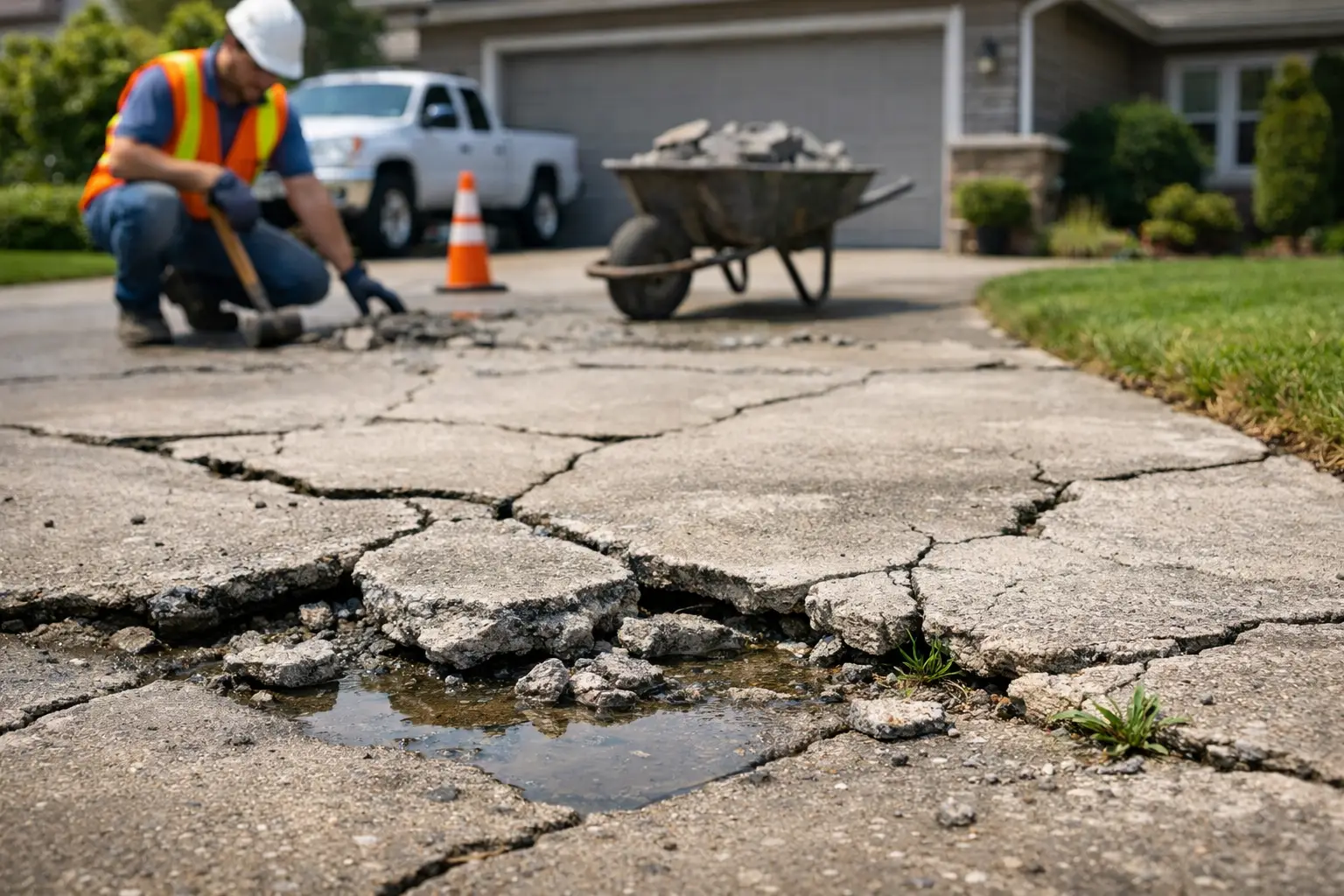
The concern grows when cracks are wider than about a quarter inch, run across multiple sections, show vertical separation, or continue expanding after previous repairs. Cracks that branch across the slab can indicate that the base has shifted or that the concrete has lost the support it needs. If water can enter the cracks, it can further weaken the soil beneath and accelerate the cycle of movement.
A professional inspection can identify whether the cracking is isolated or part of a larger drainage or soil issue. That distinction prevents property owners from spending money on a repair that will fail again in the next season.
2. Sections Have Sunk, Lifted, or Become Uneven
An uneven driveway is one of the clearest signs that replacement may be necessary. A slab that has sunk near the garage, lifted at a joint, or developed noticeable height differences creates a trip hazard and can put extra stress on tires, suspension, and vehicles with lower clearance.
Central Texas soils can expand when wet and contract during extended dry conditions. This movement may leave voids beneath concrete or push sections out of alignment. Tree roots and inadequate base preparation can create similar results. In some cases, lifting or leveling a slab may be a practical solution. But when multiple panels are moving, the concrete is heavily cracked, or the underlying drainage problem remains unresolved, full replacement provides a more dependable result.
3. Water Ponds on the Driveway or Runs Toward the Home
Water should move away from the house, garage, and foundation. If rainwater consistently pools on your driveway, settles along expansion joints, or flows toward the home, treat it as more than an appearance issue.
Standing water can stain concrete, worsen cracks, and saturate the soil beneath the driveway. More seriously, poor drainage near the home can contribute to moisture concerns around the foundation. Replacing a driveway creates an opportunity to correct the slope, improve runoff management, and make sure the finished surface works with the rest of the property rather than against it.
This is especially valuable for homes where the driveway connects to patios, walkways, gates, or landscape beds. A thoughtful plan considers the entire outdoor environment, not just the slab between the street and garage.
4. The Surface Is Flaking, Scaling, or Breaking Apart
Surface wear is different from a simple stain or faded finish. Scaling occurs when the top layer of concrete flakes away, exposing rough aggregate underneath. Spalling can create deeper chips, pits, and broken edges. Both conditions can result from poor finishing, moisture exposure, deicing chemicals, heavy wear, or concrete that was not designed or installed for the conditions it faces.
A small damaged area may be repaired if the surrounding slab is solid. When flaking and deterioration are widespread, however, resurfacing can become a short-lived cosmetic fix. The new layer depends on the old concrete beneath it. If that original surface is failing, replacement is generally the better investment.
5. Previous Patches Keep Failing
A driveway with one carefully completed repair is not necessarily a candidate for replacement. A driveway covered in mismatched patches, failed crack filler, and recurring broken edges is telling a different story.
Repeated repairs often signal that the damage goes beyond the surface. The concrete may be too thin, the base may be compromised, or movement may still be occurring underneath. At that point, continuing to patch can cost more over several years than removing the failing slab and rebuilding it correctly.
Replacement also gives homeowners the chance to improve the driveway layout. You may need a wider approach for larger vehicles, a more functional turnaround area, a dedicated parking pad, or a cleaner transition to an outdoor living space. A new driveway should fit how your household uses the property now, not how it was used decades ago.
6. The Driveway Is No Longer Sized for Its Job
Many older driveways were built for lighter vehicles and fewer cars. If your family now has trucks, SUVs, recreational equipment, frequent guests, or a home-based business, a narrow or undersized driveway can become a daily frustration.
Replacement may be appropriate even when the existing concrete has not completely failed. A properly designed project can widen the drive, strengthen high-traffic areas, improve access, and create room for parking without sacrificing the home’s appearance. For investment properties and commercial sites, better vehicle circulation can also improve safety and tenant or customer experience.
Thickness, reinforcement, joint placement, base preparation, and drainage should be selected for the intended use. A driveway that carries a full-size pickup needs a different approach than a light-use walkway or patio. This is where tailored planning matters.
7. Age and Appearance Are Affecting Property Value
An older driveway can still be structurally sound, but extensive staining, worn edges, dated design, and visible cracking can make an otherwise well-maintained property feel neglected. Since the driveway is one of the first major surfaces visitors see, its condition has an outsized effect on curb appeal.
For homeowners preparing to sell, replacement can make the exterior feel cared for and move-in ready. For those staying put, it can be part of a larger transformation that includes exterior paint, landscaping, a new front entry, or outdoor living improvements. Decorative finishes, cleaner borders, and intentional layout choices can give the front of the home a more finished, cohesive look.
Repair, Resurface, or Replace: Choosing the Right Scope
The right answer depends on the condition beneath the visible damage. Crack sealing may make sense for minor, stable cracks. A localized repair can work when one corner or panel has a clear, contained issue. Concrete leveling may be worth considering when the slab itself remains in good condition but has settled in a limited area.
Resurfacing is best reserved for sound concrete with mostly cosmetic surface wear. It is not a cure for significant cracks, shifting panels, drainage failures, or widespread deterioration. When several of those conditions are present, replacement is usually the option that delivers the best long-term value.
Before making a decision, look beyond the concrete. Ask why the damage happened. Is runoff washing out soil? Are roots creating pressure? Is the driveway too thin for the vehicles using it? Are expansion joints missing or failing? Addressing the cause is what separates a lasting improvement from a temporary repair.
What a Quality Driveway Replacement Should Include
A dependable replacement begins with removing failed concrete and evaluating the base below it. Soft soil, voids, roots, and drainage concerns should be addressed before new concrete is poured. The base must be properly prepared and compacted so the slab has consistent support.
From there, the project should be designed around thickness, reinforcement, control joints, slope, access points, and the property’s visual character. The concrete needs time to cure before regular vehicle traffic begins, and the contractor should provide clear guidance on that timeline and ongoing care.
For Central Texas homeowners, a free inspection is a practical first step when the cause of driveway damage is unclear. NXT Construction Inc. approaches concrete work as part of the property’s larger performance and appearance, helping clients make decisions that support both daily living and long-term value.
A driveway should make arriving home easier, safer, and more inviting. If yours is becoming a source of standing water, recurring repairs, or daily frustration, the best next move is not to guess at a patch. Have the condition assessed, understand the cause, and choose a solution built to serve your property for years to come.