A patio in Central Texas has to do more than look good on installation day. It needs to handle punishing summer sun, sudden downpours, shifting soil, muddy shoes, pool traffic, outdoor cooking, and the way your family actually gathers outside. Knowing how to choose patio materials starts with that reality: the right surface is not simply the one you like most in a photo. It is the one that fits your property, lifestyle, budget, and long-term plans.
A well-planned patio can make a backyard feel like a true extension of your home. Whether you are building a quiet morning-coffee space in Cedar Park, an outdoor kitchen in Lakeway, or an entertaining area for a growing family in Leander, material selection sets the foundation for durability, comfort, and visual impact.
Start With the Way You Will Use the Patio
Before comparing colors, patterns, or price ranges, define the job your patio needs to do. A small seating area outside a primary bedroom has different requirements than a large outdoor living space with a pergola, grill island, dining table, fire feature, and television.
Think about foot traffic, furniture weight, pets, children, and whether the area will connect to a pool. If you entertain frequently, prioritize a surface that is stable, easy to clean, and large enough for clear walking paths around seating and cooking zones. If the patio will support an outdoor kitchen or heavy masonry features, the base and structural preparation matter just as much as the finish material.
Comfort matters, too. Dark, dense materials can become uncomfortably hot in direct Texas sun. Highly textured surfaces can add traction, but may be harder to sweep or less comfortable under bare feet. The strongest choice balances appearance with the practical details of daily use.
How to Choose Patio Materials for Texas Conditions
Central Texas weather and soil conditions should guide the decision from the beginning. Heat, UV exposure, expansive clay soils, heavy rain, and drainage patterns can all affect the life of a patio. A beautiful installation without the right site preparation can settle, crack, hold water, or become uneven over time.
Concrete: Versatile, Durable, and Customizable
Concrete remains one of the most practical patio choices for many Austin-area properties. It can be poured in nearly any shape or size, making it ideal for custom layouts, curved edges, outdoor kitchens, and patios that need to tie into a driveway, walkway, or pool deck.
A standard broom finish offers dependable traction and a clean, straightforward look. Stamped concrete can create the appearance of stone, slate, brick, or wood while maintaining a continuous slab. Stained or integrally colored concrete adds another level of design flexibility, especially for homeowners seeking a modern, cohesive outdoor space.
Concrete does require thoughtful installation. Proper grading, reinforcement, control joints, and curing are essential. Even with quality work, concrete can develop hairline cracks over time due to natural movement and Texas soil conditions. Those details are not always signs of failure, but they should be anticipated in the design and installation plan.
Pavers: Flexible Design With Repair Advantages
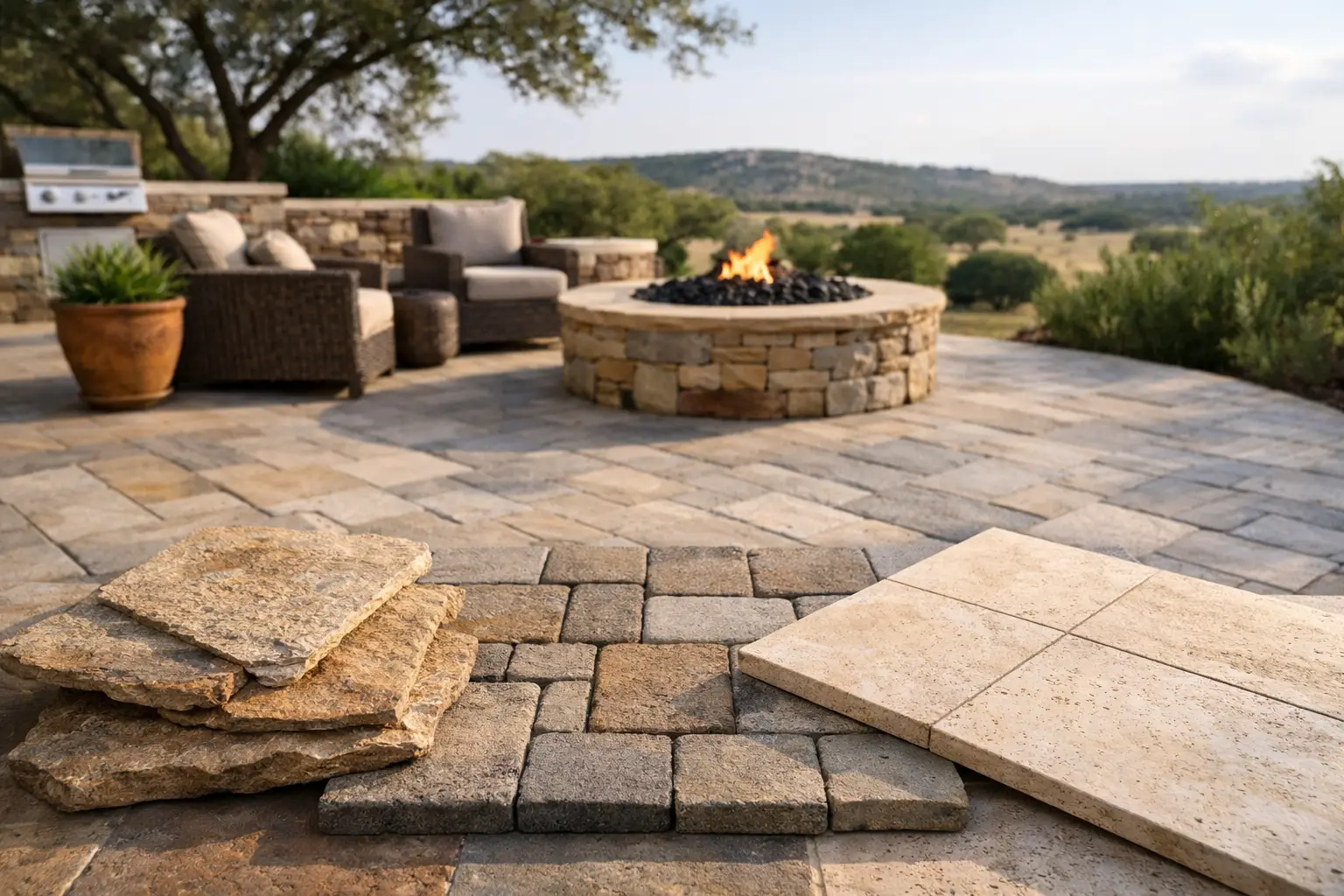
Concrete pavers are a strong option when you want defined patterns, rich color variation, and the ability to make future repairs without replacing an entire slab. Because pavers are installed as individual units over a prepared base, they can be lifted and reset if a localized area shifts or if underground utility work becomes necessary.
Pavers work especially well for patios that need a more tailored or upscale visual character. They can complement traditional stone exteriors, Hill Country-inspired homes, contemporary landscaping, and poolside entertaining areas. Their joints also create a natural visual rhythm that many homeowners prefer over a large uninterrupted concrete surface.
The trade-off is cost and maintenance. High-quality paver installation depends on excavation, a compacted base, edge restraints, bedding sand, and careful drainage planning. Weeds can appear in joints if the system is neglected, although proper installation and occasional maintenance greatly reduce that issue. For a long-lasting result, the base preparation should never be treated as an afterthought.
Natural Stone: Distinctive Character, More Variables
Natural stone brings depth, texture, and a sense of permanence that manufactured materials cannot fully duplicate. Flagstone, limestone, and sandstone are popular choices for Central Texas outdoor spaces because they feel connected to the local landscape and pair naturally with native plantings, masonry, and rustic-modern architecture.
Each stone has its own color movement, density, texture, and maintenance needs. Flagstone can create an organic, irregular pattern that feels relaxed and timeless. Cut limestone can deliver a cleaner, more formal look. Some stones are more porous than others, which can affect staining, moisture absorption, and how often sealing is beneficial.
Natural stone is often a premium investment because the material and labor are more specialized. It is also important to select stone with a surface texture appropriate for the location. Smooth finishes may not be ideal around pools or exposed areas where rain can make surfaces slick. When installed well, stone can be a standout feature that strengthens both curb appeal and long-term property value.
Brick: Warm, Traditional, and Long-Lasting
Brick patios offer warmth and classic appeal, particularly for homes with traditional architecture or existing brick accents. They can be laid in herringbone, basket weave, running bond, and other patterns that give a compact patio a great deal of visual interest.
Brick holds up well when installed on a stable base, but it is not maintenance-free. Mortar joints or sand-filled joints may need attention over time, and individual bricks can chip or settle. Color availability can also be more limited than with concrete pavers. Still, for homeowners who want a material that feels established rather than trendy, brick is worth serious consideration.
Gravel and Decomposed Granite: Casual and Budget-Conscious
Gravel and decomposed granite can be effective for garden seating areas, fire pit zones, side yards, and lower-budget outdoor improvements. They provide drainage and can create a relaxed Hill Country look without the cost of a full hardscape installation.
They are not the best fit for every patio. Loose materials can migrate into landscaping, get tracked indoors, shift beneath furniture, and make rolling chairs or wheeled grills inconvenient. A well-defined border, proper base, and occasional replenishment help, but homeowners should choose these materials for the right type of space rather than expecting them to perform like a solid patio surface.
Evaluate Drainage Before You Decide
Water is one of the most expensive problems to correct after a patio is complete. Your new surface should direct water away from the house, avoid creating standing-water areas, and account for existing roof runoff, downspouts, slopes, and nearby landscaping.
This is especially important when expanding an existing patio. Extending a surface without reviewing drainage can push water toward the foundation or create a low point where runoff collects. Depending on the property, the project may need a planned slope, channel drain, French drain, grading adjustment, or a permeable material strategy.
If your yard has known drainage issues, foundation movement, or previous water intrusion, address those conditions before investing in finish materials. A patio should improve how the property functions, not conceal an underlying problem until it becomes more costly.
Match the Material to Your Home and Future Plans
Your patio does not need to copy the interior flooring, but it should feel intentional beside the home. Consider exterior siding or stone, window trim, roof color, landscape style, and the architectural character of the property. Cool gray concrete may suit a contemporary home, while warm limestone or tumbled pavers may feel more natural around a traditional Texas residence.
Also consider what you may add later. If a pergola, covered roof, outdoor kitchen, privacy wall, fire pit, or pool is part of your future vision, plan the patio around that destination now. It is often more efficient to prepare footings, utilities, drainage, and layout during the first phase than to tear out finished work later.
This does not mean every project must be built at once. A phased plan can protect your budget while ensuring that today’s patio supports tomorrow’s outdoor living goals.
Budget for Installation, Not Just Material
Material price is only one part of the investment. Excavation, base preparation, drainage, reinforcement, delivery access, demolition, edge details, sealing, and site conditions can significantly affect the total project cost.
For example, a less expensive finish installed over an inadequate base may cost more in repairs than a higher-quality material installed correctly from the start. Conversely, a premium natural stone patio may not be necessary for a shaded side-yard lounge where simple concrete would meet every functional need.
The best budget is one that protects the structural work beneath the surface while placing design dollars where they will have the greatest impact. That might mean choosing a durable concrete patio with a custom border, or using natural stone in a focal seating area while keeping adjacent walkways more cost-effective.
Choose a Construction Partner Who Plans Beyond the Surface
Patio material selection is a design decision, but it is also a construction decision. The finished result depends on measurements, soil conditions, drainage, load requirements, transitions to the home, and the details that are invisible once the project is complete.
At NXT Construction Inc., we help Central Texas property owners turn outdoor ideas into functional spaces designed for real life. A thoughtful consultation can clarify which materials make sense for your site, aesthetic goals, maintenance expectations, and investment range before construction begins.
The right patio material should make it easier to spend time outside, not give you another surface to worry about. Choose one that respects your property’s conditions, supports the way you live, and gives your home a durable place for the moments you want to make room for.